
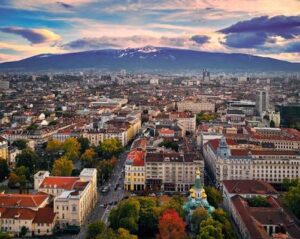
The British newspaper Metro has named Sofia the most underrated capital in Europe, highlighting the city’s combination of relatively affordable prices, historical heritage, modern cultural life, and proximity to natural attractions.
According to the British publication, the Bulgarian capital remains significantly less popular among mass tourists than traditional destinations in Western and Southern Europe, despite its potential for short city breaks.
Metro cites the British market as one example. In 2025, approximately 343,000 travelers from the United Kingdom visited Bulgaria, whereas Spain welcomes around 18 million British tourists annually. Thus, even with growing interest, the gap between Bulgaria and one of Europe’s largest tourist destinations remains vast.
At the same time, tourism in Sofia itself is growing. According to the city’s tourism authorities, the capital welcomed more than 1 million tourists from January through September 2025, and the number of arrivals increased by approximately 10% year-over-year. Foreigners accounted for about 63% of visitors.
Metro highlights Sofia’s historic center as one of its main attractions, where monuments from different eras are concentrated within a small area.
St. Alexander Nevsky Cathedral remains one of the city’s main attractions. The British publication also draws attention to the archaeological complex of ancient Serdica, a significant portion of which can be seen right in the center of modern Sofia.
The city’s proximity to Vitosha Mountain is cited as a distinct advantage. As a result, a trip to Sofia allows visitors to combine exploring the capital with hiking trails and outdoor recreation without having to travel long distances to another region of the country.
British journalists also highlight the capital’s burgeoning cultural scene. Among the events mentioned is the A to JazZ music festival, and among the cultural venues are the Sofia City Art Gallery and other museums in the city.
Another factor contributing to the city’s appeal is the relatively low cost of food, public transportation, and entertainment compared to other European capitals. Metro considers Sofia’s affordability to be one of its advantages amid rising travel costs to the most-visited cities in Western Europe.
Overall, Bulgaria welcomed approximately 13.6 million foreign visitors in 2025, a 2.7% increase from the previous year, according to data from the country’s National Statistical Institute. More than 9.5 million tourists were registered at lodging facilities, a 5.8% increase over the year.
Thus, the British Metro’s focus on Sofia aligns with a broader trend of growing interest in Bulgaria as a destination in its own right for city tourism, rather than merely as a country of summer resorts and winter getaways.
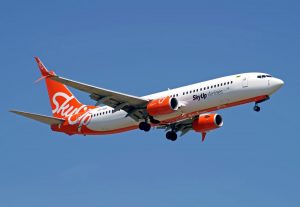
SkyUp (Kyiv) for the period from December 23, 2020 to January 30, 2021, will launch a flight on the Kyiv-Sofia (Bulgaria)-Kyiv route.
According to the company’s website, flights will be operated twice a week: on Wednesdays and Saturdays. Ticket prices for the Kyiv-Sofia flights start from UAH 1,248 without luggage, Sofia-Kyiv from UAH 1,062 without luggage.
SkyUp notes that from October 1 to November 30, 2020, Bulgaria canceled mandatory self-isolation for Ukrainian citizens who arrive in the country. To cross the border, one must have a negative PCR test done no later than 72 hours before travel.
The company also added that the requirements for winter travel are still unknown, so it is necessary to additionally check the current rules of entry and rest on the eve of departure.
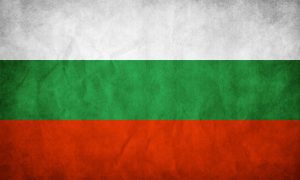
Ukraine and Bulgaria have agreed to expedite the opening of the Ukrainian Cultural Center in Sofia and the Bulgarian secondary school in Odesa, Ukrainian Foreign Minister Dmytro Kuleba said.
“We are talking about more than 200,000 people and the largest Bulgarian community in the world. I want to state very clearly now that Ukrainian Bulgarians are part of the national wealth of Ukraine and an integral part of our society. We agreed with the colleague that we will resolve in a constructive spirit all issues related to education, both with the Ukrainian language in Bulgaria and the Bulgarian language in Ukraine. And today, in order for this process to become very practical, we have agreed and accelerate the opening of the Ukrainian Cultural Center in Sofia and the Bulgarian High School in Odesa,” said Kuleba at a joint briefing with the Bulgarian Foreign Minister in Kyiv on Thursday.
Kuleba also thanked Bulgaria for being a reliable friend and partner of Ukraine on the way to EU and NATO membership.
Earlier, Minister of Foreign Affairs of Ukraine and Deputy Prime Minister, Minister of Foreign Affairs of Bulgaria Ekaterina Zakharieva also laid flowers at the Wall of Memory at the St. Michael’s Golden-Domed Cathedral, honoring the memory of the soldiers who died, defending the sovereignty and territorial integrity of Ukraine.



