
The general meeting of shareholders of KD Life Insurance Company (KD Life) on April 29, 2026, approved the payment of dividends for 2025 in the amount of UAH 3.171 million, the company reported in the NSSMC’s disclosure system.
As noted, the payment will be made at a rate of UAH 88.054 per share. It will be carried out within six months of the date of this decision.
According to the National Bank of Ukraine (NBU), KD Life collected UAH 81.03 million in insurance premiums in 2025, made UAH 14.4 million in payouts, and reported a net profit of UAH 3.338 million.
KD Life is a Ukrainian company founded in 2007 by the KD Group holding company.
The KD Group holding company is a leader in the Eastern European financial market, with nearly 130 years of experience in life and risk insurance, financial management, and investment funds. Currently, the company’s services are provided by over 3,000 consultants throughout Ukraine.
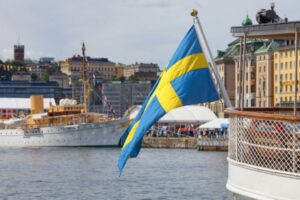
The Swedish Parliament has approved stricter rules for obtaining citizenship: starting June 6, 2026, the minimum total period of residence in the country required to apply for a passport will increase from five to eight years.
The new rules apply to adult applicants. The Swedish Migration Agency notes that different timeframes will apply to certain groups, but the basic requirement is being increased to eight years. Stricter criteria for “an orderly life” are also being introduced: individuals who have committed crimes will have to wait longer before obtaining citizenship.
The reform is part of a broader policy by the Swedish government to tighten immigration rules. In addition to extending the residency requirement, authorities also plan to introduce mandatory requirements regarding knowledge of the Swedish language, basic social studies, and the financial independence of applicants. According to Reuters, the government had previously proposed requiring applicants to have an income of over 20,000 Swedish kronor per month, as well as passing language and social studies tests.
The U.S. Library of Congress, analyzing the Riksdag’s decision, notes that the new residency requirements will take effect on June 6, 2026. At the same time, the language test is set to take effect on October 1, 2027, or earlier if the government so decides, while the social studies test will be introduced on a date determined by the Cabinet.
One of the most controversial aspects of the reform is the lack of a full transition period. More than 100,000 people whose applications are already under review may be affected by the new rules. This means that some applicants who were counting on the previous five-year period may be denied or forced to wait longer.
For foreigners who were planning to naturalize in Sweden, the reform significantly extends the waiting period. This could have a particularly noticeable impact on labor migrants, refugees, foreign professionals, and families who have been living in the country for several years and made plans based on the previous rules.
In recent years, Sweden has been consistently tightening its immigration policy following a long period of a more liberal approach to accepting foreigners. Authorities explain the changes by the need to strengthen integration, raise requirements for language proficiency and self-sufficiency among migrants, and bolster trust in the institution of citizenship. Critics of the reform warn that the retroactive application of the new rules could create legal uncertainty and reduce the country’s appeal to skilled professionals.
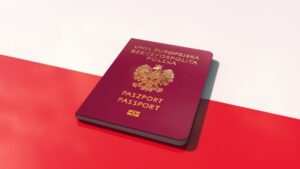
Poland is preparing a reform of its citizenship procedure that is expected to make it more difficult for foreigners to obtain a Polish passport, according to a proposal from the Polish Ministry of the Interior and Administration.
According to the Ministry’s plan, the minimum period of legal residence in Poland for citizenship applicants is to be increased to 8 years. This model involves 3 years of temporary residence followed by 5 years of permanent residence. Currently, the path to citizenship is shorter for certain categories of foreigners.
The reform also provides for stricter integration requirements. Foreigners will be required to demonstrate proficiency in the Polish language at a level no lower than B2, pass a state exam on the history, constitutional values, and principles of the Polish state, and sign a declaration of loyalty to the Republic of Poland. According to Polish media reports, the exam may include approximately 40 questions.
The Polish Ministry of the Interior explains the reform as a necessity to enhance the prestige of Polish citizenship and introduce clear criteria to confirm applicants’ integration into Polish society.
The tightening of rules comes amid a record increase in the number of naturalizations. In 2025, more than 19,000 foreigners received Polish citizenship. The largest group was Ukrainian citizens—more than 10,000 people—followed by citizens of Belarus—6,500—and Russia—759 people, Polish media reported, citing data from the Ministry of Internal Affairs and Administration (MSWiA).
In 2024, 16,300 foreigners received Polish citizenship, about half of whom were Ukrainians. By comparison, in 2023, approximately 10,000 people received Polish citizenship, and in 2019, 6,600.
A significant portion of Ukrainians obtain Polish citizenship through mechanisms related to the Polish Card and subsequent permanent residence. This distinguishes them from some other migrant groups, for whom the path to citizenship is more often based on employment, long-term residence, or family ties.
Poland remains one of the main destinations for Ukrainians since the start of the full-scale war, as well as one of the largest labor markets for Ukrainian citizens. The tightening of citizenship rules means that the transition from temporary or permanent residency to a Polish passport may become a longer and more formalized process.

Arsenal Insurance has completed the settlement of a major property insurance claim and made two payments totaling over 114 million hryvnias.
The fire occurred on the premises of a large production and warehouse complex in Dnipro. As a result of the fire, the buildings sustained critical damage—only fragments of the structures remained of some of the premises.
Based on the results of technical inspections, the buildings were deemed unsafe: the load-bearing structures completely lost their strength, and some of them collapsed inside the premises. The complex is subject to complete demolition and reconstruction.
The insurance compensation was paid in two installments:
— 51.9 million UAH was paid on May 6, 2026;
— 62.3 million UAH was paid on May 11, 2026.
“Settling such claims is an extremely complex process that requires a large number of technical expert assessments, analysis of the structural condition of the buildings, and a detailed evaluation of the extent of the damage. In this case, it was essentially a matter of the complete destruction of a large complex, so the settlement process was particularly laborious,” commented Arsenal Insurance.

According to Serbian Economist, the silver-striped pufferfish Lagocephalus sceleratus, known as the fugu and considered one of the most dangerous invasive species in the Mediterranean, is being spotted with increasing frequency in the waters of Montenegro, reports the Institute of Marine Biology at the University of Montenegro.
Alexander Joksimović, a scientific advisor at the Institute of Marine Biology, stated that these are no longer isolated findings. According to him, this species has been present off the coast of Montenegro for nearly ten years and has already established a stable population in the Adriatic Sea.
Recently, a pufferfish was found again off the coast of Budva: the fish got caught in a fishing net. Experts are warning fishermen and tourists that this fish is not safe to eat and that they should not attempt to clean or prepare it themselves.
The main danger is associated with tetrodotoxin—a potent neurotoxin that may be present in the organs, skin, and tissues of this fish. Studies on the species Lagocephalus sceleratus in the Adriatic confirm the presence of tetrodotoxin, and this toxin is dangerous to humans if the fish is consumed.
Experts emphasize that heat treatment does not make this fish safe. Therefore, the main practical advice for fishermen and vacationers is not to consume any fish they find, not to sell it, and to report any findings to the relevant authorities or the Institute of Marine Biology.
The spread of pufferfish in the Adriatic is linked to warming sea temperatures and changes in the Mediterranean ecosystem. The species originates from the Indo-Pacific region and is spreading into the Mediterranean as an invasive species, including via the Suez Canal. In 2025, scientists also reported finding this fish off the coast of Croatia, marking one of the northernmost confirmations of its presence in the Mediterranean.
For Montenegro, the emergence of a stable pufferfish population has not only ecological but also economic significance. The fish can harm local fisheries, get caught in nets, damage the catch, and pose additional risks to coastal tourist regions. Budva, the Bay of Kotor, Bar, and other areas where fishing and tourism are closely linked to the marine ecosystem may be particularly vulnerable.

The municipal enterprise Kyivpastrans intends to purchase two funicular cabins, as well as related goods and services, for a total of EUR 13 million, with funding from the European Investment Bank (EIB).
According to the tender announcement in the tender supplement to the Official Journal of the EU, the procurement will be financed by the EIB and the Kyiv City Council.
“The amount of EIB financing under the contract will not include VAT or, if applicable, customs duties and other taxes on the purchase of goods under this tender. Any such VAT, duties, or taxes will be paid by the Contracting Authority from its own budget,” the notice states.
The opening of bids is scheduled for June 30 of this year.
The first delivery is scheduled no later than 18 months from the date the supplier receives the advance payment, and the contract is generally set to last 79 weeks.
It is expected that the funicular cabin will be equipped with fast-charging batteries installed in a sliding or hinged box for access and maintenance, with adequate corrosion protection.
The supplier must also provide related goods, including machinery and track equipment, a traction system, control equipment, and a rapid battery charging system at terminal stations.
In addition, the supply of spare parts and consumables, tools for maintenance, repair, and diagnostics, as well as related services (staff training, commissioning of the funicular cabins) is provided for.
The Kyiv funicular runs up the steep slope of Volodymyrska Hill and connects Podil with the Upper City. It was opened in 1905 and was integrated into the city’s tram system at that time.



