

Ukrainian companies in January-March this year increased imports of copper and copper products in value terms by 45.1% compared to the same period last year – up to $ 28.511 million.
According to customs statistics, released by the State Customs Service of Ukraine on Monday, the export of copper and copper products for the period decreased by 31.2% – to $21.822 million.
In March, imported copper at $ 11.045 million, exported – 7.672 million.
In addition, in January-March 2023, Ukraine reduced the imports of nickel and its products by 88.8% compared to the same period in 2022 – to $3.176 million (in March – $2.020 million), aluminum and its products – by 0.7%, to $82.110 million (in March – $28.530 million). It reduced the imports of lead and lead products by 89.4% to $216 thousand (in March – $12 thousand), imports of tin and tin products by 8% to $648 thousand (in March – $104 thousand) and zinc and zinc products by 51% to $7.698 million (in March – $3.581 million).
Exports of aluminum and aluminum products in the first three months of 2023 decreased by 6.6% to $23.103 million (in March – $8.732 million) compared to the same period last year, while lead and lead products decreased by 33.6% to $4.436 million (in March – $1.412 million) and nickel and nickel products – $92 thousand (in March – none) compared to $875 thousand in January-March 2022.
Zinc exports for the three months of this year amounted to $46 thousand (in March – $22 thousand), while in January-March 2022 it was $892 thousand. Tin exports and products totaled $48 thousand (in March – $29 thousand) against $53 thousand in the same period last year.
As reported, the Ukrainian enterprises in 2022, imports of copper and copper products in value terms reduced by 64.3% compared to the previous year – up to $65.370 million, their exports decreased by 56.3% – to $90.245 million.
In addition, Ukraine has reduced imports of nickel and its products in 2022 by 49.9% compared to 2021 – up to $59.754 million, aluminum and its products – by 33.4% to $ 340.398 million, while the imports of lead and its products decreased by 66.6% – to $ 2.839 million.
Imports of tin and tin products fell by 33.5% to $3.312 million, while imports of zinc and zinc products decreased by 58.7% to $38.690 million.
Exports of aluminum and aluminum products for 2022 were down 42.7% from 2021, to $96.972 million, lead and lead products were down 68.7%, to $11.970 million, and nickel and nickel products were down 73.9%, to $1.268 million.
Zinc exports for 2022 were $1.331 million, up from $550,000 in 2021. Tin and products exports for 2022 were $424,000, up from $346,000 the previous year.
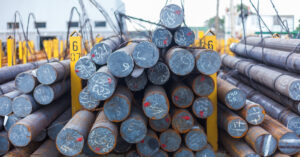
Ukraine in January-March this year, Ukraine reduced the export of semi-finished carbon steel products in volume terms by 5.4 times compared to the same period last year – to 194.469 thousand tons.
According to statistics released by the State Customs Service (SCS), exports of semi-finished carbon steel products during this period amounted to $102.250 million in monetary terms.
Most exports were carried out to Poland (43.51% of supplies in monetary terms), Dominican Republic (14.25%) and Bulgaria (11.23%).
In January-March, Ukraine imported from China 34 tons of semi-finished products worth $63 thousand.
As reported, Ukraine in 2022, exports of semi-finished products of carbon steel in volume terms reduced by 72% compared to the previous year – to 1 million 899.729 tons, in monetary terms by 70.9% – to $ 1 billion 191.279 million. The main export was carried out in Bulgaria (26.55% of supplies in monetary terms), Poland (13.97%) and Italy (12.13%).
In addition, Ukraine imported 5.558 thousand tons of similar products in 2022, which is 85.7% less than in 2021. In monetary terms, imports decreased by 86% – to $3.634 million. Imports were carried out from the Russian Federation (96.92% of supplies – before the war), China (1.84%) and Romania (1.21%).
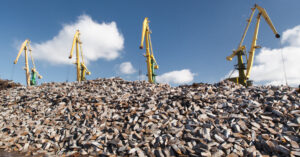
Ukraine in January-March this year increased the export of pig iron in physical terms by 0.2% compared to the same period last year – up to 449.511 thousand tons.
According to statistics released by the State Customs Service (SCS), exports of pig iron in monetary terms amounted to $166.174 million for the period.
In this case, exports were carried out mainly to Poland (56.83% of supplies in monetary terms), Spain (18.61%) and Italy (11.75%).
In the first quarter of the year, Ukraine imported 10 tons of pig iron worth $22 thousand from Germany.
As reported, Ukraine in 2022, Ukraine reduced the export of pig iron in volume terms by 59% compared to the previous year – to 1 million 325.275 thousand tons, in monetary terms by 61.1% – to $638.774 million.
In 2022, Ukraine imported 40 tons of cast iron worth $23 thousand, while in 2021 – 185 tons of cast iron worth $226 thousand.
Exports were mainly to the United States (38.47% of supplies in monetary terms), Poland (32.91%) and Turkey (8.12%), and imports were from Germany (100%).

MHP Agroholding, Ukraine’s largest chicken producer, managed to make $38 million in net profit in the fourth quarter of 2022, 2.4 times better than in the fourth quarter of prewar 2021.
The agriholding said in its annual report to the London Stock Exchange on Tuesday, while it ended the year as a whole with a net loss of $231 million, compared with $393 million in net income in the previous year.
According to the report, MHP’s revenues in the fourth quarter of 2022 increased by 6% to $766 million, and for the year as a whole, by 11% to $2 billion 642 million.
Including export revenue for the quarter reached 64% ($491 million) compared to 61% ($1 billion 601 million) for all of 2022 and 53% ($1 billion 265 million) for all of 2021.
“The war in Ukraine is ongoing and could escalate in the coming months. There are constant risks to the company’s operations due to repeated attacks on critical infrastructure in Ukraine. However, as of today, all of MHP’s production facilities in Ukraine continue to operate at nearly full capacity. After transforming its logistical arrangements in response to changing wartime circumstances, the company is once again exporting to more than 70 countries worldwide, supplying grain, vegetable oils and poultry around the world,” the document states.
According to it, to date, MHP facilities have suffered no physical damage as a result of the war.
At the same time, the group has incurred significant war-related expenses since the Russian invasion on Feb. 24, 2022, estimated at $69 million for the year ending Dec. 31, 2022. They include donations in support of the community, write-offs of stockpiles and biological assets, and other specific expenses related to the war. Specifically, MHP donated about 12,000 tons of poultry products to the people of Ukraine.
It is specified that the operating profit in the fourth quarter of last year decreased by 12% – to $90 million, and for the year – by 49%, to $255 million, EBITDA – respectively by 16%, to $109 million and by 41%, to $384 million.
As noted, in January-March 2023, the agricultural holding managed to almost fully maintain production capacity.
“Since the overall situation in Ukraine remains unstable, we cannot give any meaningful forecasts about the prospects of the poultry segment for the whole of 2023. In the grain segment, the spring sowing season starts this month. Since all of our land is outside of the war zones, we hope to be able to harvest the same 360,000 hectares as we did in 2022,” MHP also pointed out.
According to the report, given the current risks and uncertainties following the Russian invasion of Ukraine and the resulting need to preserve liquidity to support ongoing business operations and support the country’s population, MHP’s board has decided that dividend payments are unlikely while the war continues.

Bitcoin continues to rise in price on Tuesday and is worth more than $30 thousand, MarketWatch reports.
The bitcoin exchange rate is up 3.2% to $30,074 thousand during trading, according to CoinDesk. The day before, quotes reached $30.321 thousand, exceeding the $30 thousand mark for the first time since June 10, 2022. Since the beginning of the year, the cryptocurrency has soared by 81%.
Bitcoin is supported by the fact that some investors perceive cryptocurrency as a protective asset and invest in it amid the banking crisis, said David Tavil, president and co-founder of ProChain Capital.
“I believe there has also been an influx of liquidity from Asia, especially from Asian high-tech companies looking for a place to invest,” wrote Truflation founder Stefan Rast.
Bitcoin has reached $30 thousand, having overcome a serious level of resistance, Bloomberg reports. From the point of view of technical analysis, the next targets for the cryptocurrency may be $30,800 thousand and $31,200 thousand.

Index of optimism of leading Chinese economists calculated by Yicai.com declined to 51.65 points in April from 52.3 points in March, but remained above 50 points, which indicates that the positive mood remains.
Experts polled by the newspaper forecast an average increase in GDP in China by 3.99% in the first quarter of this year and by 5.47% for the year as a whole.
The average yuan exchange rate, according to their estimates, will be 6.65-6.69 yuan/$1 this year. It stands at 6.8742 yuan/$1 as of 1 p.m. Moscow time Thursday.
Economic indicators show that China’s economic recovery accelerated in March, but the labor market is still weak and more than a third of industrial companies remain unprofitable, said Zhou Xue, chief economist for China at Mizuho Securities.
China’s foreign trade situation is challenging, and some industries need more support to boost trade with other countries in the region, including ASEAN nations, according to a Yicai editorial.
Chinese exports in the first two months of 2023 were down 6.8 percent compared with the same period a year earlier, while imports fell 10.2 percent.
However, exports increased after February, judging by the flow of cargo traffic to the country’s major ports, the article noted.
Official data on China’s foreign trade dynamics for March will be released on April 13.
China needs to stabilize its exports to maintain its position as the world’s largest producer as well as to help developed countries cope with high inflation, Yicai writes. Beijing should build an institutional system to promote trade and investment instead of using ad hoc measures, the article notes.
Chinese state-owned companies are leading the wave of spinning off operations into independent entities and then placing their shares on the open market, Securities Daily wrote Monday.
According to the paper, 73 companies listed on mainland China stock exchanges are moving forward with deals to spin off businesses and then list them. More than half of the 73 companies are state-owned.
Separating operations and listing new companies on the market is a good way to unlock the value of each unit and expand financing channels, said Hu Conghui, an associate professor at the business school of Beijing Normal University, cited by Securities Daily.
Such deals have a positive effect on the market value of state-owned companies and allow the government to raise capital, said Wu Wanying, an analyst at Tianyi Digital Economy.
Spin-offs are most common in semiconductor equipment, new energy sources and other technology segments.



