

Residents of New Zealand have signed a petition in favor of renaming the country to the Maori Aotearoa, and the Maori Indigenous Affairs Committee is ready to discuss the official change of the name of the republic, New Zealand Gerald reports.
“In the summer, a petition with 70,000 signatures of the country’s residents, who want to rename New Zealand to Aotearoa, came to Parliament. The Special Committee on Maori Affairs said it would discuss the official change of the country’s name at a meeting in parliament. Meanwhile, politicians are divided over the name change, but most of the public is ready to accept it.
According to Prime Minister Jacinda Ardern, the issue of an official name change is not yet being considered, but she hopes for the active use of the Majorian synonym in everyday life.
“Regardless of whether we change it in the law, I don’t think it will change the fact that New Zealanders are talking more and more about Aotearoa. And this transition is welcome,” she said.
In turn, the co-leader of the Maori Party, Debbie Ngareva-Packer, rejected the idea of holding a referendum on renaming New Zealand, arguing that the country’s indigenous population is only 17%.
Aotearoa translates from the Maori language as “Land of the Long White Cloud”.

The Ministry of Health of Qatar is softening the requirements for entering foreigners from November 1, they will no longer be required to present a negative result of a PCR test for coronavirus or a rapid antigen test made before flying into the country.
As emphasized in the message of the ministry, this decision is due to the fact that the number of cases of coronavirus continues to decline worldwide, and in Qatar, the vaccination program of the population is successfully continuing.
The easing of covid restrictions applies not only to tourists, but also to residents of Qatar, who previously had to take tests within 24 hours of returning to the country.
In addition, from November 1, residents of Qatar and tourists will not be required to present the Ehteraz app to enter public places. This will only need to be done when visiting medical facilities.
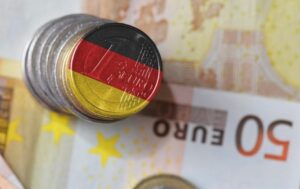
Consumer prices in Germany, harmonized with EU standards, rose by 11.6% in annual terms in October, according to preliminary data from the country’s Federal Statistical Office (Destatis).
Inflation accelerated from 10.9% in September and again renewed its historical maximum.
Analysts polled by Trading Economics expected inflation to remain at 10.9% on average.
Consumer price growth slowed to 1.1% month-on-month from 2.2% in September. Experts on average predicted an increase of 0.5%.
Inflation, calculated by German standards, in October accelerated to 10.4% in annual terms – the highest since December 1951, compared with 10% a month earlier. On a monthly basis, it slowed down to 0.9% from 1.9%.
Inflation in Germany is fueled by a weaker euro, an energy crisis and ongoing problems in supply chains.
Energy prices in the country rose by 43% in October, food prices rose by 20.3%, and the cost of services increased by 4%.
The final data on inflation in Germany for October will be published on November 11th.

Citizens of Ukraine who arrived in Azerbaijan will be able to stay in the country indefinitely, said Rufat Ibrahimov, chief of the Migration Control Department of the State Migration Service of Azerbaijan, apa.az reported.
“Period of stay is again 90 days. However, given the situation, expulsion does not apply after the period expiration. That is, citizens of Ukraine after 90 days can stay in our country,” Ibrahimov was quoted as saying by apa.az.

The National Bank of Ukraine (NBU) expects that if active hostilities with the Russian occupiers continue until mid-2024, the harvest of grain and leguminous crops in the country will decrease (under a pessimistic scenario with a blockade of its ports) to 51.5 million tons in 2023 (- 40% compared to 2021), and up to 52.5 million tons in 2024 (-38.7%).
According to the NBU inflation report for October, the key factor in forecasting crop volumes will be the availability of crop exports from Ukrainian seaports.
Thus, under the scenario of the continuation of Russian aggression until mid-2023, it is expected that the total harvest of grains and legumes in 2023 will be 57 million tons, provided Ukraine has full access to agricultural exports through its Black Sea ports, and 51.5 million tons in the event of their blockade by Russia.
Similarly, if the war continues until mid-2024, Ukraine will be able to harvest in 2024 not 62 million tons of cereals and legumes, as in the case of free maritime exports, but only 52.2 million tons due to the blockade of its port infrastructure.
At the same time, the National Bank predicts the harvest of grain and leguminous crops in 2022 at the level of 52.5 million tons.
The bank recalled that in 2019 Ukraine harvested 75.1 million tons of grain and leguminous crops, in 2020 – 64.9 million tons, in 2021 – a record 85.7 million tons since independence.
As reported, by October 28, Ukrainian farmers had harvested 48.81 million tons of main crops from a total area of 13.13 million hectares, or 70% of the previously planned areas.
Ukraine in 2021 harvested a record harvest of grains, legumes and oilseeds of 106 million tons: grains and legumes – 84 million tons, oilseeds – 22.6 million tons.

Italy has handed over more than 20 155-mm M109L self-propelled artillery mounts to the Ukrainian army, La Repubblica reports.
“These are armored tracked vehicles with a 155 mm cannon using NATO ammunition. In the last years of the Cold War, Italy produced hundreds of such installations, upgrading the original American model, then they were withdrawn from service at the beginning of the millennium,” the message says.
It notes that these installations will undergo a major overhaul, and then go straight to the front line.
Journalists report that the Ukrainian army will receive from twenty to thirty self-propelled guns, “although the exact number remains top secret.”
The publication adds that these self-propelled guns are part of the latest military aid package, which was agreed by the previous Italian government, Mario Draghi.



