
Financial support commitments undertaken by Ukraine’s partners and the actual allocation of funds are still very different, which creates a liquidity problem and the threat of further monetary financing of the state budget deficit by the National Bank with all the negative consequences for inflation, exchange rate and macro stability, Finance Minister Sergei Marchenko said.
“You know perfectly well that there is a huge difference between commitments and payments… The first quarter of 2023 is the most problematic for us right now… Even a huge amount of commitments will not help us in the first quarter of 2023 (if these funds are not provided),” he said in Wednesday at the discussion “War in Ukraine: Financing the Victory” organized by the think tank Bruegel.
The day before in Berlin, at the International Expert Conference on the Reconstruction of Ukraine, the minister said that Ukraine’s fiscal and quasi-fiscal financing needs in the first quarter of 2023 are estimated at $11.4 billion. Of these, $4.2 billion is for gas purchases: January – $1.9 billion, February – $1.4 billion and March – $0.9 billion.
In total, the financing needs are: January – $4 billion, February – $4.1 billion and March – $3.3 billion, the Finance Minister’s presentation said. According to it, in the remaining months of 2023, they are estimated from $2.1 billion in August to $3.9 billion in June, for a total of $37.9 billion.
Marchenko recalled that in April 2022, it was agreed with international partners that the monthly gap in Ukraine this year is estimated at $5 billion a month, but the actual payment of funds is far from this figure. “For example, in April there were only $1.7 billion, in May – only $1.5 billion, in June – $4.4 billion, in July – $1.7 billion, in August – $4.7 billion, in September – about $2 billion.” , – stated the head of the Ministry of Finance.
According to him, if by the end of this year the EU’s macro-financial assistance (about EUR3 billion – IF) and the funds announced by the United States ($7.5 billion – IF) are allocated, then the Ministry of Finance will feel comfortable.
“But again, this does not mean that we will be able to cover all our expenses before the end of the year. It only means that we can manage the liquidity gap … we are able to meet critical expenses, while other expenses can be deferred,” Marchenko said.
He recalled that for 2023, the Ministry of Finance estimates the need for additional external financing of socially necessary budgetary spending in the amount of $3-3.5 billion, excluding emergency recovery costs, the likelihood of an increase in the background of the latest record Russian strikes on civilian infrastructure.
According to the minister, the commitments to allocate EUR 1.5 billion per month by the European Union in 2023 and EUR 18 billion in total for the year, which were taken the day before by the President of the European Commission Ursula von der Leyen, make it possible to assume a solution to this problem.
“But again, it is important for us to plan ahead. It is not yet clear whether we will be able to use this money in the first quarter of 2023,” Marchenko said.
He said that he discussed this issue at a meeting with the Minister of Finance of Germany, with the ministers of other countries.
“If you are ready to support Ukraine, please do it faster, because while you spend some time creating a solution, we do not have time. January is just around the corner, and January is not covered,” the head of the Ministry of Finance stressed.
He added that he expects to be connected to US funding. “But again, it’s not clear to me when the money can be paid, and if not, we have to find other options, we’ll look at another perspective, perhaps with bilateral creditors, etc. That’s why predictability is so important,” Marchenko added.
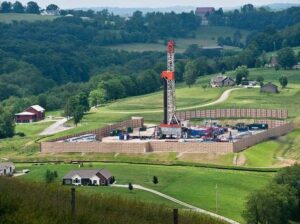
British Prime Minister Rishi Sunak intends to return the moratorium on hydrocarbon production by hydraulic fracturing (HF) in England, writes the Financial Times newspaper.
The ban, in place since November 2019, was lifted by the Liz Truss government in September. Then Truss explained this decision by the fact that the energy security of the country should become an absolute priority.
Sunak, who spoke in the House of Commons on Wednesday, said he supported the Conservative Party’s 2019 public declaration saying fracturing in England would not be allowed “until science clearly shows it can be done safely.” “.
The UK has halted hydraulic fracturing after a series of tremors were recorded in the country’s only shale well near Blackpool in northwest England.
The EBITDA of Ukrtelecom JSC in January-September 2022 decreased by 39% compared to the same period in 2021, to UAH 975 million, the company’s press service told Interfax-Ukraine.
According to the press release, due to the loss of control over part of the telecom infrastructure and the termination of the provision of services in the temporarily occupied territories, the company’s total income for nine months decreased by almost 17% compared to the same period last year and amounted to almost UAH 4.2 billion.
“The fall in EBITDA was due to the significant impact of the write-off of assets (losses) in the temporarily occupied territories, the formation of a reserve, as well as receivables arising from an increase in the number of overdue payments from customers. In addition, some of the company’s subscribers left the country. Also significant funds were aimed at helping the Armed Forces of Ukraine and humanitarian aid,” the operator commented on the results for January-September.
At the same time, the company continues to pay taxes on land and real estate, including in the temporarily occupied territories.
Ukrtelecom also noted that until February 24, all the company’s indicators showed steady growth, but the full-scale war unleashed by the Russian Federation against Ukraine changed everything.
“Since the beginning of the full-scale war between Ukraine and the Russian aggressor, Ukrtelecom has been working to restore services 24/7, ensuring their availability at the level of 87% of the settlements covered by the operator’s network. Assistance to the Armed Forces of Ukraine and the arrangement of Wi-Fi in school shelters are the main directions of the system the company’s social responsibility program during the war,” the press service of Ukrtelecom emphasizes.
According to the company, one of the strategic directions of Ukrtelecom’s network modernization was, as before, the optimization of the use of technological energy resources. Thus, over the past three years, electricity costs have decreased by 41%: from 155 million kWh in 2018 to 92 million kWh in 2021. At the same time, the company continues to implement a long-term energy efficiency program in wartime, which will contribute to the strength of Ukraine’s energy system, according to a press release.
“In recent months, the terrorist state has massively attacked the energy infrastructure of Ukraine, which causes direct damage to communication systems. The margin of safety of the Ukrtelecom network is currently provided by autonomous power generators, which are equipped with the operator’s most important Internet nodes, as well as sufficient (at least daily norms) fuel supply. The company’s daily investment in the stability of communication services is up to 14 thousand liters of diesel fuel with a critical load on the power grid and emergency shutdowns,” the statement said.
Despite the full-scale war, Ukrtelecom continues to implement projects to connect users to optics – in 2022, about 5 thousand km of fiber optic lines have already been built, and the optical Internet user base has grown by 33% compared to September last year and amounted to more 300 thousand subscribers in the mass and business segments.
About 200 medical and educational institutions were connected to high-speed optical Internet, more than 60 of them in the third quarter. In general, as of the beginning of October, optics from Ukrtelecom are used in more than 1.7 thousand educational and almost 1.3 thousand medical institutions.
In addition, Ukrtelecom completely modernized the telecommunications infrastructure in Dnipro, replacing copper cables with optical ones, and all operator services are now provided exclusively using the NGN (next generation network) multiservice telecom network of the new generation. Subscribers in Dnipro, switched to the FTTx optical architecture, have Internet speeds up to 1 Gbps.
Also, the implementation of a similar large-scale project to transfer subscribers to the modern NGN telecommunications infrastructure in Odessa is nearing completion.
Ukrtelecom emphasizes that it is still efficiently managing the property freed up due to the modernization of the technological infrastructure. Commercial rental income for three quarters of this year exceeded UAH 273 million, while they are almost 15% less than a year ago, which is due, among other things, to the loss of a number of properties in temporarily occupied settlements and destruction as a result of rocket attacks.
The operator notes that during the full-scale war he suffered considerable losses. A preliminary estimate of the cost of destroyed and damaged buildings, lost equipment, telecommunications networks and other assets in the temporarily occupied territories is almost UAH 650 million.
For nine months. In 2022, Ukrtelecom paid UAH 1.12 billion in taxes to the budgets of all levels, allocated about UAH 50 million in financial assistance for the needs of the Armed Forces of Ukraine, and also transferred more than 170 corporate vehicles to the army.
Since the beginning of the full-scale war, Ukrtelecom has acquired and donated almost 3,000 tactical first-aid kits, 4,000 medical tourniquets, 2,000 hemostatic bandages and dressings, hundreds of walkie-talkies, dozens of stretchers, generators and many other necessary things and equipment for the needs of our defenders . In the ranks of the Armed Forces of Ukraine, about 350 employees of the company protect Ukraine, according to a press release.
As reported, Ukrtelecom ordered the production of a significant number of Valkyrie unmanned aerial systems (UAC) and has already handed over the first three of them to the Ukrainian military. According to open data, the cost of one such complex is about $18.1 thousand.
The Specialized Anti-Corruption Prosecutor’s Office (SAP) and the National Anti-Corruption Bureau of Ukraine (NABU) announced a new episode in the Rotterdam+ case for another UAH 20 billion, as part of the investigation of which 2 former chairmen of the energy regulator NEURC were reported suspected; 6 former and 3 current members, as well as the current and former employee of the Commission.
“On October 26, 2022, NABU and SAPO reported the suspicion of 15 persons involved in the implementation of the so-called Rotterdam + formula, according to which electricity consumers illegally overpaid more than UAH 20 billion during 2018-2019,” the law enforcement authorities said in a statement. on Wednesday.
According to him, among the suspects is a current and former official of a group of private heat generating companies.
As explained by the NABU, 6 of these 15 persons, according to the investigation, knowingly took part in the crime, received new suspicions under Part 2 of Article 364 of the Criminal Code of Ukraine (abuse of power with grave consequences). The actions of the NEURC members who, without understanding, voted for the approval of the so-called “Rotterdam +” formula, were qualified under Part 2 of Article 367 of the Criminal Code of Ukraine (negligence with grave consequences).
“The investigation believes that they improperly performed their official duties, which entailed grave consequences for the state and public interests,” the bureau noted.
As specified in the NABU, this is the second episode of a large-scale investigation by anti-corruption agencies. The investigation of the first, on suspicion of six people, regarding the illegal overpayment of more than UAH 19 billion during 2016-2017, was completed in September 2022.
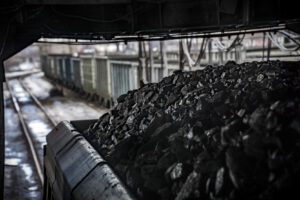
According to investigators, the so-called “Rotterdam+” formula included expenses that did not actually exist, namely, the transportation of nationally produced coal to TPPs from the port in Rotterdam. As a result, according to NABU and SAPO, end consumers during 2016-2019. overpaid more than UAH 39 billion.
“The investigation has evidence that representatives of a group of private heat generating companies, who eventually received excess profits, persuaded the NKREKU (National Commission for State Regulation in the Energy and Public Services – IF) to accept such a formula. At first, the regulator did not agree, realizing the absurdity of including transportation costs in the tariff However, in March 2016, he agreed to this proposal,” the ministry stressed.
As a result, there was an increase in electricity tariffs for industry, social infrastructure facilities, entrepreneurs, which led to an increase in the cost of goods and services to the end consumer, including essentials, the NABU summarized.
As reported, the head of the Specialized Anti-Corruption Prosecutor’s Office (CFG), Oleksandr Klimenko, decided in September 2022 to cancel the prosecutor’s decision to close the so-called “Rotterdam+ case” as illegal and unfounded.
It was noted that Klymenko also completely changed the group of prosecutors in this case due to the ineffective implementation of supervision over the observance of laws during the pre-trial investigation.
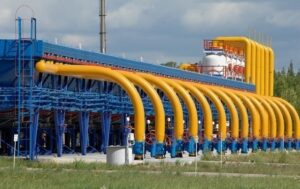
Energy Minister of Ukraine Herman Haluschenko called on Europe to use the free capacity of Ukrainian underground gas storages (UGS).
“Gas prices are at the lowest level in several months. A great opportunity to use Europe’s largest underground gas storage facilities with 15 billion cubic meters of free capacity. Additional gas volumes will be needed this winter,” he wrote on Twitter.
According to Gas Infrastructure Europe, as of October 24, gas reserves in the EU’s UGS facilities rose to 93.79%. The growth for the last reporting day amounted to 0.16 percentage points. In absolute terms, more than 100 billion cubic meters have been accumulated in UGS.
Also, LNG stocks in the tanks of receiving terminals increased to the maximum level in three years. European LNG terminals in October operate at around 61% capacity. In September and August – 59%.

From the beginning of the 2022/2023 marketing year (MY, July-June) and until October 26, Ukraine exported 12.19 million tons of grain crops, of which 6.48 million tons of corn (53.1% of total supplies), 4.62 million tons of wheat (37.9%) and 1.04 million tons of barley (8.5%).
As reported on the website of the Ministry of Agrarian Policy and Food on Wednesday, the rate of grain exports since the beginning of the current MY is 33% lower than the same period of the last MY (from July 1 to October 26, 2021, 18.19 million tons were delivered abroad).
According to the agency, from the beginning of 2022/2023 MY to October 26, 2022, Ukraine exported 4.62 million tons of wheat (2.53 times less compared to the same period a year earlier), 1.04 million tons of barley (4. 04 times less), 6.2 thousand tons of rye (8.8 times less) and 34.3 thousand tons of flour (19.7% less). At the same time, the pace of corn exports exceeded last year’s volumes – 6.48 million tons were exported, which is 3.24 times higher than in 2021/2022 MY on the same date.
It is specified that in general, since the beginning of October, 3.49 million tons of grain crops have been exported (+0.66 million tons for the period October 21-26), including 1.58 million tons of wheat (+0.26 million tons), 1 .63 million tons of corn (+0.31 million tons), 267 thousand tons of barley (+91 thousand tons), 9.7 thousand tons of flour (+2.2 thousand tons) and 1.9 thousand tons rye (no change).
As follows from the data of the ministry, for the five days of October 21-26, an average of 132 thousand tons of grain per day was supplied to foreign markets, while for the previous period of October 1-21 – 141.5 thousand tons / day, for 26- September 30 – a record 267.5 thousand tons / day since the beginning of the war, 126 thousand tons / day for September 21-26, and 132.5 thousand tons / day for September 9-21. Thus, the average daily export rates for the reporting period October 21-26 decreased by 6.7% compared to the previous period October 1-21.
As reported, in the 2021/2022 marketing year, Ukraine exported 48.51 million tons of grains and legumes, which is 8.4% higher than the previous marketing year, despite the full-scale invasion of the Russian Federation and difficulties with the export of agricultural products due to the blockade of Ukrainian seaports. 18.74 million tons of wheat were delivered to foreign markets (12.6% more than in 2020/2021MY), 23.54 million tons of corn (+1.9%), 5.75 million tons of barley (+35.9%) , 70.9 thousand tons of flour (-44.1%).
In 2020/2021 MY, the country exported 44.72 million tons of grain and leguminous crops: 16.64 million tons of wheat, 23.08 million tons of corn, 4.23 million tons of barley, 126.9 thousand tons of flour and 18.4 thousand . tons of rye.
In 2019/2020 MY, Ukraine exported 56.72 million tons of grain and leguminous crops.



