

U.S. stock index futures are lower on Wednesday on weak quarterly reports or forecasts from a number of big tech companies.
Shares of Alphabet Inc. (SPB: GOOG) and Microsoft Corp. (SPB: MSFT) shed 6.6% in pre-trading, while Texas Instruments (SPB: TXN) shed 4.7%.
Alphabet, Google’s holding company, saw its third-quarter 2022 revenue increase 6%, the slowest pace in two years, while its net income was down 27%. In addition, Google’s advertising revenue in the past quarter turned out to be worse than experts’ forecasts.
Microsoft recorded net profit and revenue better than analysts’ expectations in the first financial quarter ended September 30th. However, the company’s revenue forecast for the second financial quarter – $52.35-53.35 billion – turned out to be weaker than the market consensus forecast of $56.16 billion.
Texas Instruments gave a weak outlook for the current quarter, although its results in July-September exceeded analysts’ expectations.
“These companies’ reports are really important indicators of the advertising industry and a harbinger of the movement of goods and services in the economy,” said Fahad Kamal, chief investment officer of Kleinwort Hambros, quoted by Dow Jones.
Other tech companies due to release quarterly earnings this week include Meta (SPB: META) Platforms Inc. (recognized as an extremist organization in the Russian Federation and banned), Apple Inc. (SPB: AAPL), Intel Corp. (SPB: INTC) and Amazon.com Inc. (SPB: AMZN) Shares of these companies lost 4.3%, 1.1%, 1.2% and 3.6%, respectively, in early trading on Wednesday.
“We’re used to the tech sector performing strong quarter-on-quarter,” says FlowBank chief investment officer Esti Dweck. “There was hope that their financials would be another signal that the sector is still resilient.”
The value of Boeing Co. (SPB: BA) shed 0.8%. One of the world’s largest manufacturers of aviation, space and military equipment increased revenue in the third quarter by 4%, but the figure turned out to be almost $2 billion worse than the average market forecast. At the same time, Boeing’s free cash flow in July-September amounted to $2.9 billion, significantly exceeding the average analysts’ forecast of $1 billion.
The focus of traders on Wednesday – the data on sales of new buildings in the US in September, which will be released by the country’s Department of Commerce at 17:00 Moscow time.
Experts polled by Trading Economics, on average, expect sales to decline by 13.9% last month, to 585,000 homes.
The value of the December E-mini futures for the S&P 500 fell by 0.97% to 3832.75 points by 15:50 square meters on Wednesday. The quotation of the December E-mini futures on the Dow Jones index fell by this time by 0.36%, to 31,762 points. Futures on the Nasdaq 100 for December fell 1.97% to 11,483 points.
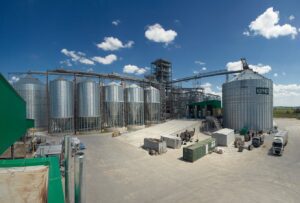
Agro-industrial group Kernel, the largest producer of vegetable oil in Ukraine, will publish its consolidated report for the 2022 financial year (FY, July-2021 – June-2022) on November 10 instead of the previously scheduled date of October 28.
As indicated in the message of the holding on the Warsaw Stock Exchange on Wednesday, the postponement was caused by the collection of additional information about the consequences of Russian aggression in Ukraine.
It is specified that on the day of the publication of the report, the management of Kernel will not hold a regular telephone conference, since “no information in addition to that published in the report should be presented during such a conference.”
“The management does not intend to make any recommendations or forecasts regarding the future activities of the company, given the uncertainty prevailing in Ukraine due to the Russian invasion. The company will return to the usual practice of arranging quarterly calls after the lifting of martial law in Ukraine,” the agricultural holding emphasized in an exchange message. .
In addition, the group of companies will continue to analyze the consequences of Russian aggression in Ukraine and inform all parties interested in the company’s activities about updates and changes in the work of Kernel.
Before the war, Kernel ranked first in the world in the production of sunflower oil (about 7% of world production) and its export (about 12%), and was also the largest producer and seller of bottled sunflower oil in Ukraine. In addition, the company was engaged in the cultivation of other agricultural products and their sale.
The largest co-owner of Kernel through Namsen Ltd. is Ukrainian businessman Andrey Verevsky with a share of 39.3%.
The agricultural holding in fiscal year 2021 (FY, July 2020 – June 2021), increased its net profit by 4.3 times compared to FY 2020 – up to $513 million, its EBITDA increased 2.1 times – up to $929 million, revenue – by 38%, to $5.65 billion.

Stock indices of the Asia-Pacific region (APR) are rising during trading on Wednesday, following the dynamics of the US stock market.
China’s Shanghai Composite rose 1.06% by 8:24 pm, Hong Kong’s Hang Seng rose 1.45%.
Alibaba (SPB: BABA) Health Information Technology Ltd., which provides services for the collection and use of medical data (+7.6%), and biopharmaceuticals CSPC Pharmaceutical Group Ltd. are the leaders in growth of quotations on the Hong Kong Stock Exchange. (+6.3%) and Wuxi Biologics (Cayman) Inc. (+5.7%).
Paper retailer JD.com Inc. (SPB: JD) gained 0.3% while Alibaba Group lost 1.3%.
The value of the Japanese index Nikkei 225 to 8:27 qoq increased by 0.9%.
The shares of Denka Co, a chemical company, are rising most significantly. Ltd. (+6.1%), M3 Inc., providing medical services (+4.7%), and insurer T&D Holdings Inc. (+4.1%).
The South Korean index Kospi added 0.7% by 8:30 qoq.
Quotes of securities of one of the world’s largest manufacturers of chips and electronics Samsung Electronics Co. grow by 3%, the cost of automaker Kia Corp. decreases by 0.8%.
Shares of another South Korean chipmaker, SK Hynix Inc., rose 1.4%, although the company said it plans to cut investments in 2023 by more than half amid a sharp decline in third-quarter net income due to weak demand for semiconductors.
The Australian S&P/ASX 200 gained 0.2%.
Consumer price growth in Australia accelerated, raising fears that the Reserve Bank of Australia will have to raise interest rates more than previously forecast, writes MarketWatch.
Consumer prices rose 7.3% in September compared to a revised 6.9% growth a month earlier. This is the highest inflation rate since at least September 2018, writes Trading Economics.
The capitalization of the world’s largest mining companies BHP and Rio Tinto increased by 0.1% and 0.6%, respectively.

The Kyiv city air quality monitoring system has been officially integrated into the international IQAir service, the Kyiv City State Administration reports.
“Official data on air quality in the capital is available to users of the IQAir website, which forms the world rating of cities according to the state of atmospheric air. There is a network of five reference points for observing the state of atmospheric air of the European standard in Kyiv. They complement more than 40 indicative posts,” the statement reads. message in the Telegram channel.
Data from both types of monitoring points is available to users of the Kyiv Digital application, where they can also receive notifications about a high level of air pollution in the capital.

JSC Ukrzaliznytsia will install electric generators and heaters received from the Red Cross Society of Ukraine at railway stations.
As reported in the Telegram channel of UZ, the generators will operate at stations in Zaporozhye (two stations), Vinnitsa, Khmelnitsky, Kamenetz-Podolsky, Berdichev, Rivne, Krivoy Rog (two stations), Kovel, Kolomyia, Mukachevo, Truskavets, Morshyn , Zhmerinka, Ivano-Frankivsk, Chernivtsi, Chop, Uzhgorod, Zhytomyr, Mironovka, Chernihiv, Trostianets, Sumy, Kharkiv, Odessa, Cherkassy, Kropyvnytskyi, Ternopil, Lvov (two stations) and at the stations “Taras Shevchenko” and “Darnitsa” in Kyiv.
The total cost of humanitarian aid is about UAH 12 million.
In addition, last week Ukrzaliznytsia received 154 water heaters from the Ukrainian Red Cross Society, which were distributed among 79 railway stations.

Oil prices are falling on Wednesday morning after a moderate rise the day before, caused by concerns about the supply of fuel on the world market and the weakening dollar.
The price of December futures for Brent on London’s ICE Futures exchange is $92.79 per barrel by 8:08 qoq, which is $0.73 (0.78%) lower than the closing price of the previous session. As a result of trading on Tuesday, these contracts rose by $0.26 (0.3%) to $93.52 per barrel.
The price of futures for WTI oil for December in electronic trading on the New York Mercantile Exchange (NYMEX) is $84.84 per barrel by this time, which is $0.48 (0.56%) lower than the final value of the previous session. A day earlier, the contract rose in price by $0.74 (0.9%) to $85.32 per barrel.
The ICE-calculated index, which shows the dynamics of the dollar against six currencies (the euro, the Swiss franc, the yen, the Canadian dollar, the pound sterling and the Swedish krona), lost about 1% on the eve, which supported oil quotes.
In addition, the market on Tuesday reacted to statements by Saudi Energy Minister Prince Abdulaziz bin Salman that the lack of strategic reserves of raw materials and free mining capacity could become painful for the market in the coming months.
Meanwhile, the American Petroleum Institute (API) reported Tuesday night that U.S. inventories rose by 4.5 million barrels last week. Experts, on average, expected a more moderate growth, in the region of 200,000 barrels.
Official data from the Energy Information Administration of the US Department of Energy will be released on Wednesday at 17:30 qoq, and analysts polled by Trading Economics predict that the report will indicate an increase in oil inventories by 1.03 million barrels and a decrease in gasoline reserves by 0.8 million barrels.



