
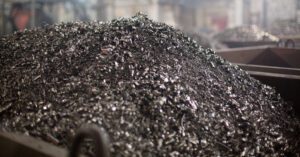
Ferroalloy enterprises of Ukraine in January-August of the current year in total reduced output by 32% compared to the same period last year – up to 399.46 thousand tons.
As Interfax-Ukraine was informed by the Ukrainian Association of Ferroalloy Producers (UkrFA), in January-August, the production of silicomanganese decreased by 22.2% – to 356.5 thousand tons, ferromanganese – by 70.7%, to 20.69 thousand tons.
In addition, the production of ferrosilicon (in terms of 45%) fell by 63.4% – to 19.72 thousand tons, metallic manganese – by 62.4%, to 1.81 thousand tons.
In addition, 0.74 thousand tons of other ferroalloys were produced.
Pokrovsky (formerly Ordzhonikidzevsky) Mining and Processing Plant (PGOK, Dnipropetrovsk region), which mines and enriches manganese ore, produced 497.1 thousand tons of manganese concentrate in 8 months 2022, which is 34.4% lower compared to 8 month-2021. PGOK for 8 months. also produced 29.55 thousand tons of iron ore sinter (84.8% less compared to January-July 2021), supplying it to PJSC “Dniprovsky Metallurgical Plant” (DMZ), which is part of DCH Steel businessman Alexander Yaroslavsky. In March-August, PGOK did not produce iron ore sinter, as DMZ suspended the production of metal products.
At the same time, on September 1 of this year, PGOK resumed the work of the Bogdanovskaya concentrating and sintering plant.
Data on the results of the work of the Marganets mining and processing plant (MGOK, Dnipropetrovsk region) for 8 months-2022 are not available, meanwhile, for 7 months-2022 it produced 294.68 thousand tons of concentrate (a decrease of 5.6% compared to 7 month-2021).
As reported, in 2021 Ukraine increased the production of ferroalloys by 15% compared to 2020 – up to 858.7 thousand tons, but reduced manganese concentrate by 6.6% – up to 1 million 763.43 thousand tons.
Prior to nationalization, PrivatBank (Kyiv) organized the business of SZF (located on the NKT) and ZZF, MGOK and PGOK (OGOK).
The Nikopol Ferroalloy Plant is controlled by the EastOne group, created in the fall of 2007 as a result of the restructuring of the Interpipe group, as well as the Privat group (both Dnepr).
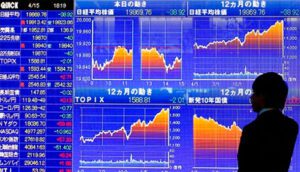
The stock indexes of the largest countries in the Asia-Pacific region (APR) are mainly falling during trading on Wednesday, with the exception of the Japanese indicator.
The Hong Kong Hang Seng index fell 1.5% by 8:23 pm. China’s Shanghai Composite fell 0.8%.
Earlier this week, China’s National Bureau of Statistics (NSO) unexpectedly postponed the release of third-quarter GDP data, scheduled for Tuesday, as reported. This increased uncertainty about the outlook for the Chinese economy, writes Trading Economics.
Shares of biopharmaceutical company Wuxi Biologics (Cayman) Inc. are among the biggest losers in Hong Kong. (-6.3%), developer New World Development Co. Ltd. (-5.6%) and sporting goods manufacturer Li Ning Co. Ltd. (-4.8%).
Shares of online retailer Alibaba (SPB: BABA) shed 2.8%.
The value of the Japanese Nikkei 225 index increased by 0.5%.
Growth leaders among the components of the index are shares of technology SoftBank Group (+3.7%) and electricity producers Tokyo Electric Power Co. Holdings Inc. (+2.9%) and Kansai Electric Power Co. Inc. (+2.5%).
The price of securities of clothing retailer Fast Retailing rose by 1.3%, consumer electronics manufacturer Sony Group – by 0.5%.
South Korean index Kospi fell by 0.1%.
The market value of one of the world’s largest chip manufacturers Samsung Electronics Co. decreased by 1.2%, automaker Hyundai Motor – increased by 0.3%.
The Australian S&P/ASX 200 fell 0.3%.
Shares of the world’s largest mining companies BHP Group and Rio Tinto fell 1% and 0.3%, respectively.
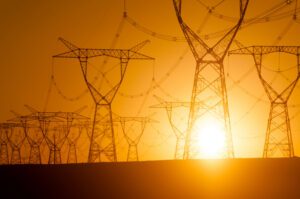
Since the beginning of the Russian aggression, NPC Ukrenergo has received assistance in the form of supplies of equipment and materials from five European transmission system operators (TSOs) represented by the Belgian Elia, the Polish PSE, the Italian Terna, as well as the German Amprion and 50 Hertz, the company reported in its Telegram channel on Tuesday.
“Since the beginning of the war, European TSOs have been helping us at their own request so that our repairmen can quickly restore networks destroyed by enemy rocket attacks. They personally make sure that the equipment is delivered as quickly as possible,” the company said.
The last batch of aid and equipment came from the Belgian Elia.
“Belgian colleagues have provided new generators, insulators for overhead power lines, wire and couplings for their connection with a total cost of several hundred thousand euros,” the company said.
As the company said, the very first aid came in March from the Polish system operator PSE, which also provided transformer equipment to the Ukrainian side at the end of May, including from its own emergency stock.
“In addition, Polish colleagues ordered and paid for the manufacture of 70 km of wire, which our repairmen are already using today, specifically for Ukrenergo,” the company added.
In July, Vitaliy Krush, an employee of one of the largest German TSOs Amprion, delivered two generators to the Ukrainian border for Ukrenergo substations.
“Also, equipment for the Ukrainian system operator was provided by another German operator 50Hertz and Italian Terna. Various equipment is expected from other OSB and international partners,” the company said.
As explained in Ukrenergo, system operators, like no one else, understand the importance and complexity of the rapid restoration of infrastructure in Ukraine.
“We greatly appreciate every contribution to the fact that our mobile repair teams can quickly restore damaged networks, replace transformers destroyed by enemy missiles,” Ukrenergo said.
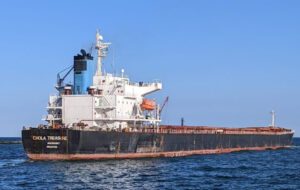
Four bulkers carrying 49,000 tonnes of wheat and soybeans departed from Ukrainian ports on Tuesday after receiving approval from the Joint Coordination Centre (JCC).
“The Joint Coordination Centre (JCC) reports that four vessels left Ukrainian ports today carrying a total of 49,000 tonnes of grain and other food products under the Black Sea Grain Initiative,” the center said in a statement.
In particular, the Matrix vessel carrying 7,000 tonnes of wheat, the Hasan vessel with 6,000 tonnes of soybeans and the Esence bulker with 6,000 tonnes of wheat are bound for Turkey. The Mastro Mitros is carrying 33,000 tonnes of wheat to Israel.
“Grains that reach a destination may go through processing and be trans-shipped to other countries,” the center said.
“As of 18 October, the total tonnage of grain and other foodstuffs exported from the three Ukrainian ports is 7,860,365 metric tonnes. A total of 719 voyages (365 inbound and 354 outbound) have been enabled so far,” it said.
The United Nations, Russia, Turkey and Ukraine signed a document in Istanbul on July 22 on opening a corridor to export grain from three Ukrainian ports – Chornomorsk, Odesa and Pivdenny.

President of Ukraine Volodymyr Zelensky has appointed Miroslav Kastran Ambassador of Ukraine to Slovakia.
The corresponding decree of October 18 was published on the website of the head of state.
By another decree, the President appointed Serhiy Saenko as the Ambassador of Ukraine to the Kingdom of Morocco.

Oil prices are rising after falling to lows in more than two weeks on reports that the US plans to sell additional barrels of oil from the strategic reserve.
The price of December futures for Brent on the London ICE Futures exchange by 8:10 am Wednesday is $90.52 per barrel, which is $0.49 (0.54%) higher than the closing price of the previous session. As a result of trading on Tuesday, these contracts fell by $1.59 (1.7%) to $90.03 per barrel.
The price of futures for WTI oil for November in electronic trading on the New York Mercantile Exchange (NYMEX) rose by this time by $0.88 (1.06%), to $83.7 per barrel. By the close of previous trading, the value of these contracts fell by $2.64 (3.1%) to $82.82 per barrel.
US President Joe Biden will announce on Wednesday the sale of an additional 15 million barrels of oil from the country’s strategic oil reserve in response to OPEC+’s move to cut oil production by 2 million b/d since November, the Associated Press wrote, citing senior officials in the US presidential administration. .
In addition, the President is expected to announce that he may make a similar decision several times this winter. These measures are aimed at curbing the rise in oil prices in the world. The plan to sell the energy resource from the reserve was announced in March, and it was designed for six months. In total, it was planned to release 180 million barrels.
At the moment, the US strategic oil reserve is at its lowest level since 1984, which is about 400 million barrels of oil, writes Associated Press.
At the same time, upside potential in the oil market remains due to traders’ concerns about supply. “We continue to see a number of opportunities for a short-term recovery (of oil prices – IF), as the EU embargo on energy supplies from the Russian Federation comes into force in December, and the G7 countries continue to work on the price ceiling for Russian oil,” analysts at Fitch Solutions said.



