
According to Fixygen, Energetik Power Plant PJSC will hold a shareholders’ meeting on April 28, 2026, via remote participation. The agenda includes the approval of financial statements, performance results, and other corporate matters.
The company operates in the industrial and energy sector and is involved in the manufacture or maintenance of energy equipment. Companies of this type are an important part of the country’s repair and manufacturing base.

PJSC “Ukrainian Bacon” (Kostiantynivka, Donetsk Oblast) reported losses for 2025, which it plans to cover using future profits, the company announced in the disclosure system of the National Securities and Stock Market Commission (NSSMC).
The draft resolution of the general meeting of shareholders, scheduled for April 30, 2026, provides for the waiver of the accrual and payment of dividends for the past year.
Shareholders are being asked to approve the director’s report on the results of operations in 2025, recognizing them as satisfactory, as well as to approve measures to improve the company’s financial condition.
Achieving profitability has been identified as the priority for 2026.
In addition, the agenda includes a motion to remove Maksym Pysarev and Dmytro Makhota from the Unified State Register (USR) as persons authorized to act on behalf of the company without a power of attorney.
According to data from the OpenDataBot service, the revenue of PJSC “Ukrainian Bacon” in 2025 fell by 79.5% compared to the previous year—to 95.84 million UAH. The net loss amounted to UAH 107.39 million, compared to a profit of UAH 147.11 million in 2024. Thus, the negative trend in net income reached 173% (a decrease of UAH 254.5 million). The value of assets decreased by 45% to UAH 568.09 million, while total liabilities decreased by 33.3% to UAH 713.3 million. The company’s authorized capital is UAH 1.0005 million.
PJSC “Ukrainian Bacon” was founded in 2008. It produces meat products under the “Bashchynsky” and ‘Europroduct’ trademarks, as well as under the “Nasha Ryaba” brand and a number of private labels (“Auchan,” METRO, etc.).
Since October 2021, the company has been part of Yuriy Kosyuk’s MHP agricultural holding. Previously, the owner was PJSC “Myronivsky Hliboproduct.” During this period, there was a change in leadership from long-time director Mykhailo Bashchynskyi to Olena Reznik, and later to Dmytro Makhota. Since November 2025, Oleksii Nosov has held the position of director.
Production facilities are located in the Kramatorsk district of Donetsk Oblast. Due to military operations, the plant’s operations have effectively ceased: while the workforce numbered over 1,900 people in 2021, by the end of 2025, the number of employees had dropped to 2.

According to Fixygen, Kharkiv Feed Mill will hold its annual general meeting of shareholders on April 28, 2026, via remote participation. The main agenda items include approval of the financial statements and operating results for 2025, as well as other corporate governance decisions.
The plant operates in the agro-industrial sector and specializes in the production of compound feed for livestock and poultry farming.
Companies in this sector are heavily dependent on grain prices, logistics, and the state of the meat and poultry market. According to publicly available data, the company is controlled by private Ukrainian shareholders.

Ukraine should establish a training center for its own experts at the International Criminal Court (ICC), according to Oleksiy Shevchuk, a partner at Barristers LLC.
“Ukraine must provide systematic expertise and professionals capable of working effectively within the ICC’s structure. Ukraine should establish a training center for experts to work in international judicial bodies, primarily the ICC, as international criminal law will be one of the defining areas of 21st-century politics,” he told Interfax-Ukraine.
As Shevchuk noted, the ICC currently needs a wide range of experts who can support its operations.
“There are positions for OSINT coordinators, language analysts, financial experts, evidence management specialists, and even cyber intelligence specialists. The Court is a massive organization. And for it to function, dozens of highly qualified specialists in various fields are needed. Unfortunately, there are very few such people in Ukraine. If we can find 10 people ready to start working in The Hague tomorrow—that would be an optimistic forecast,” he said.
At the same time, Shevchuk noted that Ukraine has a strong tradition of ECHR practice, but the ICC is a different world; it has a different procedural logic, a different role for evidence, and a different mechanism for gathering information.
“The Court requires practical skills in international criminal proceedings, an understanding of military operations, and language proficiency at the level of technical translation of international terminology. It is a highly specialized environment,” he added.
Commenting on steps toward establishing a training center for ICC specialists, Shevchuk said that such a center should have several areas of focus: a program for training practicing lawyers (investigators, prosecutors, attorneys), a program for training technical and analytical staff (OSINT specialists, evidence managers, translators, data auditors, etc.), and a program for language and ethics training adapted to The Hague standards.
“We have a strong academic base in Ukraine, but researchers also need a team capable of integrating into the court’s practical work tomorrow. Canada established the Canadian Centre for International Justice, which trains lawyers and analysts specifically for international tribunals. Ukraine needs something similar—a partnership between universities, government agencies, and the ICC itself. This could be a joint initiative of the Ministry of Justice, the Ministry of Foreign Affairs, academic institutions, and civil society organizations,” said Shevchuk.
“In the coming decades, the focus will definitely shift toward The Hague—and Ukraine needs real experts, not just symbolic ones. This is not a matter of prestige, but of competence: either we train our own specialists, or others will do it for us,” the lawyer concluded.
Barristers, ICC, LAWYER, specialist, training center, ШЕВЧУК

Ukraine plans to introduce taxation on international mail shipments, which effectively marks the end of the era of “cheap packages” from foreign online stores. These changes are part of a new legislative approach to taxing cross-border e-commerce.
This involves the introduction of value-added tax (VAT) on goods ordered by Ukrainian consumers from abroad. Currently, there is a duty-free import threshold of EUR150; however, the new model envisages a gradual transition to taxing virtually all parcels, regardless of their value.
The main goal of the changes is to level the playing field between Ukrainian and foreign online sellers, as well as to increase tax revenues for the budget. Under the current system, foreign marketplaces and sellers often do not pay VAT when selling goods to Ukrainian consumers, which creates a price advantage over local businesses.
The new model is expected to be implemented based on a principle similar to the European Union’s practice, where VAT is levied at the time of purchase, and the obligation to pay it may be imposed on sellers or e-commerce platforms. This means that platforms such as international marketplaces will have to register as taxpayers in Ukraine or operate through intermediaries.
Experts note that the introduction of VAT on parcels will lead to higher prices for end consumers, particularly in the segment of inexpensive goods, which are currently ordered en masse from foreign platforms. At the same time, the government expects increased market transparency and higher budget revenues.
Simultaneously, the changes may stimulate the development of domestic e-commerce and local manufacturers, who will benefit from a more level playing field. However, some consumers may reduce their order volumes or switch to alternative purchasing channels.
Changes are also expected in the logistics sector: postal delivery operators will be involved in tax administration, including possible verification of the value of goods and interaction with customs authorities.
Thus, the cross-border e-commerce market in Ukraine is entering a phase of structural change. In the short term, this will lead to higher prices for imported goods for consumers, and in the long term, it may shift the balance between foreign and local online sellers.
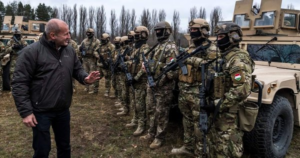
Hungary has decided to strengthen security around its section of the TurkStream gas pipeline and place it under military control following an incident on Serbian territory, according to the Telegram channel “Serbian Economist”.
According to the report, the decision was made after an emergency meeting of the defence council convened by Hungarian Prime Minister Viktor Orbán. Hungarian Foreign Minister Péter Szijjártó said the military would guard the entire Hungarian section of the pipeline — from the border with Serbia to the border with Slovakia.
The move followed an incident in Serbia, where, according to Serbian and Hungarian authorities, powerful explosive devices were found near gas infrastructure through which Russian gas is delivered to Hungary and further into the region.
At the same time, the episode has already triggered political debate. Some publications and commentary in the region question the official version of events and suggest the story may have a political dimension, particularly against the backdrop of the election campaign in Hungary.
Ukraine, for its part, has officially rejected any attempts to link it to the incident in Serbia.



