

The Supervisory Board of PJSC “National Depository of Ukraine” (NDU, Kyiv) announced the extension of the deadline for accepting applications from candidates intending to participate in the competitive selection process for the position of NDU Board Chair until April 22 inclusive.
“To attract a wider range of candidates and ensure the selection process is as transparent and competitive as possible,” the announcement on the NDU website states.
According to the announcement, the selection process will take place in two stages: in the first stage, all interested parties submit their applications to participate in the competition, and in the second stage, interviews will be held with the selected candidates.
Afterward, the supervisory board will submit recommendations regarding the candidate for the position of CEO for consideration at the general meeting of NDU shareholders, who have the authority to make this decision.
It is noted that candidates, among other things, must have at least five years of experience as a manager in capital markets and/or organized commodity markets and be thoroughly familiar with “the issues and trends in the development of Ukraine’s capital market, particularly the stock market infrastructure, legislation governing professional activities, as well as experience working in foreign capital markets.” During the interview, they will be required to briefly present their vision for the depository’s strategic development in the medium term.
As reported, from June 2021 until the end of December 2025, Alexey Yudin served as the head of the NDU’s board, and currently, until the conclusion of the competition, Marina Adamovskaya holds that position; she has served as deputy head of the board since June 2019.
In early September 2025, the National Bank announced the launch of a memorandum of cooperation in support of an integrated capital market infrastructure, signed in Rome in July of this year with the European Bank for Reconstruction and Development (EBRD) with the participation of the Ministry of Economy, the Ministry of Finance, the National Bank, and the National Securities and Stock Market Commission (NSSMC). The first stage involved optimizing the ownership structure and corporate governance of the NDU by transferring the state’s stake to the NBU for management.
Next, plans call for the creation of a holding company involving a reputable international strategic investor (an operator of trading and post-trading infrastructures) selected through an open tender, international financial organizations, local market participants, and the state/state-owned banks.
This holding company, in turn, will establish a new stock exchange in Ukraine, which will replace the National Bank as the majority owner of the central clearing institution—the Settlement Center. Additionally, this exchange will hold a minority stake in the NDU, while the National Bank will hold the majority stake.
The final stage should be the consolidation of depository services under the NDU, which is to function as a single central securities depository, by transferring to it the functions of accounting for and servicing government bonds from the National Bank.
In addition to managing the state’s 25% stake in the NDU, as of September 24 of this year, the National Bank directly owned 25%, with another 10.9399% belonging to its Corporate Pension Fund, while the state-owned Oschadbank and Ukreximbank held 24.9903% and 9.9903%, respectively. At the same time, the National Securities and Stock Market Commission (NSSMC) appoints the trustee for the shares of Oschadbank, Ukreximbank, and the NBU’s Corporate Pension Fund, but this provision of the law on the depository system is expected to be amended as part of the infrastructure reform.
Another 4.0795% of the shares were owned by 27 legal entities and 2 individuals; specifically, Yelena Nusinova held 1.7054% of the shares, and Odessa Privatization Center LLC, owned by former NSSMC member Viktor Ivchenko, held 1.7151%.
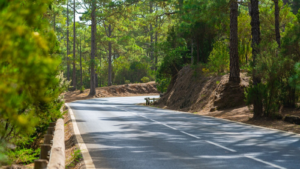
The state-owned enterprise “Forests of Ukraine” will resume work on 25 projects involving the construction of forest roads with a total length of nearly 90 km in April, the company’s press service announced on Facebook. According to the report, construction of the projects began in the fall of 2025 in the Carpathian, Northern, Podillia, Polissia, and Kyiv branches. Work was suspended for the winter, but contractors are now resuming the projects.
“During the construction of forest roads, temporary storage sites are being established for the storage, sorting, and shipment of forest products. Road signs and signal posts are being installed. Economic and social factors are being taken into account during implementation, and fire safety measures are being ensured,” stated “Forests of Ukraine.”
According to the state-owned enterprise, a new road in the Nadvirna Forest District, over 2 km long, will provide access to forest stands with a timber stock of 22,700 cubic meters. In the Korosten Forest District, the completion of a 3-kilometer road will shorten the route for logging trucks by 10 km. It is expected that thanks to logistics optimization, the cost per cubic meter of timber in this area will decrease by approximately 20%.
“Forests of Ukraine” clarified that construction in the Putyl Forest District will shorten the route for residents of mountain settlements to the district center by 10 km. In addition, major repairs to the road in the Mekshuniv Forest District (Chernihiv Oblast) will ensure that firefighting equipment can reach a body of water, which will be equipped with a pier for rapid water intake.
Overall, the state-owned enterprise plans to build 60 forest roads with a total length of over 200 km by 2026.
On April 2, Ukrainian Defense Industry JSC announced a tender for voluntary medical insurance services for employees.
According to a notice on the Prozorro e-procurement system, the estimated cost of the services is 3.9 million UAH.
The deadline for submitting bids is April 13.
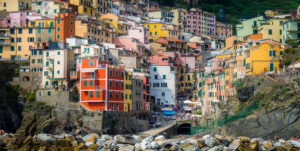
Prices for existing housing in Italy rose by 1.5% in the first quarter of 2026 compared to the previous quarter, with the average asking price reaching €1,891 per square meter. This is according to a report by the analytical division of idealista.
According to the source, price increases were recorded in 80% of the country’s administrative centers. The most notable quarterly increases occurred in Belluno (8.7%), Cremona (6.9%), and Lecco (6.4%). Among major cities, Bari, Cagliari, Rome, Bologna, Catania, and Florence showed positive trends, while Naples saw a slight decline of 0.4%.
Milan remains Italy’s most expensive city, as before, with a price of €5,192 per square meter. It is followed by Venice—€4,897 per square meter, Bolzano—€4,869, Florence—€4,602, and Bologna—€3,717. Rome ranks sixth at €3,369 per square meter. The most affordable cities were Caltanissetta—€653 per square meter, Ragusa—€730, and Biella—€752.
At the regional level, price growth has spread across nearly the entire country. A quarterly decline was recorded only in Molise and Basilicata, while the strongest growth was seen in Valle d’Aosta—4%, Veneto—3%, as well as Liguria and Tuscany—2.2% each. Trentino-Alto Adige remains the most expensive region at €3,266 per square meter, while Molise is the least expensive at €911 per square meter.
The market maintains positive momentum across most of Italy, though macroeconomic factors—including interest rates and inflation—may influence it in the coming months. The idealista index itself is based on asking prices published in listings, not on the actual prices of completed transactions. The methodology also excludes auction properties and atypical listings, and the median price is used as the benchmark.
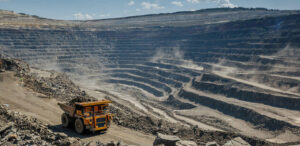
“Demurinsky Mining and Processing Plant” LLC (MMPP, Dnipropetrovsk Oblast), which extracts titanium and zirconium ores and was confiscated from Russian billionaire Mikhail Shelkov, increased its net loss by 2.5 times in 2025 compared to 2024—to 278.673 million UAH.
According to information from the State Property Fund, net revenue from the sale of products (goods, works, services) last year decreased by 15%—to UAH 154.067 million.
The main type of activity is the extraction of other non-ferrous metal ores (activity code under the Classification of Economic Activities: 07.29).
Demurinsky GOK LLC is one of the largest mining and processing enterprises in Ukraine. Registered on May 30, 2001, the company has been developing the Vovchanske complex placer titanium-zircon deposit in the Dnipropetrovsk region (Northern and Central deposits) since 2006.
Preliminary beneficiation is carried out at the open-pit mine, followed by mineral separation at the processing plant. The reserves of ore sands in the deposit, categorized as B+C1, amount to 22.8 million cubic meters with an average grade of 9%: 1,614 thousand tons of ilmenite, 520 thousand tons of rutile, and 181 thousand tons of zircon.
The company holds a special subsoil use permit for the extraction of titanium-zirconium ores suitable for the production of zircon, rutile, ilmenite, disten-silimanite, and staurolite concentrates. The permit is valid until July 29, 2031. The company also holds permits for discharges, water use for high-risk operations, and others (total number of permits: 23).
Main product range: KDSZ distene-selimanite concentrate; ilmenite concentrate; rutile concentrate; staurolite concentrate; KTSZ zircon concentrate.
The asset (single lot) includes: 100% corporate rights and claims.
As of December 31, 2025, the GZK’s accounts payable amounted to UAH 142.504 million.
The state’s share in the LLC is 100%.
The LLC’s authorized capital is UAH 39,621,414 thousand.
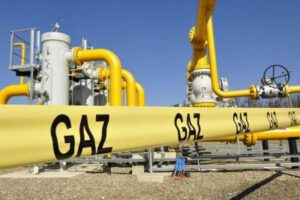
Ukraine, which entered the 2025/26 heating season with gas reserves of 13.2 billion cubic meters, imported an additional 4.6 billion cubic meters to get through it, First Deputy Prime Minister and Minister of Energy Denys Shmyhal said.
“Ukraine has successfully completed the heating season, despite Russia’s numerous attempts to destroy our energy system. This was achieved, in particular, thanks to the accumulation of sufficient resources,” he wrote on Saturday in a Telegram post following the results of a meeting of the Winter Headquarters for the Elimination of the Consequences of the Energy Emergency.
The Minister of Energy noted that the capacity of the Trans-Balkan Corridor had been increased to 4.2 billion cubic meters of gas per year
Shmyhal also reported that in 2025, Ukrainian gas production amounted to 16.97 billion cubic meters, which is 2.4 billion cubic meters more than forecast, with the private sector demonstrating growth of over 14%.
He added that all nine nuclear power plant units were operational with a total installed capacity of 7,835 MW, and thanks to the maximum electricity import capacity being increased to a record level of 2,450 MW, approximately 3.6 billion kWh were imported in December–February.
The country had sufficient coal reserves throughout the winter: 2.4 million tons of coal were stockpiled, which is 0.8 million tons more than planned, the First Deputy Prime Minister also noted.
He did not specify what gas and coal reserves Ukraine had at the end of the heating season.
According to former Energy Minister Olha Buslavets, since mid-March of this year, gas withdrawal from UGS facilities has shifted to a small injection of about 2 million cubic meters per day. Natural gas reserves in Ukraine’s UGS facilities stood at 9.6 billion cubic meters at the end of March, which is 4.0 billion cubic meters higher than last year, Buslavets wrote on Facebook.
The industry publication ExPro estimated gas production in 2024 at 19.12 billion cubic meters.



