

Sandwich panels with weather-resistant steel cladding create a unique architectural aesthetic and ensure maximum energy efficiency for buildings.
In 2021, Finnish company Ruukki introduced Patina sandwich panels with mineral wool filling, with Cor-Ten exterior cladding and polymer-coated steel interior cladding.
Patina sandwich panels have a patented lock shape that prevents internal corrosion at the joints.
Ruukki Patina gives the building’s facade a striking appearance that changes color over time from silver at the time of delivery to a rich brown in a few years. This property of Corten steel creates a “living” facade that attracts attention. The rich rusty brown color with an aging effect blends perfectly with glass, concrete, and greenery.
Cor-Ten steel requires no maintenance and has a long service life. Thanks to its ability to form a new oxide film (patina) on the steel surface, owners can save on building maintenance, as the surface repairs itself without the need for repair or painting. The high quality of steel and mineral wool ensures that Patina sandwich panels will last more than 50 years without the need for special care.
Corten panels meet the highest environmental criteria, allowing building investors to earn more points in LEED and BREEAM certification systems.
The unique properties of Cor-Ten sandwich panels give the building elegance and timelessness, as well as setting it apart from the many other commercial properties in the area.
The client wanted to create a building that would respect the heritage and refer to the colors of the facades of the historic brick buildings in the area.
The result is a modern, functional building that meets high standards for airtightness, fire safety, and durability. Patina sandwich panels ensure a long service life for the building and reduce its carbon footprint.
Thanks to their excellent airtightness, the panels have improved the building’s energy rating and enabled savings of up to 30% on heating and air conditioning costs, which is very important for large sports facilities.
The building is heated using geothermal energy and is constructed from sandwich panels with maximum thermal insulation. The architecturally attractive Cor-Ten façade attracts attention, which is an important advantage for tenants of the property, which is located along the motorway.
Ruukki Patina sandwich panels give the building an elegance that blends naturally into its surroundings.
The facade of the office section, made of Patina sandwich panels, makes the building stand out and blends harmoniously with the surrounding greenery. The rich orange-brown color of the panels contrasts beautifully with the gray tones of the production and storage section of the facility. The building features a unique solution – Cor-Ten radius wall sandwich panels.
https://rautagroup.com/uk/sendvich-paneli-cor-ten-yaskrave-rishennya-dlya-energoefektivnih-budivel/

Ukraine has begun accepting submissions for the Ivan Franko Award in the field of information activities, one of the state awards for authors whose publications, television and radio works, and scientific research shape historical memory and public consciousness. Works can be submitted from March 2 to May 1, 2026, according to the State Committee for Television and Radio Broadcasting.
“The competition is open to new original journalistic works that contribute to the establishment of the historical memory of the people, their national consciousness and identity, and are aimed at state-building and the democratization of Ukrainian society,” the statement said.
These are works that have already been published or made public in their final form within the last three years, but no later than six months before being nominated for the award. The award itself is traditionally presented annually on Ivan Franko’s birthday, August 27. The amount of each award is 10,000 hryvnia.
The award will be presented in four categories: for the best publication in print media, for the best work in television, for the best work in radio broadcasting, and for the best scientific work in the field of information. At the same time, the same candidate cannot be nominated with two or more works at the same time.
To participate, you must submit an application with a brief description of the work and the author, a copy of the work on a physical medium with confirmation of its publication, and a copy of your passport. Documents are accepted by the State Committee for Television and Radio Broadcasting.
Ivan Franko (1856-1916) was a Ukrainian writer, poet, publicist, and scholar, one of the key figures of the national revival of the late 19th and early 20th centuries. He was born in the village of Nahuyevychi in the Lviv region, studied at Lviv University, and was involved in journalism and public and political activities. Franko is the author of poetry collections, prose works, and dramas, as well as numerous literary and scientific works; among the most famous are the poem “Moses,” the novel “Boryslav Laughs,” and the novella “Zakhary Berkut.” Franko’s work combines social themes, national ideas, and a European intellectual context; his texts have been translated into many languages.
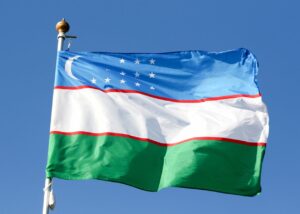
Akmalkhuzha Mavlonov, Chairman of the Customs Committee of the Republic of Uzbekistan, held a meeting with representatives of the pharmaceutical industry to discuss streamlining drug imports, strengthening quality control, and addressing systemic market issues. According to the data presented, in 2025, the total turnover of pharmaceutical products in the country reached $2 billion, which is 18% (about $300 million) more than a year earlier, while exports amounted to $32 million.
According to Mavlonov, pharmaceutical products are imported from 79 countries, primarily India, Russia, China, Turkey, Germany, and Ukraine, with about 85% of imports (approximately $1.7 billion) accounted for by finished medicinal products. He also named the largest importers among Uzbek companies, including Grand Pharm Trade, Meros Pharm, Farm Lyuks Invest, GD Pharm, Eurofarm Business, and Astor Alliance.
The Customs Committee announced that starting in 2026, medicines must be stored only in customs and free warehouses that meet the requirements of good storage practices and have appropriate storage conditions. At the same time, medicines and medical products worth $379 million, imported by 63 enterprises within the structure of the Agency for the Development of the Pharmaceutical Industry, are currently under customs storage and control. Mavlonov emphasized the need for quality and circulation checks: “Checks are objectively necessary. Without inspections, it is impossible to allow such products to be consumed by the population.”
It was also noted that over the past three years, customs authorities have detected 3,914 violations in the field of illegal circulation of medicines and medical products, and in 2025, according to the committee’s estimates, about 40% of imported medicines were imported during a period of high temperatures, which creates risks of violating transportation and storage conditions.
Ukraine has traditionally been a prominent supplier to the Uzbek pharmaceutical market and was among the leaders in terms of supplies: According to data from the State Statistics Committee of Uzbekistan, cited by local media, in 2021 Ukraine was the fourth largest exporter of pharmaceutical products to Uzbekistan (after India, China, and Russia) with a value of $86 million. At the same time, Uzbekistan is one of the key destinations for Ukrainian drug exports — in 2023, it became the largest market for Ukrainian pharmaceutical products ($53 million, or 19.1% of exports in this group).
A separate trend is the localization of production with the participation of Ukrainian companies in Uzbekistan. In particular, Farmak is implementing a project in the Tashkent Pharma Park cluster with the localization of solid dosage forms (tablets and capsules) according to GMP standards, which, according to the project statement, will enable the production of over 500 million tablets per year.
In addition, in 2023, Ukrainian company YURiA-PHARM, with the support of EBRD financing, acquired Uzbek company Reka-Med; the EBRD noted that the deal should enable local production for the Uzbek market and reduce risks for exports in the context of the war.

On February 25-28, the Ilkhom Theater in Tashkent hosted an exhibition of posters by Ukrainian illustrators Yellow&Blue, dedicated to modern Ukraine and its cultural identity.
The exhibition was organized by the European Union Delegation to Uzbekistan in cooperation with the Embassy of Ukraine, while the Ilkhom Theater provided the venue and organizational support, for which the organizers expressed their gratitude.
The exhibition featured over 60 works by Ukrainian authors, created using collage, appliqué, and vector graphics techniques; the project was prepared by the Ukrainian illustration community Pictoric.


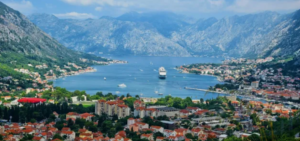
According to Serbian Economist, Iberostar has opened sales for its new Iberostar Selection Montenegro property on the Bar Riviera coast. The promotional offer is tied to the period of stay from May 1 to October 31, 2026, which indicates a launch at the beginning of the summer season.
Iberostar is located on the seafront and has direct access to a private bay/beach; The property is approximately 9 km from the old town of Bar, and the distance to Podgorica and Tivat airports is 45 km and 57 km, respectively. The hotel is located in the coastal area of Ratac, between Bar and Sutomore, and is advertised as “new for 2026.”
The key focus of the project is on leisure and wellness infrastructure. There will be indoor and outdoor swimming pools, a 3,700 sq m spa complex (saunas, hammam, steam room, cold room, massages and treatments), and a gym with sea views. In terms of accommodation, Iberostar is promoting rooms and suites with views of the Adriatic, as well as options with private amenities, such as terraces with jacuzzis and categories with private or swim-up pools.
Dining will include several formats, from the main restaurant to à la carte, cafes, and beach bars. An all-inclusive option and the Star Camp children’s program are also announced.
Iberostar is expanding its presence in the Adriatic through existing hotels in Montenegro, including Iberostar Waves Slavija and Iberostar Waves Bellevue in the Budva area.
https://t.me/relocationrs/2367

Agrotrade agricultural holding has formed the structure of cultivated areas for 2026 and allocated the largest shares to sunflower (28.6%) and corn (24.9%), the agricultural group reported on Facebook.
“The changes in the crop structure are dictated by both economic calculations and the results of the previous season: niche crops — flax and winter peas — have been added, the area under soybeans has been reduced, and sunflower and corn crops have been increased. The priority is high-margin crops, in particular sunflower and winter rapeseed,” the agricultural holding emphasized.
It is noted that the crop structure also includes winter wheat (19.3%), winter rapeseed (13.8%), soybeans (7.3%), and flax (3.3%). Smaller areas are allocated to winter barley (1.6%), winter peas (0.7%), and industrial hemp (0.4%).
In 2026, the agricultural holding plans to increase the average yield by 0.17–0.79 t/ha, depending on the crop, by updating its approaches to plant protection and nutrition. Agrotrade will also continue to transform its production processes: it will switch to direct sowing, Strip-Till technology, and soil biologization, abandoning plowing.
The Agrotrade Group of Companies is a vertically integrated holding company covering the entire agro-industrial cycle (production, processing, storage, and trade in agricultural products). It cultivates over 70,000 hectares of land. Its main crops are sunflower, corn, winter wheat, soybeans, and rapeseed. It has its own network of elevators with a one-time storage capacity of 570,000 tons.
The group also produces hybrid seeds of corn, sunflower, barley, and winter wheat. In 2014, a seed plant with a capacity of 20,000 tons of seeds per year was built on the basis of the Kolos seed farm (Kharkiv region).
The founder of Agrotrade is Vsevolod Kozhemyako.



