

In 2025, Nestlé fully implemented its investment plan in Ukraine in the amount of UAH 9.5 billion and intends to increase capital investments in its new production site in Smoligov (Volyn region) to EUR70 million by the end of 2027, said Alessandro Zanelli, CEO of Nestlé in Ukraine and Southeast Europe, in a column for NV.
“At the beginning of the year, I announced that we planned to invest about UAH 9.5 billion in Ukraine, and we have fulfilled this forecast. In 2025, we achieved approximately double growth,” he wrote.
Zanelli named the launch of a new factory in Smoligov in April 2025 as a key industrial project of previous years. The initial investment in the facility amounted to EUR 43 million, but the company plans to expand its capacity. By the end of 2027, the total investment in this site is expected to reach EUR 70 million. The factory’s design capacity will allow it to produce 40,000 tons of vermicelli per year, which will be exported to Europe, the US, and Mexico.
Zanelli specified that production in Smoligov is highly automated, which allows for twice as few staff, but requires more highly skilled workers. To this end, the company has opened its own production academy.
In addition to industrial and commercial investments, Nestlé has allocated nearly $18 million to the Ukraine, WeCare program, which focuses on the safety, physical, and mental health of employees (excluding the cost of setting up shelters). The company also invests around EUR10 million annually in modernizing and improving the quality of its existing production facilities.
The CEO of Nestlé in Ukraine also announced that he will be moving to the position of head of the company’s Eastern European division in 2026 and leaving the Ukrainian office.
Nestlé began operations in Ukraine in 1994 with the opening of a representative office. In 1998, it acquired a controlling stake in ZAO Lviv Confectionery Factory Svitloch, and since 2018, it has owned 100% of the company’s shares. In May 2003, Nestlé Ukraine LLC was founded in Kyiv, and at the end of the same year, Nestlé became the owner of 100% of the shares of Volynholding.
In 2010, Nestlé SA acquired Technocom LLC in Kharkiv, a manufacturer of instant products under the Mivina trademark. In 2012, Nestlé Business Service (NBS Europe) was established in Lviv, which is one of seven Nestlé service centers in the world and provides support services to Nestlé divisions in more than 40 countries around the world.
Nestlé’s business in Ukraine is represented by the following areas: coffee and beverages, confectionery, culinary products (cold sauces, seasonings, soups, instant foods), baby and special nutrition, ready-made breakfasts, and pet food.
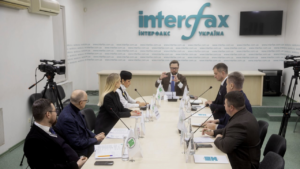
The Interfax-Ukraine press center hosted the first working meeting of the organizing committee of the nationwide competition, which aims to select talented young people to prepare a draft security agreement for Ukraine. This was announced by Oleksiy Shevchuk, spokesperson for the National Association of Advocates of Ukraine (NAAU), who also heads the Center for Economic Research at the Vadym Hetman Kyiv National Economic University (KNEU).
According to the lawyer, the competition was initiated by the UNAA and KNEU, and a preliminary presentation of the initiative was held several months ago.

“If a decision is made to present the results to NATO, we consider this appropriate, as this format will ensure adequate publicity for the work. The possibility of presenting the results to the Office of the President of Ukraine is also being considered; I have had working communication on this issue with Ms. Iryna Mudra, who is awaiting the results of the competition. I do not rule out that she may join the final meeting of the competition commission. The relevant institutions have been informed, and expectations regarding the competition have been confirmed,” Shevchuk emphasized.
He stressed that the competition is intended to be annual, as the topics of security and international order are changing, and the main task of the current season is to identify talented young people in Ukraine who are capable of formulating the legal conditions of a future security agreement for the state.
“We have come to the conclusion that today even experienced diplomats cannot determine the list of conditions that should be spelled out for our country,” Shevchuk added.
The commission’s work was joined by, in particular, Ukrainian MP and former head of the Security Service of Ukraine Valentin Nalyvaichenko, head of the Diplomatic Academy Ihor Ostash, and international relations scholar Volodymyr Nakonechny.
The meeting participants agreed on the leadership of the competition commission: Lyudmila Kozhura, director of the KNEU Law Institute, was elected chair, with Ihor Ostash and Valentin Nalyvaichenko as deputies. The role of commission secretary was discussed separately, with Eva Hoffman and Volodymyr Nakonechny among the candidates proposed.
During the discussion, human rights activist and founder of the Project Sunflowers Foundation Eva Gofmanska noted that she would prefer to remain a member of the committee, supporting the initiative “in a spirit of respect and solidarity,” and to give the key role in substantive work to Ukrainian experts who know the language and legal system from the inside.
“Thank you for inviting me to join the competition committee. I greatly appreciate the trust and openness that this invitation demonstrates. At the same time, I consider it necessary to clearly define the nature of my participation: I do not speak Ukrainian and I realize that this limits my ability to fully work with the legal, cultural, and social context on which the competition is focused. That is why my participation in the committee is mainly representative and symbolic in nature, aimed at supporting the initiative. In my opinion, the key substantive role should belong to Ukrainian experts,” said Hofmanska.
The chair of the commission, Lyudmila Kozhura, reported that as of the day of the meeting, 26 contestants from nine law schools in Ukraine had registered for the competition. The largest number of participants—eight each—represent Taras Shevchenko National University of Kyiv and Yaroslav Mudryi National Law University, and three more are registered from KNEU. In terms of level of education, third-year students predominate.

“I think it is important to note that the involvement of young lawyers in discussing issues of state security is evidence of their responsibility and professional readiness to work on the future of Ukraine. I congratulate the participants, colleagues, and partners and thank them for their presence and support of this initiative. Participation in the competition is already a sign of professional maturity, a responsible attitude, and confidence in the effectiveness of legal mechanisms. I am counting on meaningful, practical, and well-prepared proposals,” Kozhura said.
According to the rules, entries will be accepted until March 1, after which they will be published and checked for academic integrity, including plagiarism. It is expected that after evaluation by the commission, the winners will be determined by mid-March. The meeting also discussed the selection of entries, taking into account the risks of using artificial intelligence and borrowing. The organizers announced that the competition will award three prizes and a separate special cash prize from the organizer.

A separate part of the discussion concerned the future presentation of the best works. Shevchuk said that among the possible venues being considered are the NATO representative office, the Office of the President, and communication with the education sector. In addition, the possibility of supporting participants in further international programs was mentioned.
People’s Deputy and public figure Valentin Nalyvaichenko, for his part, expressed his readiness to facilitate public presentations of the works and support the winners.

I confirm my readiness to provide organizational and communication support for the initiative, both in terms of content and format of its further presentation. I consider it appropriate to provide the winners and participants with the opportunity to publicly present their work, in particular in parliament, in relevant committees, and at the Hennadiy Udovenko Diplomatic Academy of Ukraine under the Ministry of Foreign Affairs. We can organize an appropriate platform for the presentation of works and professional self-presentation of authors. I also confirm my readiness to provide recommendations and facilitate further support for the winners in their interaction with European and NATO partners,” he stressed, adding that he is ready to provide recommendations to European and NATO partners.
Igor Ostash, Head of the Hennadiy Udovenko Diplomatic Academy of Ukraine under the Ministry of Foreign Affairs, in turn, stressed the importance of choosing a very prestigious platform for publishing the results and further presentation.
In addition, the discussion also included proposals to prepare a special issue of a specialized publication with the winners’ works in several languages and to organize a series of presentations at Ukrainian universities and international venues.

Chinese New Year (Spring Festival) in 2026 will fall on February 17. The holiday marks the beginning of the Year of the Horse according to the Chinese zodiac.
According to estimates, the holiday period is traditionally accompanied by the world’s largest seasonal migration: billions of trips are expected in China as part of “chunyun” — peak travel before and after the New Year according to the lunar calendar.
The symbolism of the holiday is largely associated with the theme of good luck and protection. Red is the predominant color in the decorations – it is used in ornaments and lanterns, as well as in paired New Year’s inscriptions on doors. Gifts are often presented in red envelopes (hongbao) with money. The program of celebrations includes a family dinner on New Year’s Eve, visits to relatives, and street performances, including lion and dragon dances.
According to the calendar tradition, the celebration lasts until the 15th day and ends with the Lantern Festival, which falls on March 3 in 2026.

The State Agency for Control over Gambling and Lotteries of Ukraine (PlayCity) has decided to fine FC Dynamo (Kyiv) for violating the requirements of the legislation on advertising in the field of organization and conduct of gambling for the amount of UAH 5.2m. According to the regulator’s document dated January 26, the violation was recorded on January 16.
At the same time, the soccer club has the right to appeal the decision in court within three months, the document says.
In December, it was reported that PlayCity has decided to block more than 2,500 illegal online casino sites in the six months since the start of operations, and the amount of fines imposed on bloggers and media for illegal promotion of gambling exceeded UAH 52 million.
In addition, more than 280 pages in social networks were deleted for posting illegal gambling advertisements.
In late December, in an interview with Interfax-Ukraine, PlayCity head Gennadiy Novikov noted that in the future it is planned to differentiate fines for violations in the field of gambling advertising by the degree of public risk, in particular, the fine for advertising illegal business will be higher.
The state agency fined 4.8 million UAH for illegal gambling advertising by the Telegram channel Truha Ukraine, Ukrainian sports media Tribuna.com (registered as Sport Segodnya LLC) and online media dev.ua (Dev Ukraine LLC). The media, in their turn, announced their intention to appeal this decision. There are no court rulings on these cases yet.
Since February 2025, the state policy in the field of gambling is formed and coordinated by the Ministry of Finance. On March 21, 2025, the Cabinet of Ministers decided to create a new central executive body – PlayCity agency (PlayCity), which is officially subordinate to the Mincifra and replaced the previous regulator – the Commission for the Regulation of Gambling and Lotteries (CRAIL) from April 1.

State Enterprise “Forests of Ukraine” has proposed increasing its investment plan for 2026 to UAH 4.1 billion, of which more than UAH 2.1 billion is planned to be spent on Ukrainian-made goods and services. The updated investment program will be focused on supporting the state policy “Made in Ukraine,” according to a Facebook post by the state-owned enterprise’s CEO, Yuriy Bolokhovets.
He noted that UAH 380 million has been allocated for the purchase of firefighting equipment in the investment program of the State Forestry Agency of Ukraine. He emphasized that 95% of these funds can be received by Ukrainian enterprises that manufacture fire trucks, modules, video surveillance masts, special clothing, and equipment.
UAH 80 million has been allocated for forest restoration equipment (disc harrows, mulchers, seeders). The company is ready to allocate another UAH 100 million for the purchase of Ukrainian-made trailers, semi-trailers, and trawls.
At the same time, the CEO of Lisiv Ukrainy noted that modern logging equipment (harvesters, forwarders) is not yet produced in Ukraine, so they plan to purchase it directly from European manufacturers.
Among other investment areas, Bolokhovets mentioned the construction of forest roads, for which UAH 621 million has been allocated. The work will be carried out by the company itself or by Ukrainian contractors using local materials. In addition, the development of forest seed centers will continue, for which the state-owned enterprise has allocated UAH 270 million, 90% of which will be spent on Ukrainian goods and services.
Bolochovets added that next month, the procurement department of the state-owned enterprise “Forests of Ukraine” plans to hold a “Supplier Day.” Businesses will be presented with investment programs and procurement plans for 2026-2027 to obtain feedback on technical specifications and the level of competition.
The CEO of “Forests of Ukraine” recalled that in 2025, 72,000 enterprises took advantage of the “Made in Ukraine” state support programs.

The Franco-Ukrainian Chamber of Commerce and Industry (CCIFU) has formed a new board of directors following the results of the general assembly and voting, the chamber announced.
The chamber noted that in the current difficult period, the energy, expertise, and goodwill of its members are particularly important for supporting its activities.
The new CCIFU board of directors includes: Ruslan Akimov (Stellantis), Bertrand Barrière (Jeantet), Mikhail Bubnov (Schneider Electric), Tatyana Chevroley (Global Distribution Ukraine), Grégoire Datte (Forvis Mazars), Laurent Dupuis (Ukrsibbank BNP Paribas Group), Marta Trush (Auchan Ukraine), and Anna Zaptalova (Yves Rocher Ukraine).
The Franco-Ukrainian Chamber of Commerce and Industry was founded in 1994 as the Association of French Business in Ukraine, and in 2011 it joined the international network of French chambers of commerce and industry.
Today, the chamber brings together more than 120 French and Ukrainian companies and positions its mission as revitalizing the French business community and supporting companies that plan to export, develop, or locate in Ukraine.
Key areas of focus include business services and project support for members, partnership development, and reconstruction initiatives. The director of CCIFU is Maud Joseph.



