

The Cabinet of Ministers has set new deadlines for foreigners with expired residence permits to apply for exchange of the document.
According to the decree № 141 from February 5, it is established that foreigners and stateless persons, except for citizens of the Russian Federation, who have a residence permit, the term of application for the exchange of which came after February 24, 2022, should within 90 days from the date of entry into force of this decree to apply for the exchange of such a residence permit.
It is determined that this Decree shall enter into force three months after its publication.
In addition, the State Migration Service is instructed within three months from the date of entry into force of this decree to provide information and awareness-raising work aimed at informing foreigners and stateless persons about the procedure and terms of exchange of temporary residence certificates, the deadline for applying for the exchange of which came after February 24, 2022.

The US virtual embassy in Iran has urged US citizens to “leave Iran now” if possible and to have a plan to leave independently, without expecting assistance from the US government.
The published warning notes that heightened security measures continue in the country, with road closures, public transport disruptions, and internet blockages. It also points to communication restrictions, including access to mobile and landline networks, and that airlines continue to restrict or cancel flights to and from Iran.
US citizens are advised, if safe to do so, to consider leaving by land, including via Armenia or Turkey, and to make alternative communication arrangements in advance in light of possible internet shutdowns.
The US State Department maintains a Level 4 – Do Not Travel advisory for Iran and separately emphasizes that there is no US embassy in the country and consular assistance is limited; Switzerland acts as the protecting power.
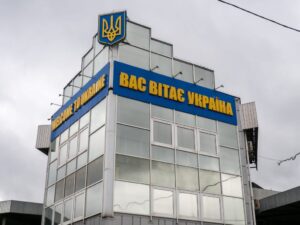
The European Union may provide Ukraine with a grant to modernize the Shepit-Izvoarele Sucevei border crossing point on the border with Romania as part of the Interreg VI-A NEXT Romania-Ukraine 2021-2027 program, according to the press service of the Recovery Agency. According to the report, the program’s governing body has approved the selection of the BOND – Border Operations and National Development project. The project has been recommended for funding and may receive a grant of up to €690,900, which is 90% of the total project budget.
The Recovery Agency noted that BOND is the next stage of comprehensive work on opening the Shepit-Izvoarele Sucevei border crossing point, provided for by an intergovernmental agreement between Ukraine and Romania. Earlier, as part of the Romania-Ukraine 2014-2020 program, mirror infrastructure projects were implemented on both sides of the border – bridges and access roads were built, and flood protection measures were carried out on a 2 km section on the Ukrainian side and a 3 km section on the Romanian side.
As specified, the BOND project provides for the technical equipment of the checkpoint on both sides of the border, in particular the purchase and installation of specialized equipment for the safe and efficient operation of the checkpoint, as well as the development of a joint cross-border strategy for the development of border areas.
The Interreg NEXT “Romania-Ukraine” program for the period 2021-2027 is aimed at supporting cross-border cooperation and covers the border counties of Romania and the Zakarpattia, Ivano-Frankivsk, Chernivtsi, and Odesa regions of Ukraine.
BORDER, CHECKPOINT, EUROPEAN UNION, GRANT, MODERNIZATION, ROMANIA
Entrepreneurs can obtain a preferential loan at 0% per annum through Oschadbank under the state program “Affordable Loans 5-7-9%” for the purchase and connection of energy equipment. The program is aimed at supporting small and medium-sized businesses for which a stable power supply is critical.
Energy loans are provided for the purchase and connection of:
The instrument was introduced as an additional mechanism to increase the energy resilience of businesses and reduce the risks of downtime and loss of income during periods of peak loads on the power system.
Program terms:
Financing is available to sole proprietors and legal entities (micro, small, and medium-sized businesses) that meet the program criteria. For sole proprietors with an income of up to UAH 50 million, no collateral is required (only a guarantor).
“Energy efficiency today is a matter of business survival. As a strategic partner of the state, Oschadbank gives priority to supporting entrepreneurs by providing quick and convenient access to financing to preserve companies and jobs,” said Natalia Butkova-Vitvitskaya, member of the Oschadbank Board.
Since the launch of the “Affordable Loans 5-7-9%” program, Oschadbank has concluded more than 20,000 loan agreements worth over UAH 55 billion, supporting the operational stability of Ukrainian businesses in the context of the war.
Detailed advice on opening an account and participating in the program is available at any Oschadbank branch or by calling the contact center at 0 800 219 800.
Additional information about the program is available at energycredit.bdf.gov.ua.
Electricity imports to Ukraine in January 2026 increased by 40% compared to December 2025 and amounted to 894.5 thousand MWh, according to the DIXI Group analytical center, citing data from Energy Map.
“This is the highest monthly figure since the launch of the new electricity market in July 2019,” the center said.
There were no electricity exports in January.
For comparison: in January 2025, electricity imports amounted to 183.1 thousand MWh, while exports amounted to 84.7 thousand MWh, according to statistics from DIXI Group.
In January, Hungary accounted for the largest share of imports – 45%, or 402.0 thousand MWh. Romania accounted for 21% of the resources provided to Ukraine (185.9 thousand MWh), Slovakia – 18% (159.8 thousand MWh), Poland – 15% (135.2 thousand MWh), and Moldova – 1% (11.6 thousand MWh).
The growth in imports from European countries ranged from 18% to 62%, with the exception of Moldova, from which supplies decreased by 18%.
According to DIXI Group analysts, in January 2026, the maximum capacity of inter-state crossings for electricity imports from the European Union to the joint Ukraine-Moldova regulation block increased to 2.45 thousand MW, which is a record since Ukraine joined the ENTSO-E network. At the same time, part of this capacity is used to import electricity to Moldova, so Ukraine has access to about 2.1 thousand MW of commercial imports. At the same time, the amount of permitted import capacity for each of the countries in the block is dynamic and may change depending on the operational situation in the countries’ power systems.
On average, during January, the use of available transmission capacity was 57.3% of the accepted nominal value (2.1 GW). The maximum level of utilization was recorded on January 24 between 16:00 and 17:00, at 104%, while the minimum was recorded on January 9 during the same time interval (19.9%).
“Thus, Ukraine ended January 2026 as a net importer of electricity, which was the fourth consecutive month that the country remained in this status and reflects the critical role of imports in maintaining the stability of the power system in the face of massive attacks and high seasonal consumption,” DIXI Group emphasized.
Analysts at the center recalled that during January, Ukraine’s energy system operated under increased load, and on January 16, a state of emergency was declared in the country’s energy sector. In January, Russia used more than 6,000 strike drones, about 5,500 guided aerial bombs, and 158 missiles of various types against Ukraine’s energy system and critical infrastructure. In total, Russia carried out six massive strikes during the month, damaging power generation facilities as well as electricity transmission and distribution networks. The attacks took place against the backdrop of significantly worsening weather conditions and lower air temperatures, which further increased the load on the system.
One of the factors contributing to the increase in electricity imports was the rise in price caps in the short-term market segments.
As reported, the National Commission for State Regulation of Energy and Public Utilities (NKREKP) at an extraordinary meeting on January 16, set the maximum price limit for electricity on the day-ahead market (DAM) and intraday market (IDM) at UAH 15,000/MWh for the entire day for the period from January 18 to March 31, 2026.
The NEURC made this decision after statements by First Deputy Prime Minister and Minister of Energy of Ukraine Denys Shmyhal regarding the government’s expectations from the regulator to review the maximum prices for electricity on the spot market and to equalize the day and night price caps in order to attract electricity imports throughout the day.
After the adoption of this decision, the BASE electricity price index for the Ukrainian DAM reached a record high of 13,232.96 UAH/MWh at the auction on January 22, which is 1.8 times higher than the average value of this indicator for the 20 days of January – 7,307.04 UAH/MWh.
According to ENTSOE data, in January 2026, Ukraine ranked first in terms of the average daily BASE price index on the DAM 14 times (January 2-4, 10-11, 16-17, 19, 21, 23-25, 27-28), compared to 26 European countries.
At the end of 2025, Ukraine ranked second among 27 European countries in terms of the BASE index on the DAM, which amounted to 5,292.62 UAH/MWh, calculated according to Central European Time (CET).

The leader of the Servant of the People party, First Deputy Speaker of the Verkhovna Rada Oleksandr Kornienko, estimates the cost of holding elections in Ukraine at UAH 6 billion.
“There are no complicated calculations here, since 90% of these costs are the salaries of commission members. Since the last elections, the 2019 parliamentary elections, the minimum wage and average salary have increased by several thousand hryvnia, and some indicators have doubled. Therefore, if elections previously cost UAH 2.5-3 billion, then simply multiplying that figure by two, the current cost would be UAH 6 billion,” Kornienko said in an interview with the Azerbaijani news agency Report.
He also noted a number of issues related to compensation for commission members abroad. “How can this be implemented? If, for example, we follow our regulations, some of these people will be there, and some may be on business trips. These are all additional expenses. So, these issues remain unresolved,” said the first deputy speaker.
According to Kornienko, partner countries “understand that they will finance these elections.”
“We are negotiating with them,” he said.
At the same time, the party leader said that he would not like to discuss the issue of election participants, since “there are more pressing problems in the country right now, such as the energy crisis.”
“Unfortunately, the aggressor country has deprived us of both democracy and the opportunity to hold elections on time… Let’s see how events unfold, including political ones. Now we need to do everything we can to at least be able to hold these elections,” Kornienko concluded.



