

Holding a new competition to select an asset manager for IDS Ukraine, the producer of the “Morshynska” and “Mirgorodska” mineral waters, before the High Anti-Corruption Court issues a ruling may have limited prospects, said Pavlo Velykorechanyn, an expert with the Verkhovna Rada’s Anti-Corruption Committee and former deputy head of ARMA, in an exclusive interview with the “Interfax-Ukraine” news agency.
ARMA previously announced another tender to select an asset manager for IDS Ukraine and expects to hold it in September.
However, according to Velykorechanyn, there are legal obstacles that could significantly dampen the interest of potential participants.
In particular, certain court rulings lack a clear prohibition on current operators from using the companies’ assets. This could complicate the actual transfer of control to the new manager.
In addition, according to the company’s own data, the share of individuals subject to sanctions in IDS Ukraine is 49.7%, i.e., less than 100%. Under the new legislation, in such a situation, management requires either the consent of the other co-owners or a decision to forfeit the relevant share to the state budget.
The High Anti-Corruption Court (HACC) is currently considering a case regarding the forfeiture of the asset to the state; a decision is expected in the fall.
“Until the HACC issues a decision to forfeit this stake to the state and it is transferred to the State Property Fund, the prospects for ARMA conducting any tenders regarding IDS are highly uncertain,” Velikorechanyn noted.
Previously, several attempts were made to transfer IDS Ukraine’s assets into management. In particular, an agreement was signed with the company “Karpatska Dzherelna,” but the procedure for approving the concentration with the Antimonopoly Committee lasted about a year and a half and was not completed, after which the agreement was terminated.

Poland needs new specialized terminals for transshipping Ukrainian grain, as existing storage capacity for large shipments is virtually exhausted, said Bartosz Penchkovsky, owner and CEO of the Polish logistics company Frontier Logistics.
“Right now, if we look across all of Poland, it effectively has no capacity to store large volumes of cargo—30,000 metric tons or more. All of this capacity is effectively occupied,” he said during the online discussion “Alternative Export Routes: Synergy Between Ukrainian and Polish Logistics Amid the Black Sea Blockade.”
According to him, in 2022–2023, Polish investors expanded the capacity of port and border terminals for transshipping Ukrainian cargo, which, in theory, could have facilitated the export of 6–8 million metric tons of goods per year. However, after the ports of Greater Odesa resumed operations in 2024–2025, a portion of Ukrainian cargo returned to the Black Sea ports, while Polish terminals shifted their focus to other types of cargo. In particular, Poland began receiving approximately 3–3.5 million metric tons of soybean meal from Latin America and other goods.
According to him, another “bottleneck” is access to specialized railcars for transporting grain.
Penchkovsky also noted that some border crossings have spare capacity, while others are overloaded.
He added that Poland’s logistics infrastructure has significant potential to increase the transshipment of Ukrainian agricultural products, provided there are investments in specialized terminals and more efficient use of existing border crossings.

Viktor Mykyta, Deputy Head of the Office of the President of Ukraine and Chair of the Chamber of Regions of the Congress of Local and Regional Authorities, reported on a meeting with heads of regional administrations, during which they discussed the regions’ preparations for the start of the new school year, providing children with hot meals, setting up shelters, ensuring energy independence for educational institutions, and other issues.
“As of now, more than 9,370 educational institutions are ready to provide children with hot lunches. This covers nearly 99% of all students at this level. The state has provided communities with the financial resources needed to achieve this target,” Mykyta wrote on Telegram on Friday following the meeting.
He also reported on work to implement the president’s “Schoolchild’s Package” initiative, which provides funding to families of first-graders to purchase necessary school supplies before the start of the new school year, though he did not specify what stage the initiative is currently in.
The deputy head of the Presidential Office discussed efforts to create energy-independent schools, which involve equipping the largest educational institutions with autonomous power, generation, and heating systems. “Schools will become true havens of resilience, where, in the event of power outages, children will be able to stay warm and have access to electricity for an extended period of time. Last winter, which was particularly harsh, such solutions proved their effectiveness in communities and regions. This is our proven path, and we are moving forward along it,” Mykyta said.
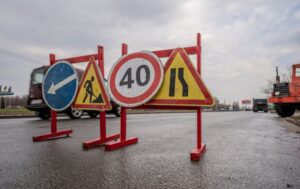
Due to security measures involving foreign delegations in the capital, temporary traffic restrictions will be implemented from August 22–25, according to the State Security Service of Ukraine.
It is noted that the restrictions will be in effect in the central part of the capital, as well as in certain areas of the Pechersky, Podilsky, Solomensky, and Shevchenkivsky districts.
“Please take this information into account when traveling,” reads a post by the State Security Service of Ukraine on Facebook.
KYIV, SECURITY, State Security Service, TRAFFIC, TRANSPORTATION
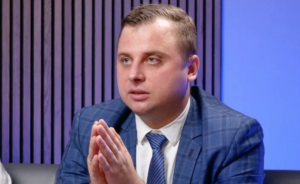
The proportion of unjustified hospitalizations in Ukraine is estimated at approximately 38%, and in general therapy wards, up to 65% of bed-days may be excessive, said Yevhen Gonchar, Ukraine’s Deputy Minister of Health, in an exclusive interview with Interfax-Ukraine.
The Ministry of Health observes the highest number of such cases in therapeutic specialties, particularly in neurology, cardiology, and endocrinology.
According to Gonchar, reducing unjustified hospitalizations should not lead to a reduction in the number of doctors. Some specialists who are currently employed primarily in hospitals will be able to devote more time to outpatient care.
This should increase access to subspecialists for patients who currently sometimes have difficulty seeing a doctor because the doctor is busy in an inpatient ward.
Another area of transformation could be the further development of same-day surgery. Over the past three years, the number of such surgeries in Ukraine has already more than tripled.
Source: An exclusive interview with Yevhen Gonchar, Ukraine’s Deputy Minister of Health, given to the Interfax-Ukraine news agency.

Children with mental disorders who require inpatient care in Ukraine should be treated in regional or city children’s hospitals, rather than in general psychiatric facilities, said Yevhen Gonchar, Ukraine’s Deputy Minister of Health, in an exclusive interview with the Interfax-Ukraine news agency.
According to him, the legislation was amended after cases were uncovered in which children from residential care facilities were referred to psychiatric hospitals—in particular, under the guise of treatment or rehabilitation, or in fact to influence their behavior.
Such cases were documented in reports by the Verkhovna Rada Commissioner for Human Rights and law enforcement agencies.
Gonchar emphasized that a psychiatric hospital should not be used as a tool for correcting a child’s behavior.
Adult patients with dementia who have been in psychiatric facilities for a long time, primarily for social rather than medical reasons, remain a separate issue.
Stable patients with dementia who do not require treatment for acute episodes, according to the deputy minister, should receive social care—specifically in supported living facilities or other specialized institutions—rather than permanently occupying beds in psychiatric hospitals.



