

The shareholders of Slavgorod Reinforcing Plant PJSC (SAZ, Dnipropetrovs’k region) intend to conduct an additional share issue and increase the authorized capital (AC) by UAH 1,375,238.5 million.
The issue of the additional issue is on the agenda of the extraordinary shareholders’ meeting scheduled for November 24 this year.
“To increase the authorized capital of SAZ PJSC by placing additional shares in the amount of 5 million 500 thousand 954 pieces of existing nominal value at the expense of additional contributions in the amount of UAH 1 million 375 thousand 238.5,” the agenda states.
It is also assumed that the participants in the placement of shares (without a public offer) are exclusively the company’s shareholders: PJSC Promarmatura and PJSC Interindustry Component Base “Generalmashkontrakt”.
Slavgorod Valve Plant was founded in 1926 as a cast-iron valve manufacturing company. After reconstruction in 1965, it has specialized in the production of forged steel shut-off and control valves with manual and electric actuators, thermodynamic condensate traps, ball valves and cast iron stopcocks. In 2012-2014, the plant mastered mass production of shut-off and control valves for thermal power plants. In addition to pipeline valves, the plant also mass-produces products for the mining and machine-building industries.
According to the second quarter of 2023, Promarmatura owns 53.5661% of SAZ, and Intersectoral Assembly Base Generalmashkontrakt owns 22.0307%.
The authorized capital of SAZ PrJSC is UAH 45 thousand, the nominal value of a share is UAH 0.25.

Prime Minister of Ukraine Denys Shmyhal says that German construction materials company Fixit has received investment insurance from the German government to build a second plant in Ukraine.
“We want German business to invest in Ukraine, to invest in recovery, and within the framework of the forum we are signing important documents… The building materials company Fixit will build a second plant in Ukraine and will receive investment insurance from the German government for this purpose, which will be signed here on the sidelines of the business conference,” Shmyhal said at a press conference at the sixth German-Ukrainian Economic Forum in Berlin on Tuesday.
According to the prime minister, Fixit will also receive a EUR12 million loan from the German bank KfW. “This is a very important and significant project,” he emphasized.
BUILD, CONSTRUCTION MATERIAL, Fixit, GERMANY, INSURANCE, PLANT
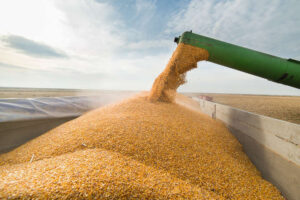
In July-September this year, the cargo turnover of the port of Kolobrzeg increased by 52% due to the resumption of transshipment of Ukrainian agricultural products, the Polish edition of Rynek Infrastruktury reports.
According to the report, Kolobrzeg was not previously included in the Polish government’s resolution on the transit of Ukrainian grain. In the third quarter, the port resumed accepting Ukrainian agricultural products, which helped increase cargo turnover.
In the third quarter, the Polish port handled more than 73 thousand tons of cargo, which is 52% more than in the same period of 2022, when 48 thousand tons were handled. The cargo included grain, logs, limestone, pellets and fertilizers. Grain accounts for half of the transshipment. Among the grains transshipped in Kolobrzeg, corn and barley were the most common.
The port temporarily suspended operations in April this year. Back then, the Polish authorities banned imports of Ukrainian grain but allowed its transit. At first, Kolobrzeg was not on the list of ports that could handle Ukrainian grain, but later the Polish government allowed the company to handle Ukrainian cargo.
“We have demonstrated that we are unpredictable in our actions as a country, so building long-term business relations is perceived as risky, as one decree can turn everything upside down”, said Artur Lievski, head of the port’s administration.
A week after the ban was imposed by the Polish government, the mistake was corrected: Kolobrzeg was included in the list of seaports through which grain can be transited from Ukraine. However, it took a long time to restore trust, and for some time no freight trains with Ukrainian products arrived in Kolobrzeg. After a three-month break, the first train with corn from Ukraine arrived at the seaport of Kolobrzeg in late July, the newspaper said.

The Kvitna Charitable Foundation has conducted free breast cancer screenings for more than 2,000 women over the five months of its Mobile Medical Platform.
According to the foundation’s press release, the mobile medical platform project began operating in May 2023. As part of the project, visitors can receive a free medical examination and consultation.
“The idea of creating a mobile medical platform has been around since the beginning of the full-scale war. This initiative is relevant for providing medical care to people in the destroyed regions, in settlements with many internally displaced persons, as well as in those cities and towns where there is simply no access to medical examination,” the foundation reports.
In addition, the foundation has purchased equipment and reagents worth more than UAH 1.5 million for the National Cancer Institute (NCR), and has implemented more than 40 awareness-raising campaigns.
The mobile medical platform is a converted room on wheels specially designed for medical purposes. Its autonomy is ensured by its own power generator to provide comfortable conditions for visitors. The platform is connected to the Starlink network to ensure constant communication.
Inside there are two rooms, a bathroom and a refrigerator for storing medicines. The platform is equipped with an ultrasound diagnostic apparatus with a set of sensors for various examinations, including ultrasound of the thyroid gland, breast, abdominal organs, pelvic organs, etc.

The competition between Ukrainian and Russian sunflower oil on the global market in 2023/24 MY will be very high, especially on the markets of India, China, Asia and Africa, said Viktoriia Blazhko, the Head of the Black Sea Agricultural Markets Department of APK-Inform, at the XXI International Conference Fat&Oil Industry-2023.
According to her, Ukraine remains the world’s largest exporter of sunflower oil, despite the disruption of the supply chain. However, Ukraine’s share in the global exports is decreasing due to the increase in sunflower oil exports from Russia.
“Russia’s pressure is increasing… Russian products exert pressure by improving quality, price and increasing sunflower production,” the expert explained.
She emphasized that the main “battlefield” in this confrontation is India and China, other countries of Asia and Africa.
“Russia is becoming the main supplier of sunflower oil to China… The Chinese are interested in Ukrainian oil, but they will buy it only from Ukrainian ports, shipped from ports. As for India, Ukrainian products retain their market share, but the pressure from Russia is increasing,” emphasized Ms. Blazhko.
She also drew attention to the important news for the market about the ban on imports of vegetable oils by Iran starting from October 23. Iran is a major buyer of Russian sunflower oil. All the products shipped to this country will end up on the global market and put additional pressure on the export of products from Ukraine.

Poland’s Pronar, a major manufacturer of agricultural and municipal equipment, is patenting a special machine for demining fields and construction sites, planning to start mass production for Ukraine’s needs in 2024, said Radoslaw Biletsky, Pronar’s director of trade and marketing.
“A team of 150 engineers is working very closely with partners in Ukraine to overcome the existing challenges – mined agricultural fields… so that agricultural machinery has special integrated systems that could solve these problems,” he said at the forum “Ukraine-Poland. Machinery and Equipment Sector” forum under the patronage of the Polish Investment and Trade Agency and the Polish Union of Employers in the Construction Sector in Siemiatycze, Poland.
Biletsky declined to give more precise specifications of the machine until the patenting procedure is completed, noting that the vehicle will be automated, can be controlled remotely, and can be used in fields, construction sites, and other open areas.
According to the Sales and Marketing Director, this is another product line that Pronar has designed specifically for use in Ukraine.
“The newest line is shredding machines. They allow us to bring to zero those places where the business will continue to develop in order to prepare locations for new construction,” said Biletsky.
He added that Pronar also exports snowplows, spreaders and sweepers to Ukraine, which help to ensure transportation.
Earlier, the Ministry of Economy of Ukraine indicated that there are 30 demining machines in the country, of which 25 are in constant operation.
Pronar is a Polish manufacturing company that has been operating since 1988. According to its website, it has nine production sites, its own research and development center, airport and exhibition center. According to the company, it holds a significant position in Europe in the production of agricultural, municipal and processing machinery, crushers and disc wheels for low-speed machines and components, supplying products to more than 80 countries in total. Pronar employs over 3000 people.



