

The volume of transactions with payment cards of Ukrainian banks in Ukraine and abroad in the second quarter of 2023 amounted to UAH 1.335 trillion, which is 27.7% less than in the first quarter of this year, when a 9% decline was also recorded compared to the previous quarter.
According to the National Bank’s statistics released on Monday, while in the first quarter a larger decline was recorded in cash withdrawals – 14%, while non-cash transactions decreased by only 6.7%, in the second quarter the situation changed: cash withdrawals decreased by 11%, while non-cash transactions decreased by 35.2%.
As a result, the volume of cash withdrawals amounted to UAH 505.4 billion, while non-cash transactions amounted to UAH 829.5 billion, which broke the upward trend in the share of non-cash transactions by volume that had been going on for several years: it fell to 62.1% from 69.4% in the first quarter of this year, dropping immediately below the level of 2021.
The number of transactions with payment cards in the second quarter of this year fell by 13% to 1.843 billion compared to the first quarter. At the same time, the number of cash withdrawals increased by 4% to 132.3 million, while non-cash transactions fell by 14.1% to 1.711 billion.
The National Bank specified that within Ukraine in the second quarter, the volume of cash receipts decreased to UAH 487.8 billion from UAH 501.8 billion in the first quarter, while the volume of non-cash transactions increased to UAH 329.4 billion from UAH 285.7 billion.
In April-June, the number of cash withdrawals in Ukraine increased to 129.7 million from 119.4 million in the first quarter, while non-cash transactions increased from 943.8 million to 1 billion 166.1 million.
According to the NBU, most card transactions by amount and number were made in the retail network (46.4% and 72.6%, respectively). There were 1,242.5 million transactions worth UAH 385.2 billion.
In the second quarter of 2023, card-to-card transfers accounted for a third of the total (32.1%) and almost a tenth by number (8.5%), while payments for goods and services on the Internet accounted for 14.9% by amount and 14.6% by number.
In the reporting period, the average amount of one transaction was UAH 310 (UAH 344 in the first quarter of this year), UAH 1,829 (UAH 2,133) for card-to-card transfers, and UAH 495 (UAH 460) for online payments.
The number of active pos-terminals in the retail and service networks in June increased by 8.3% to 388.1 thousand units, and the number of points of sale and service outlets accepting payment cards increased by 12.2% to 355.9 thousand units.
The ATM network has also been showing a recovery trend since the beginning of the year: the number of ATMs increased by 1.2% to 15.8 thousand since the beginning of the year.
As of June 2023, the total number of issued payment cards in Ukraine reached 110.3 million, which is 1% more than in January this year, including the number of active payment cards with which monthly expenditure transactions were made, which increased by 3% to 47.2 million.
The NBU noted that the total number of contactless payment cards continues to grow: their number in June this year increased by 5% compared to January, and now more than half (57%) of active payment cards in June are contactless cards.
Tokenized payment cards are also popular among Ukrainians, as they provide greater security for payments: their number has increased by 14% since the beginning of the year to 9.7 million, and now their share among all active cards is 21%, compared to 19% in January 2023.
“As a result, only a tenth of transactions (10.6% by amount and 9.4% by number) in the second quarter of this year were carried out in the retail network with physical reading of data from the card carrier. In the first quarter of 2023, the share of such transactions was 12.4% and 11.1%, respectively,” the NBU said.

On August 17, 2023, MitNews – Main News of the Meat Industry launched a survey in social networks, in various professional communities of pig breeders and meat processors.
The publication wanted to find out public opinion on the number of pigs in Ukraine and what it should be.
Pig farming has been providing more than 200% profitability to farm owners for more than a year.
In addition, pig farming can become a significant domestic market for the blocked Ukrainian grain – 10 million tons instead of 2 million tons now.
Global pork consumption is growing every year, with an increase of 16.5 million tons by 2030, according to the OECD-FAO forecast. The global pork trade requires an additional 20 million pigs annually. In Ukraine, it is possible to raise them and make money on it, but the development of pig production in Ukraine is still blocked.

An increase in the number of pigs to 20 million heads of simultaneous housing, compared to 5 million heads before the war, will provide the Ukrainian economy with €6 billion in added value annually, according to the Meat Industry Association.
53% of respondents believe that 20 million pigs (the New Pig Production 2025 program) is not enough, there should be 90 million pigs, as in Denmark – 3 pigs per 1 inhabitant of the country.
Before the war, Ukraine had half as many pigs on pig farms as Belgium, which is 20 times smaller than Ukraine in terms of territory and almost the size of one region of Ukraine.

On September 15, 2023, the Forum “Grain. Pigs. Meat – 2023”, which aims to unlock the development of pig farming in Ukraine and provide everyone with working tools on how to start a new or scale an existing pig farming business.
To register for the forum “Grain. Pigs. Meat – 2023” forum can be found at https://meatindustry.com.ua.
The organizers have also created an opportunity for responsible businesses that are ready to support the development of pig production in Ukraine with modern technologies in genetics, equipment, veterinary drugs, feed, etc. to present their capabilities at the Swine & Meat Industry Expo.
You can also watch the video on the topic:
Opportunity for Ukraine in the global pork trade market
Open4business is a media partner

Pharmacy sales in Ukraine in January-July 2023 increased by 29.95% compared to the same period of 2022 – up to UAH 13.221 billion, in physical terms – by 1.33% to 94.974 million packages.
Business Credit reported to Interfax-Ukraine that the weighted average price of goods of the pharmacy basket at the end of seven months of 2023 amounted to 139.21 UAH, which is 28.25% more than a year earlier.
Pharmacy sales of medicines for seven months increased by 28.53% – almost to UAH 10.338 billion. In physical terms, they grew by 1.58% to 65.932 mln packs. The weighted average retail price of medicines for seven months of 2023 amounted to UAH 156.79, which is 26.53% higher than a year earlier.
As reported, in January-June 2023 pharmacy sales increased in monetary terms by 19% compared to the same period of 2022 – to UAH 84.126 billion, but in physical terms decreased by 10.4% – to 612.11 million packs. The weighted average price of goods of the pharmacy basket in the first half of 2023 amounted to UAH 137.44 – 33% more than in the same period of 2022.
In the first half of the year, pharmacy sales of medicines in monetary terms amounted to UAH 65.96 billion (up 16.9%), while in physical terms they decreased by 8.12% to 430.899 mln packs.

The Ukrainian Grain Association (UZA) has updated its estimate of the potential harvest in 2023, increasing it by another 3.7m tons to 80.5m tons of grains and oilseeds, up from last year’s figures of 73.8m tons of grains and oilseeds, the association’s press service said.
The increase in this year’s crop forecast is due to favorable weather conditions and better crop yields than expected, although almost 2 million hectares were sown less than last year,” the UZA said.
According to the report, the wheat crop estimate for 2023 improved from 20.2 million tons to 22 million tons (2022 was 20.2 million tons and 2021 was a record 33 million tons). Potential wheat exports in MY 2023/2024 could be around 16 million tons, given the 4.4 million tons of carryover at the beginning of the season.
Barley crop estimate for 2023 is also raised from 5.2 million tons to 5.8 million tons (10.1 million tons in 2021 and 5.8 million tons in 2022), and potential 2023/2024 MY exports are expected to be 3 million tons. Corn crop expectations for the new season have improved slightly further, from 26.9 to 28 million tons (37.6 million tons in 2021 and 27.3 million tons in 2022), while exports could be around 22 million tons.
The sunflower harvest in 2023 is expected to be 13.9 million tons (16.9 million tons in 2021 and 11.1 million tons in 2022), with potential exports of 0.5 million tons. Sunflower processing for oil could reach 13.2 million tons.
UZA estimates the 2023 rapeseed harvest at 4.1 million tons, with exports in MY 2023/2024 expected at 4 million tons; soybeans at 4.8 million tons, with potential exports at 3.3 million tons.
According to the forecast, exports from Ukraine in the new 2023/2024 season could potentially reach almost 49 million tons. Last season, which ended June 30, 2023, UZA estimated exports reached 58 million tons.
The UZA noted that exporting such volumes in the new season will be possible if Ukraine is able to export through its Black Sea ports and if the logistics of alternative routes, including the Danube route, improve and become cheaper.
“The world has already seen that exporting grain through Ukrainian ports and ensuring the safety of navigation in the Black Sea is the only way to quickly and efficiently deliver Ukrainian grain to countries that are in dire need of it,” the industry association explained.
UZA noted that in the conditions of Russia’s blocking of navigation in the Black Sea and its attacks on port infrastructure it continues to work with the European Commission to compensate European carriers for transportation of Ukrainian grain from the border to European ports. This initiative was supported by the European association COCERAL, which has also approached the European Commission. This will allow Ukrainian producers to keep a part of the price, which they are forced to spend now on more expensive logistics, the association believes.
In addition, the problem of increasing the capacity of the Sulinsky Canal on the Danube to ensure its round-the-clock operation and increase the number of pilots is being solved. Work is underway together with the U.S. and the EU to create anchorages in Romanian territorial waters for reloading Ukrainian grain from barges to larger vessels such as Handysize and Panamax, which will make logistics across the Danube more efficient, the UZA said.
“Obstacles to grain exports from Ukraine negatively affect the availability of grain on the world market. According to the US intelligence in a report to the US Congress, Russia’s invasion of Ukraine has caused deep disruptions in global food supplies, raising prices and increasing the risk of food insecurity in poor countries in the Middle East and North Africa,” the business association recalled.
UZA emphasized that rising prices also lead to higher food inflation in developed countries. “In case it is impossible to export products, Ukrainian farmers may reorient their production and give up growing grain, which will further aggravate the crisis in the global food market in the medium term,” the industry association summarized.

Benchmark oil prices, which ended last week at their highest levels this year, are little changed on Monday morning.
The price of November futures for Brent on the London ICE Futures exchange at 8:08 a.m. is $84.53 per barrel, which is 6 cents (0.07%) higher than at the close of the previous session. Last Friday, these contracts rose by $1.72 (2%) to $88.55 per barrel.
Quotes for WTI futures for October in electronic trading on the New York Mercantile Exchange (NYMEX) by this time increased by 9 cents (0.11%) to $85.64 per barrel. At the end of the previous session, they rose by $1.92 (2.3%) to $85.55 per barrel.
Over the past week, Brent rose in price by 5.5%, WTI by 7.2%, and the two brands ended trading on Friday at their highest levels since November 17 and 16, 2022, respectively.
The quotes were supported by fears of a reduction in supply in the market, as well as positive statistics from China.
The Purchasing Managers’ Index (PMI) in China’s manufacturing industry in August updated its highest level since February, Caixin Media Co. reported on Friday, which calculates the indicator. The index rose to 51 points from 49.2 points in July. A value above 50 points indicates an increase in activity in the sector.
Traders also expect Saudi Arabia to extend its voluntary production cuts by 1 million barrels per day to October.
In addition, the latest US data is “relatively balanced and generally in line with expectations that the peak level of Federal Reserve interest rates has already been reached, which in turn spurs hopes for a soft landing for the US economy,” said Tyler Ritchie of Sevens Report Research.
Meanwhile, data from the oilfield services company Baker Hughes showed that over the past week, the number of operating oil rigs in the United States remained unchanged at 512 units, the lowest since February 2022. The number of gas rigs decreased by 1 to 114.
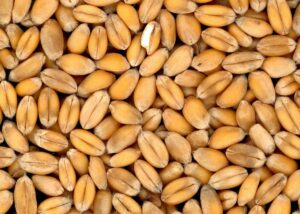
Poland will not allow grain imports from Ukraine after September 15, as the interest of Polish farmers is more important to the country’s government than any EU rules on this issue, said Polish Minister of Agriculture and Rural Development Robert Telusz.
“We know what could have happened if grain (from Ukraine) had arrived in Poland after September 15. Especially since the price of grain is currently low, and the granaries are already full. We know that this is in our interest and we will defend it. That is why I am going to Spain with this message to the summit of agriculture ministers,” the Polish publication farmer.pl quoted him as saying during the National Agricultural Exhibition in Czestochowa last Sunday.
Telusz informed the public that on Monday he will visit Spain, where he will convince the European Union to extend the ban on grain imports from Ukraine to the EU until the end of 2023 after September 15, together with representatives of other frontline countries – Hungary, Bulgaria, Slovakia, and Romania.
“When the war in Ukraine broke out, Polish society, including farmers, became the saviors of the Ukrainian cause. (…) Polish society became a lifesaver. Today in Brussels, we are loudly declaring: a dead rescuer is a bad rescuer. We will not allow the Polish farmer to lose because of arbitrary decisions of officials from Brussels,” said Deputy Minister of Agriculture Krzysztof Ciezora.
According to Janusz Kowalski, the State Secretary of the Ministry of Agriculture, the Polish government has supported Polish farmers to the tune of EUR 3.181 billion, while the amount of financial support from the European Commission is only EUR 63.614 million.



