
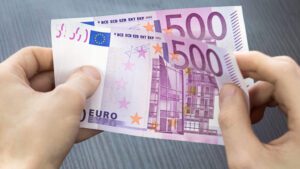
The National Bank of Italy and the National Bank of Ukraine (NBU) have launched a program for exchanging hryvnia for euros for Ukrainian refugees since June 21, the NBU press service reported on Friday.
According to the report, Ukrainians who have been granted a temporary residence permit in Italy or international protection will be able to exchange hryvnias in the amount of up to UAH 10,000 per person.
The exchange will be available at branches of the Italian Central Bank and branches of commercial partner banks (more than 400 branches throughout the country).
As reported, the hryvnia cash exchange program has already been launched in Poland, Germany, Belgium, Sweden and the Netherlands.

Turkish President Recep Tayyip Erdogan announced the change of the name of the country’s national airline from international to Turkish: instead of Turkish Airlines, it will be called Türkiye Hava Yolları, Sözcü newspaper reports.
“Turkey is no more, there is Türkiye. From now on, we will write Türkiye Hava Yolları instead of Turkish Airlines on the fuselage of our aircraft,” Erdogan said during a ceremony dedicated to the launch of the new Türksat 5B satellite into space.
According to Sözcü, the decision to rebrand was made as part of a program to recognize the country in the international arena as Türkiye, not Turkey. According to the authorities of the republic, this will increase the prestige of the country.
In June, the Turkish authorities sent a letter to the UN asking to change the name in all official documents. In turn, the organization granted the request and officially registered the name of the country as the Republic of Türkiye.
Turkish Airlines is Turkey’s flag carrier based in Istanbul. The company was founded in 1933 and operated flights within the country, and today the carrier has one of the most extensive route networks around the world.
More than 60% of CEOs and other top managers of companies around the world are afraid of a recession in their countries in the next 12-18 months, according to a survey conducted by the research company Conference Board.
Another 15% of respondents believe that their economies have already entered a recession.
The survey shows a sharp deterioration in sentiment among CEOs around the world. At the end of 2021, only 22% of respondents in a similar study noted recession risks, at the end of 2020 – 39%.
As part of the study, the Conference Board interviewed 750 directors of companies from different countries. The survey was conducted in May, that is, before the recent increase in the Fed’s rate by 75 basis points at once.
Top managers named the consequences of the war unleashed by Russia in Ukraine, problems in supply chains and the situation with coronavirus in China, as well as rising interest rates, as the main negative factors.
In addition, directors are concerned about rising energy prices, causing an increase in the cost of transport services.
“Fundamental economic factors such as rising energy prices and the implications for the cost of goods and transportation services are very important,” said George Oliver, chief executive officer of diversified industrial corporation Johnson Controls.
On fears of a recession, some companies have announced a suspension of hiring new employees or even layoffs.
“There is reason to believe that we are entering a recession phase after a 10-year period of economic growth,” Brian Armstrong, head of crypto exchange operator Coinbase, wrote in a letter to employees. “The recession means another winter in the cryptocurrency market, which may turn out to be long.”
Earlier, Coinbase announced plans to lay off 18% of the state, or about 1.1 thousand employees.
At the same time, companies in the United States are also facing another difficulty – a shortage of qualified personnel. This is facilitated by very low unemployment, which reached 3.6% in March.
Meanwhile, consumer confidence remains strong, said Conference Board senior economist Dana Peterson.
“Consumers are less worried about a recession than CEOs,” Peterson said. “But CEOs are trained to look at a 12 to 18-month horizon, and for most consumers, the horizon is three to six months.”
The supply of weapons to Ukraine from the United States under the lend-lease procedure has not yet begun and may start in a few months, says Secretary of the National Security and Defense Council (NSDC) Oleksiy Danilov.
“Lend-lease hasn’t started yet. But the adoption of the lend-lease law itself is a very positive decision for us. And lend-lease will be, the question is when. Here we come back to the fact that everyone’s clocks work differently in the war. For some, a day is like a day, but for us it’s completely different dimensions,” Danilov said in an interview with the League published on Saturday morning.
To a clarifying question when lend-lease arms deliveries are expected, he replied: “it could be July-August, maybe September.”
At the same time, Danilov said that there were “almost no Soviet-made ammunition of 122 and 155 mm caliber left.”
When asked how he assesses the results of Rammstein-3, the NSDC secretary replied: “We need to ask ourselves: who owes us something? To do this, we need to have a slightly different relationship with those countries that commit themselves. If our country were a member of NATO, it would be a completely different conversation.”
“Today we have to thank the countries that are helping us. There are a lot of them. We don’t know about all of them. A lot of countries ask not to voice the military weapons that they transfer to us. Time will pass and there will be our victory – we will thank everyone,” he said.
“No one will defend our country except us. Will they help us with weapons? They will. Will this weapon be enough? There are never enough weapons. But in this war, each country has its own tasks and visions for itself,” Danilov stressed.
Agro-industrial group Astarta, the largest sugar producer in Ukraine, refused to pay dividends for 2021 and will direct EUR94.1 million to the retained earnings reserve.
As stated in the message of the company on Friday night, such a decision was made by its shareholders meeting on Thursday.
Shareholders also approved Astarta’s continuation of the buyback program for up to 12.5 million shares (50% of those outstanding) at a maximum price of PLN125 per share.
In addition, the meeting delegated to the board of directors the right to issue shares and grant options in the amount of not more than 10% of Astarta’s authorized capital for one year.
The shareholders also instructed the board of directors to select an auditor company to audit the company’s financial statements for 2022. Candidates for the review include international drug companies Ernst & Young, KPMG, Deloitte & Touche, PricewaterhouseCoopers, Grant Thornton, BDO and Baker Tilly.
The meeting reportedly approved the replacement of Marc M.L.J. van Campen as a member of the company’s board of directors with Savvas Perikleous.
Astarta is a vertically integrated agro-industrial holding operating in eight regions of Ukraine. It includes six sugar factories, agricultural enterprises with a land bank of 220 thousand hectares and dairy farms with 22 thousand heads of cattle, an oil extraction plant in Globino (Poltava region), seven elevators and a biogas complex.
In 2021, the agricultural holding increased its net profit by 14 times compared to 2020 – up to EUR122.5 million, EBITDA – by 1.8 times, up to EUR201.5 million. Its revenue increased by 18.2% – up to EUR491.35 million, a third of which (EUR170 million) was generated by the production and sale of sugar.
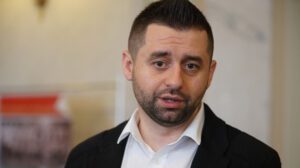
Ukraine will be able to resume peace talks with Russia on a strengthened position at the end of August, said head of the Ukrainian delegation at the talks with Russia, leader of the Servant of the People faction in the Verkhovna Rada David Arakhamia.
“We don’t want to share our plans with the Russians, because they can see it in open sources. But I think we will conduct counteroffensive operations in some places,” he said in a comment to the Voice of America, answering the question of what will happen at the end of August.
To date, the Ukrainian side does not consider the possibility of resuming negotiations. At least, by the time Ukraine does not strengthen its forces, and Russian troops do not return to the positions they were in before February 24, Arakhamia noted.
“The minimum acceptable agreement would be if we kicked them out or they voluntarily retreated to the positions where they were before February 24,” the politician said.
After that, as explained in the negotiating group, it will be possible to talk about the return of all sovereign territories, including Crimea and the territories of Donetsk and Luhansk regions.
“We could consider some kind of political agreement, like the one we proposed in Istanbul. For example, we have not touched on the Crimean issue for several years. We are not doing this militarily, but we are doing it in a diplomatic and political way,” Arakhamia said.



