
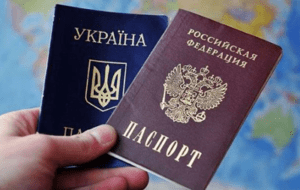
Ukraine is introducing a visa regime for Russian citizens, President of Ukraine Volodymyr Zelensky told the Telegram channel on Friday.
“As part of countering unprecedented threats to national security, sovereignty and territorial integrity of our state, I proposed to the Cabinet of Ministers to work out the issue of revising the regime of entry of Russian citizens into the territory of Ukraine,” he wrote.
“And today the Cabinet of Ministers must adopt this important resolution ‘On the termination of the Agreement between the Government of Ukraine and the Government of the Russian Federation on visa-free travel of citizens of Ukraine and the Russian Federation and the application of certain international treaties of Ukraine with the Russian Federation,’” the president also wrote.
According to him, “according to the planned decision of the Cabinet of Ministers, from July 1, 2022, Ukraine will introduce a visa regime for entry for citizens of the Russian Federation.”
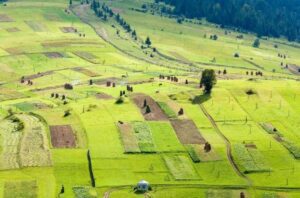
Turkey plans to lease land from other countries for crop production, which will help the country overcome the food crisis caused by Russian aggression against Ukraine and the consequences of the COVID-19 pandemic.
Turkey is considering leasing agricultural land in 10 countries, including Ukraine, Latin America and Africa, Turkish Minister of Agriculture and Forestry Vahit Kirişci told Türkiye.
“Part of the negotiations with 10 countries, including Ukraine and some countries of Latin America and Africa, ended with an agreement, and contacts with some of them continue. Agricultural products that cannot be produced in Turkey for climatic reasons will be grown on the leased lands or the production of which is insufficient,” the publication said.
It is specified that Turkish private business will also be involved in projects on leased lands. For example, in Sudan, Turkey will grow pineapples, mangoes, avocados, rapeseed, sunflowers, corn, cotton, sesame, sugarcane and alfalfa, the production of which is insufficient in Turkey.
Türkiye specifies that the leased areas will focus on the cultivation of plants that can be used in the production of animal feed. In addition, it is planned to establish the production of wheat there, which will be processed in Turkey and then exported in the form of biscuits, pasta and bulgur.
“We want to bring modern agriculture there. We want to produce in untouched agricultural areas. There are very serious untouched areas, especially in southern Africa. We are able to grow plants in these regions,” the Turkish minister was quoted as saying.

Based on the results of a comprehensive assessment and taking into account the ongoing war, the European Broadcasting Union (EBU) announced the impossibility of holding the final Eurovision 2023 in Ukraine in May 2023 and will start negotiations on its organization in the UK, whose representative took second place following the Ukrainian group “Kalush” at Eurovision 2022.
“After an objective analysis, the Reference Group, the governing board of the Eurovision Song Contest, has concluded with deep regret that, given the current circumstances, the security and operational guarantees necessary for a broadcaster to run, organize and produce the Eurovision Song Contest in accordance with the rules of the Eurovision Song Contest , cannot be performed by the (national broadcaster) “UA: Suspіlne movlennya,” the EBU said on Friday on its website.
According to him, as a result of this decision, in accordance with the rules and to ensure the continuity of the event, the EBU will now start negotiations with the BBC on the possible hosting of the final stage of the Eurovision Song Contest 2023 in the UK.
The priority in negotiations with the possible hosts of Eurovision 2023 will be to reflect Ukraine’s victory in this year’s contest, the release notes.
In addition, the EBU thanked Suspіlna for cooperating and exploring all possible scenarios in the weeks following Kalush’s May 14 victory in Turin and promised support in a number of areas to ensure the company continues to provide services to Ukrainians.
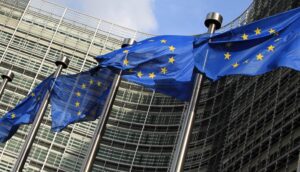
The European Commission recommends that the European Council grant Ukraine the status of a candidate member of the European Union with the subsequent implementation of the necessary steps.
The corresponding announcement on Friday in Brussels was made by the President of the European Commission Ursula von der Leyen.
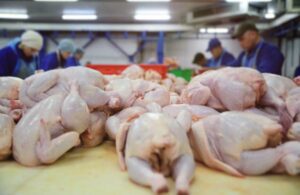
Agroholding MHP, the largest chicken producer in Ukraine, in the first quarter of 2022 received a net loss of $122 million against $1 million of net profit in January-March 2021, and its EBITDA fell by 16% to $53 million, according to the group’s report on the London Stock Exchange on Friday.
“Since February 24, 2022, the group has suffered losses due to the war in Ukraine following the Russian invasion. War-related expenses for the first three months of 2022 amounted to $25 million, of which 53% were donations to support the community, write-offs of reserves and biological assets – 33%, other expenses related to the war – 14%,” the report of the agrarian group says.
According to the agricultural holding, most of the net loss received in the first quarter of this year was due to changes in the exchange rate. The loss from the operating activities of the group of companies in January-March amounted to $27 million, while the loss on the exchange rate was $95 million.
MHP’s revenue for the reporting period increased by 24% compared to January-March 2021 to $553 million, its growth was driven by strong operating and financial performance in the pre-war period in January and February 2022, the document says.
In addition, it is indicated that the board of directors of MHP decided not to pay dividends for 2021 due to the uncertainty in Ukraine and the resulting need to save cash to support its activities.Gross profit of the group of companies in the first quarter of this year amounted to $92 million (+39% compared to January-March 2021), and operating profit – $12 million (-25%). Gross margin for the period was 17% (+2 p.p.), operating margin – 2% (-2 p.p.), and return on sales (EBITDA margin) -53% (-10 p.p.).
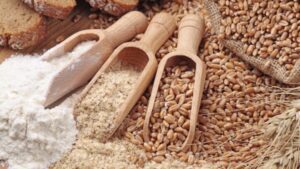
The temporary suspension of exports of wheat, flour and sugar will ensure Moldova’s food security until the next harvest, Minister of Agriculture and Food Industry Viorel Gerciu said Thursday in parliament.
The minister did not predict the price of bread in autumn, but said that this year’s wheat harvest will be less than last year’s (900,000 tons instead of 1.7 million tons). But even this will be enough to cover domestic demand, which is estimated at 660,000 tons per year.
Referring to the supply of fertilizers in Moldova, disrupted due to hostilities in Ukraine, the minister said that the country consumes 270,000 tons of fertilizers annually. Until the end of February, the cost of this volume of fertilizers was estimated at $80 million, but now the price has risen to $220 million. “129,000 tons of fertilizers have already been imported to Moldova this year, which is enough to meet the needs of agricultural producers today,” Gerciu added.



