

On June 21, 2023 Rating Committee of Expert-Rating RA has decided to withdraw the financial stability (reliability) rating of the insurer Alfa Insurance PJSC (Kyiv), according to the website of RA.
As it was reported, the rating committee of RA “Expert-Rating” has decided on December 23, 2022 to suspend the rating of the company, noting that it may be restored if the license of the company has been renewed.
Earlier, on December, 5 of 2022, the National Bank of Ukraine has applied to PrJSC IC “Alfa Insurance” a measure of influence in the form of temporary suspension of the license to provide financial services.
The NBU also noted that these measures were applied in connection with the company’s non-compliance with the requirements of the Regulation on licensing and registration of financial service providers and the conditions of their activities to provide financial services …, namely the requirements for business reputation of financial service providers. The company must eliminate the violations by December 5, 2023.
Later, the Motor (Transport) Insurance Bureau of Ukraine reported on its website that due to the temporary suspension of IC “Alfa Insurance” license for compulsory insurance of civil liability of owners of vehicles (MTPL), it lost the right to enter into new contracts.
As it was reported, IC “Alfa Insurance” was founded in 2000. It offers a universal portfolio of services, including comprehensive programs for protection of business interests and a wide range of insurance products for individuals
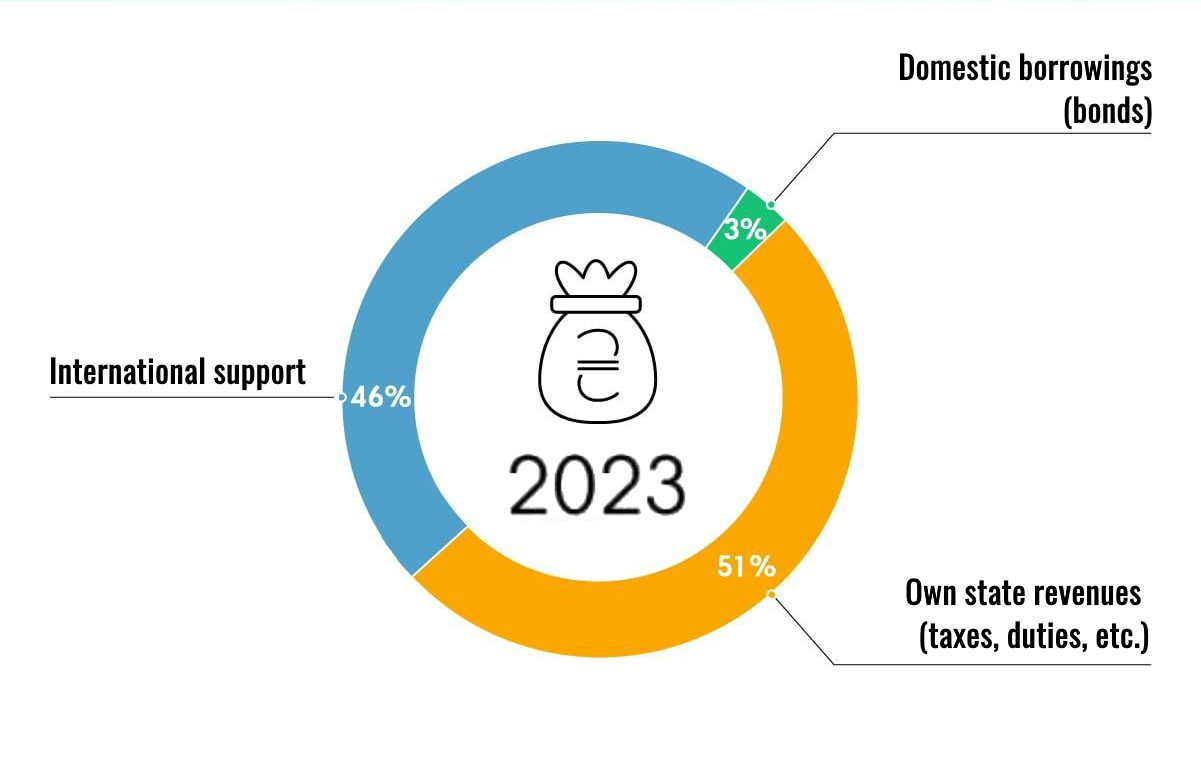
Structure of approved state budget income of Ukraine in 2023
Source: Open4Business.com.ua and experts.news
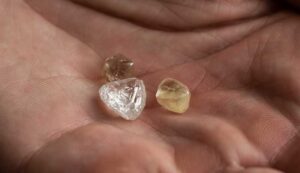
Diamond miner De Beers posted its fifth sales cycle this year with total sales of $450 million, according to Anglo American plc, which controls De Beers.
That was 31 percent below a year ago ($657 million) and 6 percent below the result of the fourth site ($479 million).
This year’s fifth sales cycle took place June 5 through June 20.
“Following the JCK Show and with current global macroeconomic issues continuing to affect customer sentiment, the diamond industry remains cautious ahead of the summer season. Reflecting these factors, demand for De Beers’ diamonds during the fifth selling cycle this year was slightly lower than during the fourth selling cycle,” De Beers CEO Al Cook commented on the results.
De Beers reduced prices for one-carat and larger diamonds by 5-10% at its June sight amid weak demand, Rapaport, the industry news agency, reported in early June.
India’s Economic Times reported in May that De Beers postponed auctions for the fifth and sixth selling cycles this year due to weaker demand from Indian diamond producers. De Beers’ auctions represent about 10 percent of the miner’s diamond sales by value. According to Vipul Shah, chairman of India’s Gems and Jewellery Export Promotion Council (GJEPC), rough diamond prices fell 10 percent due to lower demand in global markets.
Russia’s ALROSA, which controls nearly a third of the rough diamond market and was included in the SDN sanctions list last year, does not publish its sales results since March 2022.
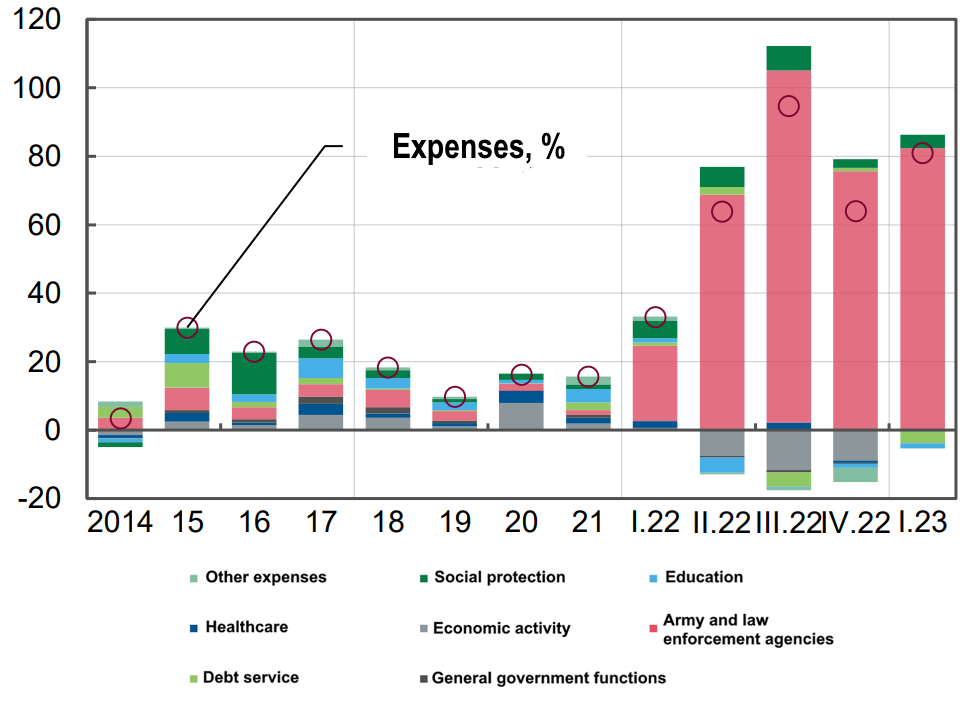
Changes in consolidated budget expenditures in 2014-2022 (%)
Source: Open4Business.com.ua and experts.news

According to the results of monitoring of the regional center for control and prevention of diseases Odessa regional center for control and prevention of diseases of the Ministry of Health of Ukraine cases of group incidence of infectious diseases have not been identified.
“No outbreaks of infectious diseases and group cases have been registered,” the department said in a statement posted on Facebook Tuesday evening.
Nevertheless, “according to the monitoring data, the incidence of acute intestinal infections in the region, compared to the previous week, increased by 10.5% (it is 190 cases against 172), including among adults – by 29.2% (93 against 72), among children under the age of 17 there was no change (…).”
The department stressed that the overall incidence rate per 100 thousand people was 8.1.
The highest incidence among the total number of cases is observed among children under 17 years (51.1%), and among them the most vulnerable is the age group from 1 to 4 years (50.4%).
Reportedly, only 1.8% of the total number of cases have no established cause of the disease.
It is noted that out of 168 registered patients with gastrointestinal disorders, 156 patients were tested for cholera, all with negative results.
The region continues to actively monitor water quality, with regular sampling of water from the sea and water.
“During the week 100 environmental samples were tested, including seawater – 52 samples, fresh water – 28 samples, sewage from infectious disease hospitals (departments) – 18, seafood (hydrobionts) – 2”.
It is reported that no cholera vibrio was detected in any of the monitoring points.
In addition, the results of samples of seawater for sanitary and microbiological with five public beaches in Odessa, it was found that the water does not meet hygienic requirements
“At present, a significant excess of microbiological indicators has already been recorded, so swimming or using such water for food processing is FORBIDDEN. The catching of fish and seafood in the sea and reservoirs, eating them, as well as buying such products is FORBIDDEN”, – were reminded in the Regional Center for Disease Control and Prevention.
It is also noted that the sanitary-epidemic situation is under constant control, in addition, on the basis of the Center for Disease Control and Prevention formed groups of rapid response to various threats, including biological, chemical and radiological.
“Environmental monitoring is conducted on a daily basis. The headquarters works 24/7.The epidemic situation is predictable and manageable. But the general well-being of the population depends on each of us,” the agency summed up.

Prices for Ukrainian sunflower rose by 11.5% during the week against the background of the growth of exchange prices for vegetable oils and amounted to 14000-14500 UAH/tonne and will grow further, according to experts of analytical center of the cooperative “PUSK”, created within the framework of the All-Ukrainian Agrarian Rada (AAR).
“Last week, the price of soybean oil on world exchanges jumped up a lot, which caused the physical market, prices for raw materials for production of vegetable oils, including prices for sunflower oil,” the analysts explained.
This led to the fact that the current week began with a price range for sunflower around 14000-14500 UAH/ton, while last week began with prices at 12000-12500 UAH/ton.
“Uniformly, the market is moving from falling to rising. The other day India bought 80 thousand tons of sunflower oil from Ukraine, which increased the prices for vegetable oil on FOB terms by $ 60-70/ton, on CPT terms the oil went up by $100-110/ton. The market has become more active, the sunflower has most likely passed the “price bottom” of this season”, – stressed the analytical department of the cooperative “PUSK”.
Experts reminded that in July plants will begin to process rape, which could lead to a sunflower price subsidence in the second half of July.
Further rise in sunflower prices will be moderate, they will not exceed 15 500 hryvnias/ton, “PUSK” forecasts.



