
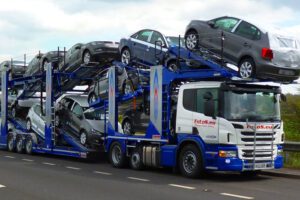
Ukrainians have reduced the rate of importing cars from Europe on preferential terms: on average, 2.65 thousand cars entered per day in early June compared to 4-5 thousand in May on a weekday, said the deputy head of the Verkhovna Rada Committee on Finance , tax and customs policy Yaroslav Zheleznyak.
“As of June 6, 140,310 cars were imported from us. The total amount of the tax rebate was provided for UAH 15.4 billion,” he said on the Telegram channel on Monday.
According to him, the largest number of such cars drove through the Volyn customs – almost 36 thousand, followed by Lviv customs, through which over 27 thousand cars drove in and Rivne customs – almost 14 thousand cars.
He added that, excluding benefits for cars, the budget received less revenue from duties and VAT on imports of UAH 9.17 billion.
As reported, from April 6, the Verkhovna Rada exempted the import of goods to Ukraine from import duties and VAT for single tax payers of the first and third groups, paying tax at a rate of 2% of turnover, and also established a simplified form of customs clearance. The deputies also completely exempted the import of vehicles by citizens, as well as subjects of the simplified system, from taxation.
At the same time, at the end of May, the Cabinet of Ministers registered in the Verkhovna Rada draft law No. 7418 on the return of all customs duties and VAT on imported goods, including cars. In particular, it is proposed to cancel the customs-free import of cars from July 1.
According to the State Border Service, over the past two weeks, about 18.6 thousand cars cross the western border of Ukraine in both directions every day.

The government of Ukraine is discussing granting English the status of the language of business communication in the country, Prime Minister Denys Shmygal said.
“English can get the status of the language of business communication in Ukraine. We discussed this possibility at a government meeting,” Shmyhal wrote on the Telegram channel.
According to him, the Cabinet of Ministers is currently working on a relevant legislative initiative.
“English is now used in business communication throughout the civilized world, so granting it such a status in Ukraine will help develop business, attract investment and accelerate Ukraine’s European integration,” the prime minister added.
Shmyhal noted that the relevant ministries were given the task of developing proposals and drawing up relevant documents.
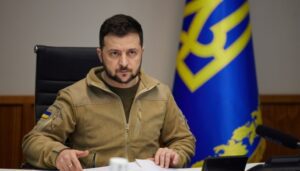
President of Ukraine Volodymyr Zelensky believes that the internal political struggle in Ukraine and European countries may affect the amount of assistance to Ukraine.
“No one just wants to give anything, including weapons and sanctions. Leaders have united in Europe and the world, but their business is pressing from within. And the opposition is also not only here. If they have a chance to compete for power, they will fight. This struggle will affect the weakening of support for Ukraine,” he said on Monday at a press conference in Kyiv.
“We need to record and understand this. And as soon as our country stops fighting with rhetoric, as soon as we start fighting politically, they will understand that we have no war,” Zelensky said.
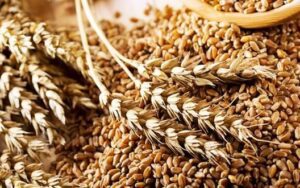
President of Ukraine Volodymyr Zelensky said that Ukraine is not ready to consider the issue of exporting its own grain through Belarus.
“As for Belarus: this information is open. We were offered to go through Belarus by rail (to export grain). We even understand how much. But we understand why we were offered this. We are not yet ready to follow this format and help our ” friendly “neighbors,” Zelensky told reporters on Monday.
President of Ukraine Volodymyr Zelensky says that neither he nor Ukrainian Foreign Minister Dmitry Kuleba were invited to a meeting in Ankara on June 8, which will, in particular, consider the issue of Black Sea shipping and which will be attended by the Minister of Foreign Affairs RF Sergey Lavrov.
“I was not invited. The Minister of Foreign Affairs has not been invited to date,” Zelensky said during a conversation with reporters on Monday, answering a related question.
According to him, he discussed with Turkish President Recemop Tayyip Erdogan, among others, the issue of mediation by the Turkish side in unblocking Ukrainian ports.
“For us, it is important that we are ready to produce grain… For us (important – IF) that there is a safe corridor of ships – that this or that fleet of this or that state will ensure the export of this grain to us. That’s all. And here we talked both with Britain and Turkey. Turkey is now finding a format to give us guarantees… I think because of this they are meeting with the Russians so that Russia will give Turkey guarantees that nothing will happen to their ships. I think so. But, however, the details of their meeting are unknown to me yet,” Zelensky said.
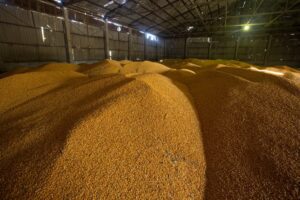
The President also said that negotiations on the export of grain are being held with the UN, as well as with the Baltic countries and Poland – on the export of some volume by rail, but this direction is not a priority due to the long delivery times. Through Odessa ports, according to him, Ukraine can export 10 million tons of grain monthly. “If now we have 22-25 million tons blocked there, but in the fall we may already have 75. What are we going to do? Therefore, we won’t be able to do without ports,” Zelensky stressed.
When asked under what conditions Ukraine can go for demining the coast of Odessa ports and who should be the guarantor for the Ukrainian side to do this, he replied: “I consider the strongest guarantee is our appropriate weapons that will be deployed in the region, the unblocking of another corridor to the port for the export of grain”.
“We are working on this with specific states, with specific anti-ship systems. We are working and are already getting a little, I can already state. I think this is the best guarantee,” Zelensky added.
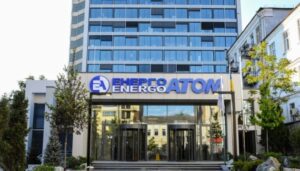
National Nuclear Generating Company Energoatom paid UAH 11.3 billion to the state budget in January-May 2022, which is twice the figure for the same period last year.
“Thanks to such indicators, Energoatom ranked third among all taxpayers in Ukraine and received special thanks for the financial support of Ukraine from the Central Interregional Department of the State Tax Service for Work with Large Taxpayers,” the company said on its Telegram channel on Monday.
As reported, Energoatom paid more than UAH 4.8 billion to the state budget in the first quarter of this year, which is a third or almost UAH 1.2 billion more than in the same period last year.



