

Romanian farmers are threatening to launch a large-scale nationwide nationwide protest on June 7 if authorities do not ban the transit and import of grain from Ukraine from June 15, 2023, to March 15, 2024, the Alliance for Agriculture and Cooperation (AAC) reported.
“As a measure to protect the activities of farmers and the agri-food sector, we ask President Klaus Johannis, the prime minister, the heads (of the local parties PNL and PSD – IF) Nicolae Ciucă and Marcel Ciolacu, (Minister of Agriculture) Petra Daea to represent Romanian interests more firmly and to take all legal steps and diplomatic measures that are imposed to prohibit the transit and import of agricultural products from Ukraine in the period from June 15, 2023 to March 15, 2024,” AAS adevarul. ro.
The Alliance notes that the agricultural market is “severely distorted to the detriment of Romanian farmers.” It argues that in 2023, most farmers will be forced to close their farms because of the high costs of growing crops, and the prospect of selling products at prices below cost “even under good production conditions will not save them.
The ACC appeal stresses that the EUR10 million allocated by the European Commission to Romania to mitigate losses is insignificant. “These funds can at most be redirected to restore, at least partially, the road infrastructure damaged by the intensive transit of Ukrainian goods,” the ACC believes.
The member organizations of the Alliance for Agriculture and Cooperation – AAC, National Federation PROAGRO, League of Agricultural Producers’ Associations from Romania – LAPAR, Union of the National Chapter of Vegetable Sector Cooperatives – UNCSV and Forum of Professional Farmers and Processors from Romania – FAPPR, together grow crops and raise livestock on more than 4.7 million ha. In its ranks are more than 56.5% of those employed in the agricultural sector and 20% of the food industry in Romania.
In Poland, as well as in Slovakia, the Czech Republic, Hungary, Romania and Bulgaria, last week there were protests by agricultural producers against increased grain shipments from Ukraine, for which Brussels temporarily lifted duties.

President Vladimir Zelensky discussed with American businessman and philanthropist Howard Buffett assistance to Ukraine.
“Together with the American businessman and philanthropist Howard Buffett discussed assistance to our state. Told about the situation in Ukraine and the reflection of Russian armed aggression on the battlefield. Every day we make steps that would ensure the sustainability of Ukrainian soldiers, support society and business,” Zelensky wrote in his Telegram channel on Tuesday night.
The head of state expressed gratitude to Buffett for his support of Ukrainians.
“Grateful to Howard Buffett for the support of the Ukrainian people! In particular, for the implementation of the factory-kitchen project, which is part of the reform of school meals, as well as assistance in the implementation of the grain initiative, support for demining, the purchase of generators and elimination of the consequences of enemy shelling of civilian infrastructure in Ukraine,” wrote Zelensky.
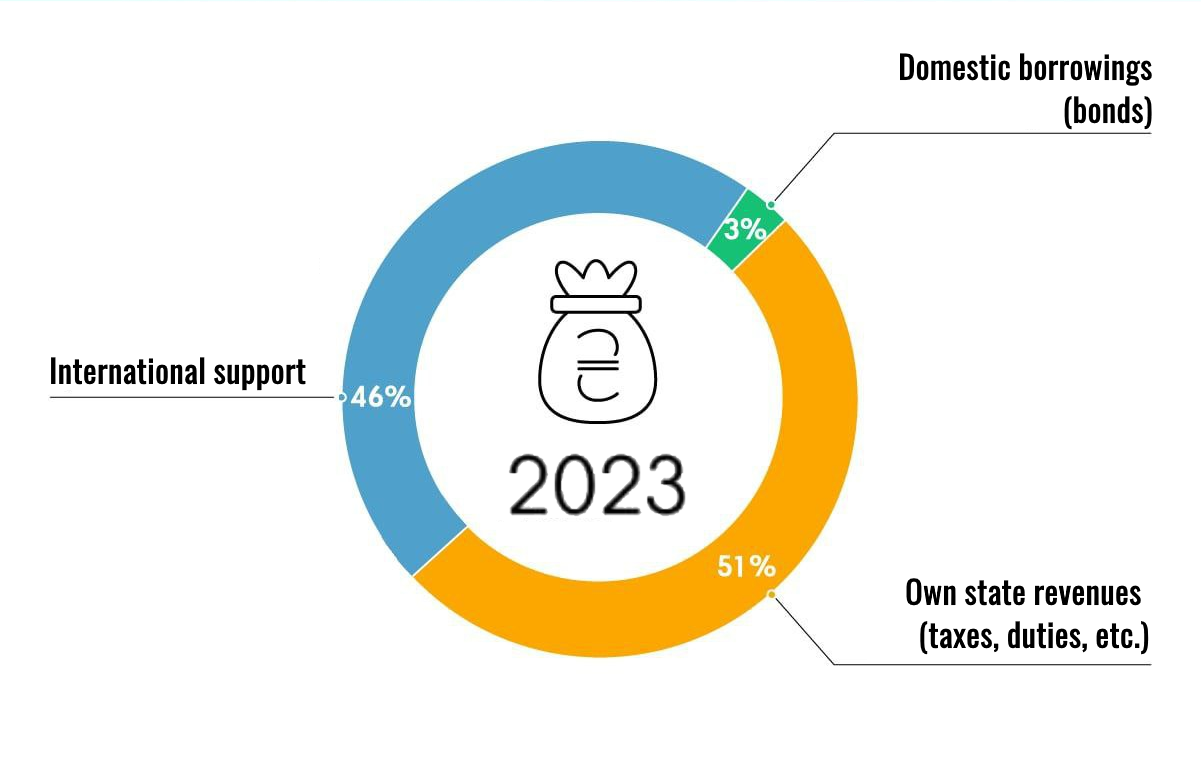
Structure of approved state budget income for 2023
Source: Open4Business.com.ua and experts.news
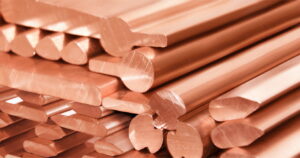
Ukrainian companies in January-March this year increased imports of copper and copper products in value terms by 45.1% compared to the same period last year – up to $ 28.511 million.
According to customs statistics, released by the State Customs Service of Ukraine on Monday, the export of copper and copper products for the period decreased by 31.2% – to $21.822 million.
In March, imported copper at $ 11.045 million, exported – 7.672 million.
In addition, in January-March 2023, Ukraine reduced the imports of nickel and its products by 88.8% compared to the same period in 2022 – to $3.176 million (in March – $2.020 million), aluminum and its products – by 0.7%, to $82.110 million (in March – $28.530 million). It reduced the imports of lead and lead products by 89.4% to $216 thousand (in March – $12 thousand), imports of tin and tin products by 8% to $648 thousand (in March – $104 thousand) and zinc and zinc products by 51% to $7.698 million (in March – $3.581 million).
Exports of aluminum and aluminum products in the first three months of 2023 decreased by 6.6% to $23.103 million (in March – $8.732 million) compared to the same period last year, while lead and lead products decreased by 33.6% to $4.436 million (in March – $1.412 million) and nickel and nickel products – $92 thousand (in March – none) compared to $875 thousand in January-March 2022.
Zinc exports for the three months of this year amounted to $46 thousand (in March – $22 thousand), while in January-March 2022 it was $892 thousand. Tin exports and products totaled $48 thousand (in March – $29 thousand) against $53 thousand in the same period last year.
As reported, the Ukrainian enterprises in 2022, imports of copper and copper products in value terms reduced by 64.3% compared to the previous year – up to $65.370 million, their exports decreased by 56.3% – to $90.245 million.
In addition, Ukraine has reduced imports of nickel and its products in 2022 by 49.9% compared to 2021 – up to $59.754 million, aluminum and its products – by 33.4% to $ 340.398 million, while the imports of lead and its products decreased by 66.6% – to $ 2.839 million.
Imports of tin and tin products fell by 33.5% to $3.312 million, while imports of zinc and zinc products decreased by 58.7% to $38.690 million.
Exports of aluminum and aluminum products for 2022 were down 42.7% from 2021, to $96.972 million, lead and lead products were down 68.7%, to $11.970 million, and nickel and nickel products were down 73.9%, to $1.268 million.
Zinc exports for 2022 were $1.331 million, up from $550,000 in 2021. Tin and products exports for 2022 were $424,000, up from $346,000 the previous year.
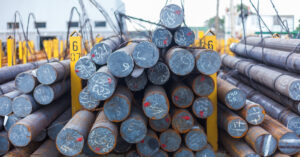
Ukraine in January-March this year, Ukraine reduced the export of semi-finished carbon steel products in volume terms by 5.4 times compared to the same period last year – to 194.469 thousand tons.
According to statistics released by the State Customs Service (SCS), exports of semi-finished carbon steel products during this period amounted to $102.250 million in monetary terms.
Most exports were carried out to Poland (43.51% of supplies in monetary terms), Dominican Republic (14.25%) and Bulgaria (11.23%).
In January-March, Ukraine imported from China 34 tons of semi-finished products worth $63 thousand.
As reported, Ukraine in 2022, exports of semi-finished products of carbon steel in volume terms reduced by 72% compared to the previous year – to 1 million 899.729 tons, in monetary terms by 70.9% – to $ 1 billion 191.279 million. The main export was carried out in Bulgaria (26.55% of supplies in monetary terms), Poland (13.97%) and Italy (12.13%).
In addition, Ukraine imported 5.558 thousand tons of similar products in 2022, which is 85.7% less than in 2021. In monetary terms, imports decreased by 86% – to $3.634 million. Imports were carried out from the Russian Federation (96.92% of supplies – before the war), China (1.84%) and Romania (1.21%).
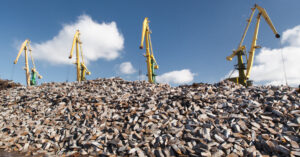
Ukraine in January-March this year increased the export of pig iron in physical terms by 0.2% compared to the same period last year – up to 449.511 thousand tons.
According to statistics released by the State Customs Service (SCS), exports of pig iron in monetary terms amounted to $166.174 million for the period.
In this case, exports were carried out mainly to Poland (56.83% of supplies in monetary terms), Spain (18.61%) and Italy (11.75%).
In the first quarter of the year, Ukraine imported 10 tons of pig iron worth $22 thousand from Germany.
As reported, Ukraine in 2022, Ukraine reduced the export of pig iron in volume terms by 59% compared to the previous year – to 1 million 325.275 thousand tons, in monetary terms by 61.1% – to $638.774 million.
In 2022, Ukraine imported 40 tons of cast iron worth $23 thousand, while in 2021 – 185 tons of cast iron worth $226 thousand.
Exports were mainly to the United States (38.47% of supplies in monetary terms), Poland (32.91%) and Turkey (8.12%), and imports were from Germany (100%).



