

PJSC “Nikopol Plant of Technological Equipment” (NZTO, Dnipropetrovsk region) increased its net profit by 56.3% in 2025 compared to 2024—to UAH 25.068 million from UAH 16.037 million.
According to the company’s annual report, net revenue for the past year reached UAH 1.081439 billion, compared to UAH 589.268 million in 2024.
Retained earnings as of the end of 2025 amounted to UAH 91.761 million.
As reported in NZTO’s 2024 annual report, the average headcount of full-time employees was 198. Net profit for 2024 amounted to UAH 16.037 million, for 2023 – UAH 24.558 million, and net revenue – UAH 589.268 million (UAH 415.235 million).
The shareholders intend to transform NZTO from a private joint-stock company into a limited liability company.
Private Joint-Stock Company “NZTO” was established on the basis of the tooling complex of the Pivdentrub Plant in November 2001. The company combines metal forming (forging), foundry production, machining, and heat treatment.
PJSC “Nikopol Plant of Technological Equipment” is engaged in the production of tools and metal structures, as well as the processing of metal waste and scrap.
According to the National Securities and Stock Market Commission (NSSMC) data for the fourth quarter of 2025, LLC “VKP ‘YUVIS’ (Dnipropetrovsk region) owns 24.9840% of PJSC ”NZTO,” Wolbert Company Limited (Cyprus) owns 24.99%, PrJSC “Centravis Production Ukraine” and LLC “Interpipe Nico-Tube” each hold 25.01% of the shares.
The PrJSC’s authorized capital is 16,605,400 UAH, and the par value of one share is 1 UAH.
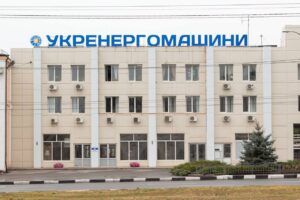
In 2026, JSC “Ukrenergomashiny” plans to invest approximately 60 million UAH in production development, specifically for the purchase of new equipment, major repairs and modernization of existing equipment, and the provision of technological equipment for workplaces.
“The total planned capital investment for 2026 amounts to UAH 60 million. Funding will be provided from the company’s own funds,” according to the company’s 2025 financial report published in the disclosure system of the National Securities and Stock Market Commission.
In particular, it is planned to allocate UAH 33.5 million in investments to improve the technical level of mechanical assembly, metallurgical, and welding operations, installation work, and equipment modernization; UAH 12.4 million toward the development of auxiliary production and laboratory facilities, office equipment, and tools, and UAH 14 million toward design, research, development, and technological work.
As reported, in 2025, Ukrenergomashiny increased its net revenue by nearly 33% compared to 2024—to 1.06 billion UAH—and its net profit by 3.5 times, to 3.07 million UAH.
According to the report, exports accounted for 70.7% (nearly UAH 770 million), including shipments to Kazakhstan, India, Armenia, Bulgaria, and Hungary.
Last year, in particular, a steam turbine was delivered for the Aksu TPP and power equipment for the Ekibastuz Thermal Power Plant (Kazakhstan), a set of power equipment for the Kozloduy NPP (Bulgaria) and the Armenian NPP, and sets of power (turbine) equipment for the Bandel TPP (India).
Domestic customers were supplied with equipment for the Khmelnytskyi, Rivne, and South Ukraine NPPs, as well as the Dobrotvor, Trypillya, Zmiiv, Kryvyi Rih, Burshtyn, and Darnytsia TPPs, and the Kremenchuk HPP.
Motor equipment was supplied, in particular, to Tatra-Yug LLC (83 traction electric motors), the Kryukiv Electric Locomotive Plant (18 induction generators), and Ukrzaliznytsia (41 induction generators).
JSC “Ukrenergomashiny” (formerly JSC ‘Turboatom’ and “Elektrovazhmash”) is Ukraine’s sole manufacturer of turbine equipment for hydroelectric, thermal, and nuclear power plants. It also manufactures, in particular, electric motors for rail and urban transport (the “Elektrovazhmash” product line).
As of early 2026, the company employed 2,169 people.
At the same time, the report notes that, in accordance with orders from the CEO, under martial law conditions—taking into account the state of production, its supply of material and energy resources, and with the aim of rationally utilizing working hours and financial resources—a part-time work schedule has been established for the company’s employees.
“Employees of JSC ‘Ukrenergomashiny’ work according to schedules based on the company’s needs,” the document states.
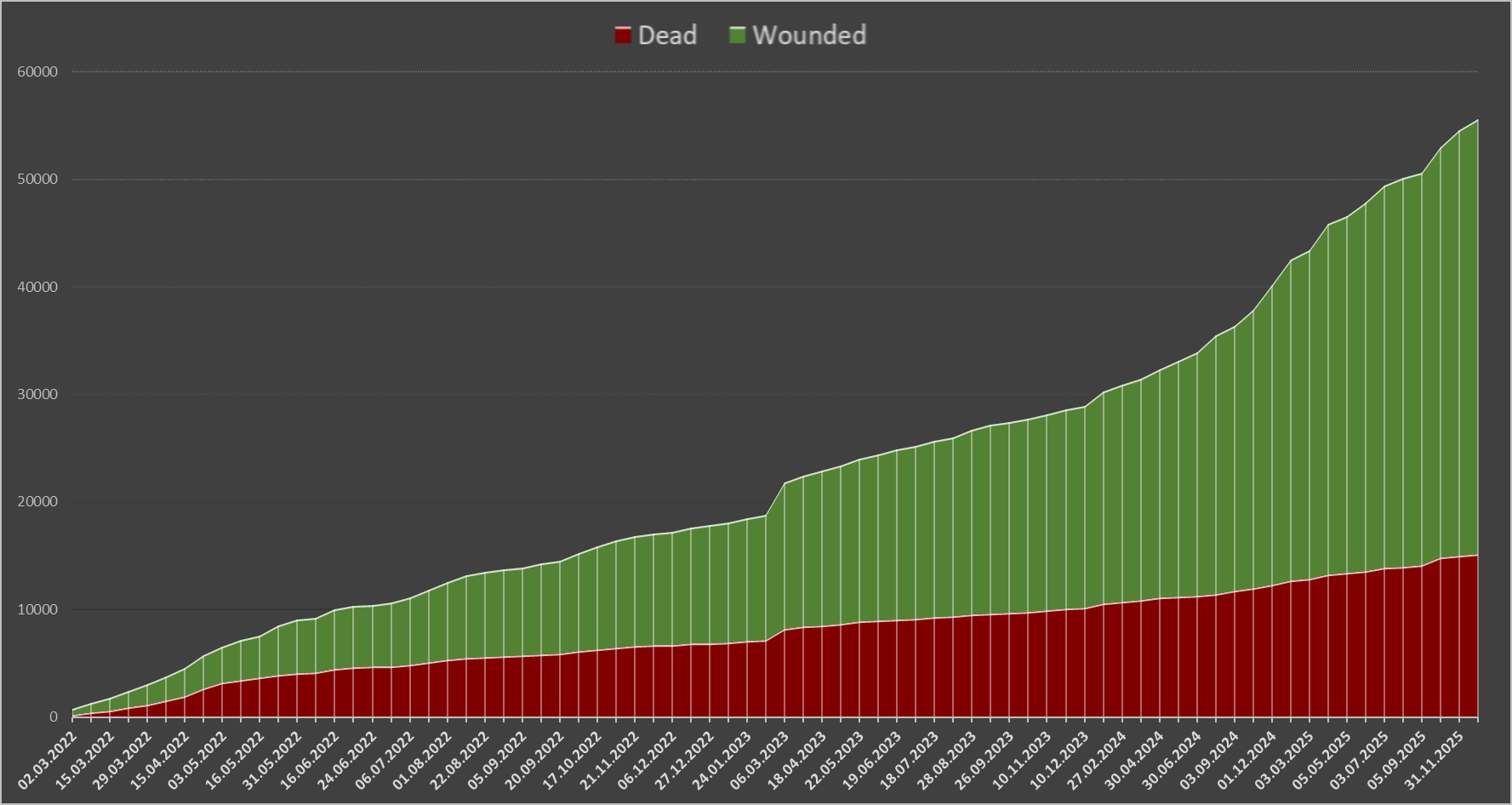
Number of dead and wounded civilians in Ukraine from 24.02.2022 till 30.09.2025 un data
JSC “Ukrgazvydobuvannya,” part of the “Naftogaz” group, contributed UAH 5.4 billion in royalty payments to the country’s consolidated budget based on its operations in January–March 2026, the company reported on Tuesday.
“In accordance with current legislation, 5% of this amount, or 270.5 million UAH, was allocated to local and regional budgets in the regions where the company conducts hydrocarbon production,” the company noted.
The royalty funds are distributed among the regions as follows: Kharkiv – 150 million UAH, Poltava – 96.6 million UAH, Lviv – 13.3 million UAH, Dnipropetrovsk – 3.4 million UAH, others – 7.2 million UAH.
As reported, in 2025, the state-owned company “Ukrgazvydobuvannya,” the largest player in the market in terms of gas production volume, incurred a loss of 5.5 billion UAH, compared to a profit of 52.6 billion UAH in 2024.

Ukrzaliznytsia has launched a new flagship train, the “Sakura,” which connects Kyiv and Uzhhorod and features new cars manufactured in Ukraine in 2026, according to a statement from the Ministry of Community and Territorial Development.
According to the Ministry’s press release on Tuesday, the new cars are equipped with security systems featuring surveillance cameras and include a number of passenger-friendly improvements: rechargeable batteries, additional amenities for traveling with children, inclusive design elements, and functional comfort features in the compartments.
The new flagship train departs on its maiden voyage from Kyiv to Uzhhorod today, April 28.
“In total, Japan has already provided Ukraine with over $15 billion in financial, humanitarian, and technical aid. “Within the framework of grant programs, we are coordinating four phases of emergency recovery totaling approximately $700 million and expect to sign the next phase for an additional $40 million,” Deputy Prime Minister for Recovery and Minister of Community and Territorial Development of Ukraine Oleksii Kuleba is quoted as saying in the release.
It is noted that with JICA’s assistance, Ukraine received approximately 28,000 tons of rails manufactured by Nippon Steel and dozens of units of specialized equipment, which allowed for the renewal of about 200 km of tracks on key routes.
The Ministry of Development added that 12 train cars feature cherry blossom petal branding.
In addition, passengers on the train will have access to an online portal about Japanese culture, architecture, and art, and will also be able to explore elements of Japanese cuisine, board games, and joint Ukrainian-Japanese cultural projects.
As previously reported, Ukrzaliznytsia received the first six of 100 new passenger cars ordered in 2025 from PJSC Kryukiv Railway Car Building Works (KVBZ).
The total contract value is approximately 6.5 billion UAH, and funding is provided from the state budget.
Deliveries are expected to continue in phases until May 2028, and 60 such cars will be ready by the end of 2026.

According to Fixygen, Kyivspetstrans PJSC plans to hold a general meeting of shareholders on April 30.
The company operates in the waste management sector in Kyiv and specializes in the collection, processing, and disposal of household waste. On its corporate website, the company describes itself as one of the market leaders in this sector in the capital and notes that it disposes of Kyiv’s waste at Solid Waste Landfill No. 5 in the village of Podgortsy and at Construction Waste Landfill No. 6 in Kyiv.
Kyivspetstrans PJSC was registered on May 21, 1997. The company’s registered address is 85 European Union Avenue, Kyiv. Its primary activity is the collection of non-hazardous waste. Andriy Hruschynskyi is listed as the company’s director.
According to SMIDA data as of March 31, 2026, the company’s largest shareholder is Igor Tynny, who owns 46.8349% of the shares.
According to Opendatabot, Kyivspetstrans’ revenue in 2025 amounted to UAH 521.857 million, with a net profit of UAH 44.991 million.
Kyivspetstrans is one of the key operators in the capital’s waste management system. The company has been operating in the market since 1971 and provides services for the collection, processing, and disposal of waste, remaining an important element of Kyiv’s municipal infrastructure.



