
Sales of new passenger cars in August of this year fell by 27% compared to the same month in 2025—to nearly 5,000 units, which is also 14% less than the figure for July of this year, Ukravtoprom reported on its Telegram channel.
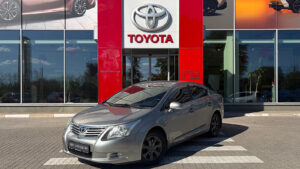
According to the association, the most popular brand remains Japan’s Toyota, which increased sales by 9% compared to August of last year—to 1,092 units.
Skoda holds second place with 600 units (+47%), while Renault took third with 361 units (-32%).
The top ten also included BYD—229 units (-69%), which ranked second last year amid rising demand for electric vehicles; Hyundai—261 units (-34%); Volkswagen—260 units (-51%); Mazda—187 units (+7%); BMW—186 units (-45%); Suzuki—156 units (-32%); and Mitsubishi—122 units (-2%).
The best-selling vehicle of the month was the Toyota RAV-4 crossover (in August 2025, it was the Renault Duster).
According to “Ukravtoprom,” a total of over 43,700 new passenger cars were sold in the country from January through August, which is 5% less than last year.
As previously reported, according to “Ukravtoprom,” the new passenger car market grew by 17% in 2025 compared to 2024, reaching 81,300 units.
auto market, CAR, SALES, TOYOTA, UKRAINE

Starting September 1, the Registry of Type Approval Certificates and Manufacturer-Issued Certificates of Conformity for Wheeled Vehicles and Equipment will become operational in Ukraine, marking a full transition from paper-based records to a unified electronic system, according to a statement from the Ministry of Recovery, Infrastructure, and Transport of Ukraine.
“We are digitizing a procedure that has essentially remained paper-based for years. The registry makes it possible to view all necessary information in a single system and verify it without paper documents,” said Serhiy Derkach, First Deputy Minister of Recovery, Infrastructure, and Transport, as quoted in the press release.
The ministry clarified that the registry is currently operating in a pilot phase, with 33 vehicle manufacturers and 20 certification bodies participating in the testing.
The next phase is expected to begin on September 27, when the new technical regulation for the approval of the design of wheeled vehicles, their components, and equipment takes effect.
Under the technical regulation, certificates will be issued exclusively in electronic form and entered into the Registry.
It is noted that previously issued paper certificates will remain valid, and once the relevant information about them is entered into the registry, no separate reissuance will be required.
Among other things, the ministry reported that it is working on changing the approach to vehicles imported into Ukraine from abroad.
“The current practice in Ukraine of certifying such vehicles prior to their first state registration does not correspond to the model applied in the European Union,” the ministry explained.
Specifically, as part of European integration, Ukraine must transition from certifying imported used vehicles to requiring mandatory technical inspections prior to their first state registration in Ukraine.

The volume of passenger car imports to Ukraine, including cargo-passenger vans and race cars (UKT ZED code 8703), amounted to $2.62 billion in January–July 2026, which is 17% less than the figure for the same period in 2025 ($3.16 billion).
According to statistics released by the State Customs Service of Ukraine, in July alone, passenger car imports fell by 27.2% compared to July of last year—to $443.2 million, which is also 5.3% less than in June 2026.
The top three suppliers of passenger cars to Ukraine over the first seven months have consistently been the United States, Germany, and Japan, whereas in the previous year they were Germany, the United States, and China. Specifically, car shipments from the U.S. fell by 3.2% to $508.3 million, those from Germany decreased by 26% to $416.2 million, and imports from Japan totaled $371.2 million, whereas last year, cars worth $407.7 million were imported from China.
Imports of passenger cars from other countries during this period totaled $1.33 billion—20.4% less than last year’s figure.
At the same time, over the seven-month period, Ukraine exported only $2 million worth of such vehicles, primarily to Georgia, the Czech Republic, and Kazakhstan, whereas last year, total exports to the UAE, the Czech Republic, and Poland amounted to $4.54 million.
Passenger cars accounted for 4.52% of Ukraine’s total imports of goods in January–July, compared to 6.89% during the same period last year; their share of total exports was 0.01% and 0.02%, respectively.
As previously reported, in 2025, passenger cars worth nearly $6.15 billion were imported into Ukraine, which is 40.2% more than in 2024. The top three exporters were the United States, Germany, and China. Car exports totaled $10.1 million (2.7 times less).
The significant increase in passenger car imports to Ukraine starting in the summer of 2025 was driven by news that VAT exemptions on electric vehicle imports would be abolished as of January 1, 2026; as a result, imports have declined significantly since the beginning of this year. However, starting in March, a slow but steady recovery of the passenger car market—including electric vehicles—began.

Insurance Company “Arsenal Insurance” made the largest payment under a comprehensive auto insurance policy in the company’s history—11.4 million UAH—for the total loss of a 2024 Aston Martin.
According to the company’s website, while driving on a wet road, the driver lost control of the vehicle—the car skidded and crashed into a guardrail at high speed.
“Arsenal Insurance” is a non-life insurance company with 100% Ukrainian capital. It has been operating since 2005. It holds a license that allows it to operate in all 18 classes of non-life insurance. It is also the leader in premiums collected in the comprehensive auto insurance (CASCO) market for January–June 2026.

In July 2026, Ukrainians purchased 22,600 used passenger cars imported from abroad, which is 1% more than during the same period in 2025, according to a report by “Ukravtoprom” on its Telegram channel.
Gasoline-powered cars accounted for the largest share of this segment of the auto market, increasing their share by 7 percentage points compared to July 2025—to 55%.
Next came diesel cars at 17% (19%), while the share of electric vehicles fell to 15% from 24%, though they still outpaced hybrids, which accounted for 10% (6%). The share of cars with LPG systems remained unchanged at 3%.
The average age of imported used cars was 8.8 years.
The Volkswagen Tiguan confidently tops the list of the ten most popular imported used models with 937 units. It is followed by the VW Golf with 862 units, the Audi Q5 with 803 units, the Nissan Rogue with 799 units, the Skoda Octavia with 661 units, the Renault Megane with 618 units, the Tesla Model Y with 509 units, the Ford Escape with 465 units, the Tesla
Model 3 with 456 units, and the Mazda CX-5 with 432 units.
As reported with reference to “Ukravtoprom,” in 2025 Ukrainians purchased 274,300 used passenger cars imported from abroad, which is 24% more than in 2024, and the top three most popular models after the Volkswagen Golf included two Tesla electric vehicles—the Model Y and Model 3.

Sales of new passenger cars in July of this year fell by 10.5% compared to the same month in 2025—to 5,754 thousand units, according to a report by “Ukravtoprom” on its Telegram channel.
According to the association, the most popular brand remains Japan’s Toyota, which increased its sales by 20% to 985 units.
Skoda took second place with 693 units (+24%), while VW came in third with 444 units (-10%).
The top ten most popular brands also included Renault with 345 units (-47%); BMW with 308 units (+17%); Hyundai with 298 units (=); Mazda—259 units (+66%); BYD—229 units (-69%); Suzuki—194 units (+39%); and Audi—156 units (-38%).
The Toyota RAV-4 crossover was the month’s best-seller.
According to Ukravtoprom, a total of about 38,800 new passenger cars were sold in the country from January through July, which is 1% less than a year ago.
According to Ukravtoprom, the new passenger car market in 2025 grew by 17% compared to 2024, reaching 81,300 units.



