Egypt’s largest developers maintained high sales levels in early 2026, despite cooling demand and the real estate market entering a more cautious phase, according to a report by The Board Consulting.
According to the report, the total value of contracts signed by Egypt’s ten largest developers in the first quarter of 2026 amounted to 271 billion Egyptian pounds, or more than $5 billion. This is 6.5% less than the record 290 billion pounds a year earlier, but the figure remains significantly higher than in previous years and confirms the resilience of the market’s largest players.
In physical terms, sales declined more sharply—by approximately 15%—to about 15,500 units. This reflects more cautious buyer behavior amid rising construction costs, currency volatility, changing financing conditions, and general macroeconomic uncertainty.
However, the market has not collapsed but is rather undergoing a structural shift. The main cash flows are concentrated among the largest and financially stable developers, while small and medium-sized developers face pressure due to the cost of capital, competition, and the need to offer long-term installment plans.
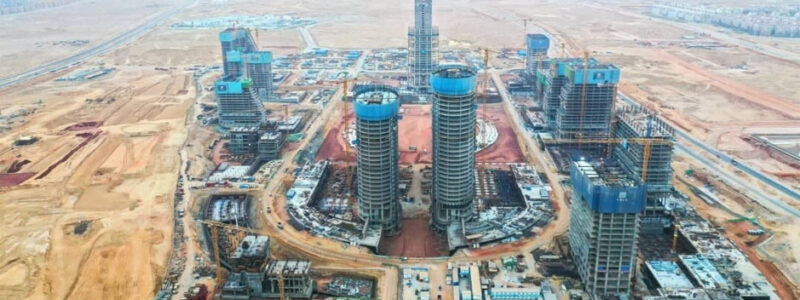
East Cairo remains the geographic leader, generating contracts worth 130 billion pounds over the quarter. Demand is driven by new residential complexes, proximity to the New Administrative Capital, and large-scale infrastructure development in the eastern part of the metropolitan area.
For foreign buyers, Egypt remains one of the most affordable major real estate markets in the region. The weakening of the Egyptian pound has made housing relatively cheaper for buyers holding dollars, euros, or Gulf currencies. According to Global Property Guide, real estate prices in Egypt rose by 13.25% year-over-year in October 2025, but in real terms—adjusted for inflation—growth amounted to only 0.67%.
External demand is driven primarily by several groups. The first consists of investors from Gulf countries, primarily the UAE, Saudi Arabia, Kuwait, Qatar, Bahrain, and Oman. Egyptian developers are actively promoting projects in the GCC, and Gulf buyers have high purchasing power and interest in large resort and urban projects. Invest-Gate notes that buyers from Gulf countries and the Egyptian diaspora already account for about one-third of sales under the “real estate export” initiative.
The second group is the Egyptian diaspora. For Egyptians living in Europe, the U.S., the Gulf states, and other regions, real estate in Egypt remains a way to maintain a connection with the country, protect capital from inflation, and acquire housing for their families or for a future return.
The third group consists of buyers from Arab countries experiencing political or economic instability. Among them, citizens of Syria, Iraq, Sudan, and Palestine are frequently mentioned. For some of these buyers, real estate in Egypt is linked not only to investment but also to residency, obtaining resident status, and long-term security.
The fourth group consists of buyers from Russia, Ukraine, and Kazakhstan, primarily in Red Sea resort locations, including Hurghada, El Gouna, and the areas around Sahl Hasheesh. For them, Egypt is attractive due to its low entry barrier, warm climate, tourist demand, and the opportunity to purchase housing at a lower cost than in Turkey, the UAE, or certain European markets.
The fifth group consists of European buyers, including citizens of Germany, the UK, Italy, and other EU countries, who view Egypt as a market for affordable resort real estate, rentals, and seasonal living.
For foreign buyers, an important feature of the market is the long-term installment plans offered by developers. In Egypt, a significant portion of housing is sold off-plan, and buyers often make a 5–10% down payment and pay the remainder over 7–10 years. This mechanism makes the market accessible but simultaneously increases the importance of choosing a reliable developer and conducting a legal review of the contract.
The Egyptian government is also seeking to more actively develop “real estate exports” as a source of foreign exchange revenue. Authorities view the sector as a tool for attracting foreign capital, especially following the $35 billion Ras El-Hekma deal with Abu Dhabi’s ADQ, which became the largest foreign direct investment agreement in the country’s history.
Thus, the Egyptian real estate market is not entering a crisis phase, but rather a phase of weeding out weaker players. Buyers are becoming more cautious, and the volume of transactions is declining, but the largest developers continue to generate billions of dollars in sales. For foreign investors, the main concern now is not just price, but the reliability of the project, currency risks, the legal soundness of the transaction, and the developer’s ability to complete the project on time.

Related: