
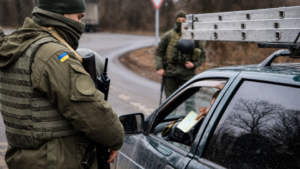
During the first five months of 2026, Ukrainian companies were fined over 7 million UAH for failing to submit or for late submission of transportation data to the Territorial Mobilization and Social Support Centers.
According to OpenDataBot, which cites information from the Ukrainian Armed Forces’ Land Forces Command, 263 penalty orders were issued between January and May. The total amount of fines imposed was 7.057 million UAH.
Of this amount, 6.652 million hryvnias—or 94%—have already been paid voluntarily by the companies or collected by force into the budget.
In total, since 2014, 1,047 Ukrainian companies have received rulings for failing to submit information on their vehicles. Notably, 87% of all sanctions were imposed after the start of the full-scale war.
The rulings are issued against company officials responsible for submitting the information. These may include directors, accountants, or other employees entrusted with these duties.
Companies are required to report twice a year to the TCC and the SP on the availability and technical condition of their vehicles and equipment.
Original source: OpenDataBot – “7 million UAH in fines imposed on businesses this year for failing to submit information on vehicles to the TCC”, published on July 29, 2026.
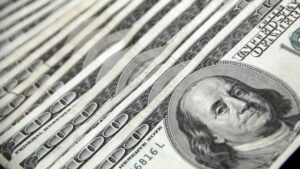
The National Anti-Corruption Bureau of Ukraine (NABU) is unlikely to be able to establish how large sums of foreign currency cash used by those involved in the Midas case entered Ukraine
“Midas,” so it proposes to introduce a special form of accounting, said the head of the NABU detective unit, Alexander Abakumov, who is leading the case.
“This is the second time we have encountered such a large amount of money that arrived in Ukraine in packages from the US Federal Reserve Bank. And for the second time, we will obviously find ourselves in a situation where we will not get an answer to the question of how they got into Ukraine,” he said at a meeting of the Temporary Investigation Commission (TIC) on Economic Security chaired by People’s Deputy Yaroslav Zheleznyak (Voice) in Kyiv on Monday.
According to him, the US Federal Reserve System records who it sells these funds to, but in Europe, while in Ukraine no one is doing this.
“There is a proposal to the People’s Deputies to introduce a form of accounting for the import of such amounts of cash into Ukraine, to whom they are sold, and this, in fact, will be a great contribution to preventing such situations,” the NABU representative concluded.
Deputy Head of the National Bank of Ukraine Dmytro Oliynyk thanked him for this proposal.
“We will consider it, and I will report back,” he said at the meeting of the Verkhovna Rada Committee.
Zheleznyak also confirmed his readiness to consider this proposal in the Rada.
He recalled that specifically in the case of Operation Midas, we are talking about the so-called “white” (and not new “blue”) dollars found in the case files, in Federal Reserve packaging, totaling about $4 million.
Oliynyk stated that Ukraine currently does not have a unique registry that would allow the barcode and FRB packaging number to be verified and the origin of these banknotes in Ukraine to be determined.
“Regarding how the bills are imported in general. Currently, there are eight banks that import dollars and euros into Ukraine. Some of them use them only for their own purposes, while others sell them to banks and other participants in the financial market,” said the National Bank representative, describing the current state of cash currency imports.
According to him, billions of dollars are imported into Ukraine, and it is impossible to single out a specific million without a registration system.
“Plus, imports are not only taking place during the war, they have been happening constantly: old banknotes are being taken out, new ones are being brought in, and it is impossible to say for sure where this million was, whether it was in a bank, on the gray market, or in some collection company or exchange office,” Oliynyk stated.
He said that the National Bank had begun collecting information on the system in order to summarize how banks trade currency among themselves and who uses it for their own purposes. “But we are talking about transactions worth billions of dollars. It is difficult to single out a small amount,” the deputy chairman emphasized once again.



