
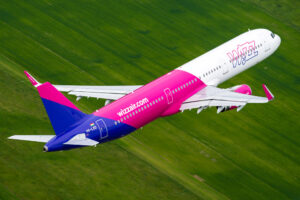
According to “Serbian Economist”, Wizz Air will open an operational base at Pristina International Airport in November 2026, stationing one Airbus A321neo aircraft with a capacity of 239 passengers there. The company plans to launch three new routes from Pristina.
Wizz Air has been operating flights from Pristina since 2017. The opening of a full-fledged base means that the aircraft and crew will be permanently based at the airport.
The Belgrade base is under threat
At the same time, Wizz Air continues its dispute with Serbian aviation authorities over changes to the rules governing foreign carriers.
In March 2026, the Serbian Civil Aviation Directorate adopted amendments to the regulations governing the issuance of permits to foreign airlines for international commercial operations.
According to Wizz Air’s interpretation, the new rules will not allow EU-registered carriers to maintain their current model of basing aircraft and crews in Belgrade, under which work shifts and flight rotations begin and end in Serbia.
Wizz Air Communications Director András Rado stated in June that unless the rules are changed, the company will be forced to close its base at Belgrade Airport in November. He emphasized, however, that the carrier does not want to leave.
Serbia’s Civil Aviation Directorate rejected the accusations, stating that no carrier is prohibited from operating flights between Serbia and EU countries. According to the regulator, the amendments do not restrict the right to operate flights but rather clarify the rules, which are the same for all foreign airlines.
As of mid-July, no final decision had been reached.
The closure of the Belgrade base would not necessarily mean a complete halt to Wizz Air’s flights to Serbia. The company could theoretically continue some flights using aircraft based in other countries. However, such a model typically results in fewer destinations, less convenient schedules, and limited opportunities to increase flight frequency.
Serbia does not recognize Kosovo’s independence, declared in 2008, and officially considers it an autonomous province of Kosovo and Metohija within the Republic of Serbia.

According to Experts.new, the global aviation industry faced a new fuel crisis in 2026: a sharp rise in jet fuel prices, supply disruptions caused by the conflict surrounding Iran, and logistical risks in the Middle East are forcing airlines to revise their schedules, cut unprofitable flights, and prepare for fare increases.
The trigger for a new wave of discussion was a report by the German magazine *Spiegel* claiming that Lufthansa was allegedly preparing to ground up to 40 aircraft due to a fuel shortage. However, the magazine later retracted the report, and Lufthansa told Reuters that the information was incorrect and likely based on an outdated internal memo. According to Reuters, *Spiegel* acknowledged that it had used outdated information.
At the same time, the underlying issue of pressure on the aviation market from fuel prices remains relevant. Back in the spring, Lufthansa was indeed considering contingency plans, including a 2.5–5% reduction in capacity and the possible temporary grounding of 20–40 less fuel-efficient aircraft. This was not an immediate decision but rather a set of measures to be implemented should the situation regarding kerosene prices and availability worsen.
The biggest blow to the industry has been the cost of fuel. In June, the International Air Transport Association (IATA) nearly halved its profit forecast for the global aviation industry for 2026—to $23 billion. According to IATA’s estimates, airlines’ fuel costs could rise to $350 billion this year, and fuel’s share of operating expenses could reach 31.4%, up from 25.4% a year earlier.
This is critical for the aviation industry: fuel is traditionally one of the largest expense items, and a sharp spike in prices quickly turns some routes into money-losers. Short European flights, regional routes, older aircraft with high fuel consumption, and carriers with limited hedging capabilities are particularly vulnerable.
In early June, the European Commission stated that, at that time, there were no signs of an aviation fuel shortage in Europe. At the same time, officials in Brussels acknowledged that regional airports could be the most vulnerable, and that the main risk to passengers is not a physical shortage of jet fuel but rising ticket prices.
Major airlines are already responding to the situation. European carriers are warning that as old fuel hedges expire, rising jet fuel costs will have a greater impact on fares. Some companies are cutting flights, revising schedules, canceling less profitable routes, and accelerating the retirement of older aircraft.
Lufthansa announced in the spring that it would be cutting back part of its short-haul program, and other European carriers have also warned of the risk of fare increases. In the U.S., according to the Department of Transportation, major airlines’ fuel costs rose sharply in March: they increased by $1.8 billion, or 56%, over the course of the month.
Globally, the situation is being complicated by several factors at once. The conflict surrounding Iran has heightened risks to supplies transiting the Middle East; the closure or restriction of air corridors has increased route lengths and fuel consumption; and disruptions in maritime logistics along strategic routes have raised the cost of oil and petroleum product shipments.
An additional factor for Europe has been the controversy surrounding future EU regulations on methane emissions from oil and gas imports. Germany, Italy, the Netherlands, the Czech Republic, and a number of other countries are advocating for a postponement of some of the requirements, warning that the new rules, set to take effect in 2027, could complicate imports not only of gas but also of petroleum products, particularly aviation kerosene.
Thus, while there is no confirmed systemic kerosene shortage on the European market yet, three persistent trends are evident: aviation fuel has become significantly more expensive, airlines are cutting unprofitable routes, and they are preparing to pass on some of the costs to passengers.
For passengers, this means that tickets on certain routes may become more expensive, especially on long-haul flights and routes with low load factors. For airlines, it means that fleet efficiency is once again becoming a key factor in competitiveness. Old aircraft, which were viable when fuel prices were low, are quickly becoming economically unviable amid high jet fuel prices.
In 2026, the aviation market is, in essence, undergoing a new post-pandemic stress test: demand for flights remains strong, but route profitability is deteriorating. Therefore, the main trend in the coming months will not be a halt to aviation, but a more expensive and selective flight network, where carriers will retain only those routes that can withstand the pressures of fuel costs, demand, and operating expenses.
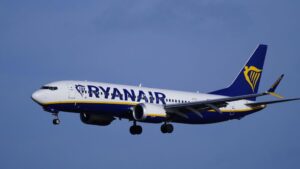
Irish low-cost airline Ryanair has stopped accepting printed boarding passes: a digital boarding pass in the myRyanair app is now required for boarding, the airline has announced. Online check-in is available on the website and in the app, after which the boarding pass is automatically generated in myRyanair. According to the carrier, the share of passengers with mobile boarding passes previously exceeded 80%.
The company explains the move as an effort to speed up boarding and reduce costs. The information page notes that Ryanair is “moving to 100% Digital Boarding Passes from 12 Nov 2025” and paper boarding passes will no longer be issued. Local exceptions may apply at certain airports, a list of which is published by the company in its explanations.
A number of European publications specify that passengers without a smartphone or without access to the app at the airport will be able to obtain a paper boarding pass after online check-in, and some national regulators remind of the need to respect passenger rights when introducing the digital format.
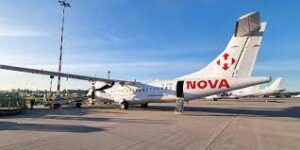
Supernova Airlines, part of Nova Posta group of companies, has performed its first flight on the Riga-Zheshuv-Riga route, the postal operator’s press service said on Friday.
“The plane delivered 7 tons of international parcels of Nova Posta customers from Riga International Airport to Poland’s Rzeszów. After that, the parcels were reloaded into trucks and sent to Ukraine,” the release said.
According to it, the first flight was performed with an ATR 72 aircraft with a capacity of up to 7.5 tons, in cooperation with the Latvian airline RAF-Avia, whose cargo fleet also includes a SAAB 340 aircraft with a capacity of up to 3.7 tons.
Supernova Airlines plans to fly on this route twice a week – every Tuesday and Thursday.
As earlier reported, on January 6, Supernova Airlines received a Ukrainian operator certificate enabling to commence cargo flights. An-26-100 manufactured in 1978 was announced to be in the airlines’ fleet.
The Ukrainian airline SkyUp Airlines has received TCO (Third Country Operator) authorization from the UK aviation authorities.
As noted in the announcement of the airline, circulated on Wednesday evening, it confirms compliance with the United Kingdom’s requirements in aviation security and allows flights to this country. The authorization does not have a validity period, but it must be confirmed every 24 months.
“The need to obtain British TCO authorization is related to the United Kingdom’s withdrawal from the European Union. If previously the European regulator’s [EASA] authorization was sufficient to carry out flights, then from the beginning of 2023 new documents from the aviation authorities of Great Britain are required,” the airline said.
To get authorization, the airline has provided detailed information on operations, fleet, flight history, internal manuals and data on operational procedures, flight safety management system, etc. The British side has also received confirmation from the State Aviation Administration of Ukraine regarding the authenticity of all the documents provided.
When all procedures were completed, SkyUp received a document certifying compliance with the requirements of the UK Part-TCO Regulations.
From now on, SkyUp can fly to the UK without additional permits.
Earlier this year SkyUp also received the TCO of Switzerland, after which the airline performed a number of flights to this country under the terms of a wet-lease.

Ukraine is not planning to halt air traffic and is working to prevent risks for airline, the Ukrainian authorities said.
Reports about Ukraine closing its airspace are not true, the Ukrainian Ministry of Infrastructure said in a statement on Sunday. The closure of airspace is Ukraine’s sovereign right; no such decision has been made, the ministry said.
“Today [on February 13], there was a working meeting in the Ministry of Infrastructure. Senior officials of the Office of the President of Ukraine, the State Aviation Service of Ukraine, state-owned enterprise UkSATSE, Boryspil International Airport and Ukrainian airlines attended the meeting dedicated to the situation on the air transport services market. A solution preventing any further exacerbation of the situation was elaborated at the meeting,” the ministry said.
A majority of airlines are continuing operations without any restrictions, it said.
“Some carriers face difficulties associated with fluctuations on insurance markets. The state, for its part, is ready to support air carriers and is planning to provide additional financial guarantees to support the aviation market,” it said.
Ukraine is currently in consultations with international partners, and the Ukrainian government is preparing relevant decisions, the Ukrainian Ministry of Infrastructure said.
“The markets for insurance services, as well as capital markets, are vulnerable to the information space. We expect the situation to stabilize soon. In order to do that, the government, the President’s Office and our international partners are designing general decisions. If necessary, the state will ensure repatriation of all Ukrainian citizens from abroad,” Ukrainian Infrastructure Minister Oleksandr Kubrakov said.
Later, Deputy Head of the Office of the President Kyrylo Tymoshenko confirmed that the sky over Ukraine remains open, and the authorities have not taken any decisions to close the airspace.
EASA (European Aviation Safety Agency) also made no recommendations to restrict flights in Ukrainian airspace, he said on Facebook.
“Most airlines continue to operate without restrictions. What is happening? Some airlines are experiencing difficulties due to insurance markets. So that passengers do not experience the inconvenience associated with this, today, together with the Minister of Infrastructure, we met with the leadership of the State Aviation Service, UkSATSE, Boryspil airport and Ukrainian airlines,” the deputy head of the President’s Office wrote.
According to Tymoshenko, Ukraine is ready to support air carriers and the necessary government decisions will be initiated in the near future.
Earlier a source in the Ukrainian Ministry of Infrastructure said that Ukraine had no plans to halt air traffic in its airspace at the level of the state, but airlines themselves could decide to suspend flights.
Ukrainian Verkhovna Rada member (European Solidarity) Oleksiy Honcharenko said earlier, citing his own sources, that air traffic could be halted in Ukraine on Monday afternoon following an insurance company’s decision to stop insuring civil aircraft.



