
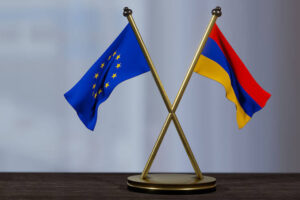
The European Commission has not confirmed that a visa-free regime between Armenia and the European Union will be introduced specifically in 2029, although Yerevan expects to complete the visa liberalization process by that date. This information is supported by recent statements from EU representatives and official documents from the European Commission.
On September 7, European Commission spokesperson Paula Pinho stated at a briefing in Brussels that it is currently too early to set a specific date for the abolition of visas.
“It is still too early to predict whether 2029 or any other date will mark the moment of visa liberalization,” the European Commission spokesperson said.
Thus, 2029 is a target set by the Armenian government, not a deadline agreed upon with the EU. Armenian Prime Minister Nikol Pashinyan has previously stated on several occasions that Yerevan hopes to achieve visa liberalization by 2029. In particular, on August 24, while presenting the government’s program for 2026–2031, he announced that Armenia intends to achieve the abolition of short-term visas for travel to the EU “during 2029.”
The dialogue between the EU and Armenia on visa liberalization was officially launched on September 9, 2024, and on November 5, 2025, the European Commission submitted the Visa Liberalization Action Plan (VLAP) to the Armenian authorities.
The plan calls for Armenia to meet requirements in four key areas: document security and biometrics; border management, migration, and asylum; public order and security; and fundamental rights. The document does not specify a fixed timeline—the process will continue for as long as necessary to meet all criteria.
In July, European Commission President Ursula von der Leyen also made it clear that the EU is not tying the decision to a specific year. She noted that Armenia is making good progress but described the process as “merit-based,” meaning it depends on the actual fulfillment of the established criteria.
Armenia is currently the only partner country with which the EU is engaged in an active new dialogue on visa liberalization, the European Commission noted. Subsequent assessment missions are to verify compliance with the remaining requirements.
Upon successful completion of all stages, the European Commission is expected to propose amendments to European visa legislation, after which the decision must undergo the necessary procedures within the EU. Therefore, Armenia’s fulfillment of the technical criteria does not in itself mean the automatic abolition of visas on a predetermined date.
ARMENIA, EUROPEAN UNION, MIGRATION, VISA-FREE TRAVEL, Єреван
The number of applications for Armenian citizenship in 2025 exceeded 32,000, marking the highest figure in the history of the independent republic, with a significant portion of the increase attributed to Russian citizens of Armenian descent. This was reported by Armen Gazaryan, Acting Deputy Minister of Internal Affairs of Armenia.
By comparison, in 2023 and 2024, the number of applications exceeded 20,000 per year, whereas previously the average was about 7,000–8,000 applications annually. Thus, over the course of a few years, the number of people seeking Armenian citizenship has increased approximately fourfold compared to the previous average.
Gazaryan directly linked this shift in trend to the start of the war in Ukraine and the subsequent travel restrictions imposed on Russian citizens. According to him, the majority of Russian citizens applying for Armenian citizenship are ethnic Armenians, so the increase primarily concerns the large Armenian diaspora in the Russian Federation.
However, the data published by the Ministry of Internal Affairs does not mean that all 32,000 applications were submitted by Russians. During the press conference, the Ministry of Internal Affairs did not disclose a detailed breakdown of the 32,000 applications by current citizenship.
Gazaryan cited obtaining a second document for international travel as one of the main reasons for the increased interest. In his assessment, in some cases, Armenian citizenship is effectively used as an additional tool for mobility by people who maintain their primary residence and vital interests outside of Armenia. This is particularly true for Russian citizens of Armenian descent following the introduction of visa and other restrictions on Russian passports.
Armenia permits dual citizenship, so obtaining an Armenian passport does not in itself require a Russian citizen to renounce their Russian citizenship.
Against the backdrop of a record number of applications, the Armenian Ministry of Internal Affairs intends to amend the current rules. Gazaryan noted that the requirements for individuals of Armenian descent are now significantly simpler than the standard naturalization procedure for foreigners. In fact, the main condition for this category of applicants is to provide documentary proof of Armenian descent.
On the official portal of the Migration and Citizenship Service, the documents listed as proof of origin include, in particular, birth certificates and documents belonging to parents, grandparents, brothers, or sisters that indicate Armenian nationality, as well as properly executed documents from religious or foreign government authorities.
Gazaryan considers the near-total absence of additional requirements to be a problem for the institution of citizenship itself.
The Ministry of Internal Affairs is already preparing a draft of legislative changes; however, specific new conditions—such as mandatory residence in Armenia, knowledge of the language, or other requirements—have not yet been officially announced. Therefore, it is premature to say that restrictions have already been introduced.
The revision of the rules is also taking place against the backdrop of Armenia’s dialogue with the European Union regarding visa liberalization. Gazaryan noted that citizenship issues are part of a broader list of institutional reforms that Yerevan is discussing with the EU.
At the same time, the number of foreigners who wish not to obtain a passport but to officially reside in Armenia is growing. According to Nelli Davtyan, head of the Migration and Citizenship Service, 9,534 applications for one-year temporary residence permits were received, of which 6,059 were approved. The number of applications and permits issued is nearly three times higher than in previous periods.
Demand for three-year residency status is also growing: in the first half of 2026 alone, 2,085 applications were submitted, whereas previously the number for an entire year typically ranged from 1,500 to 1,700.
At the same time, in the first half of 2026, Armenia recorded a positive net migration balance for its own citizens: the number of arrivals exceeded the number of departures by 1,347 people, whereas in previous years, a negative balance of approximately 20,000–22,000 people was recorded for the same period.
The Ministry of Internal Affairs’ figure reflects the number of applications, not the number of passports already issued. An application may still be under review, may require additional documents, or may result in a different decision.
In addition, the statistics include various categories of applicants. For example, the process of obtaining Armenian citizenship by displaced persons from Karabakh remains a separate, large-scale process. At the same press conference, the Ministry of Internal Affairs reported that tens of thousands of such individuals have already received Armenian citizenship.
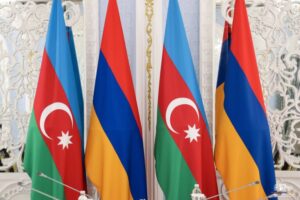
Armenia has accepted Azerbaijan’s proposals on two unresolved articles of the draft peace agreement, which means the end of the negotiation process.
“Thus, the peace agreement is ready for signing. The Republic of Armenia is ready to begin consultations with the Republic of Azerbaijan on the time and place of signing the Agreement,” reads the statement published on the official website of the Armenian Ministry of Foreign Affairs on Thursday.
Yerevan also noted that it had offered to make a joint statement on the agreement, but Baku “preferred a unilateral statement.”
Earlier, Azerbaijani Foreign Minister Jeyhun Bayramov said that Armenia had agreed to the latest amendments. According to him, the next step should be the removal of clauses from the Constitution of Armenia that Azerbaijan regards as territorial claims, as well as the dissolution of the OSCE Minsk Group.
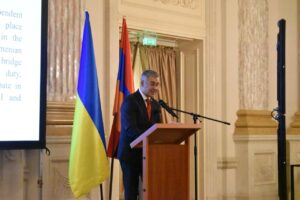
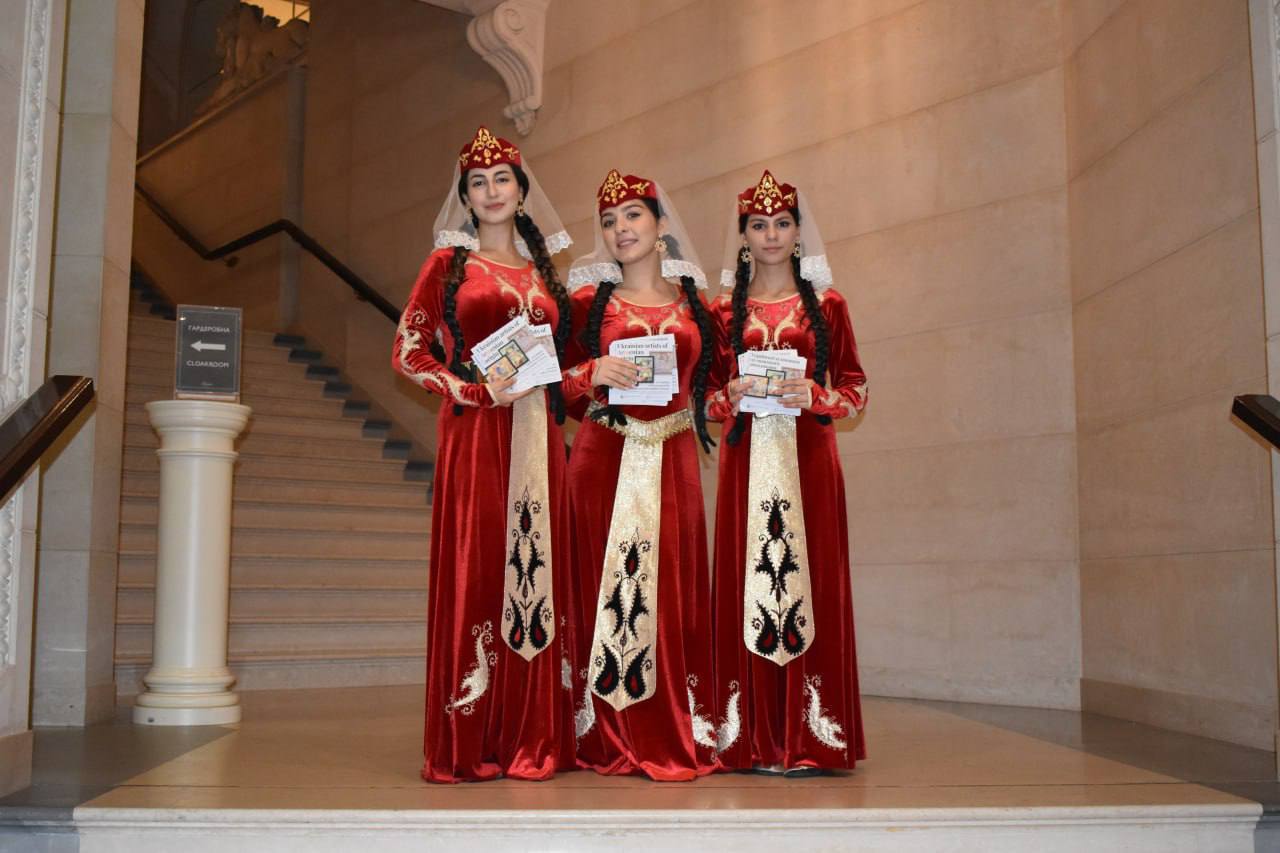
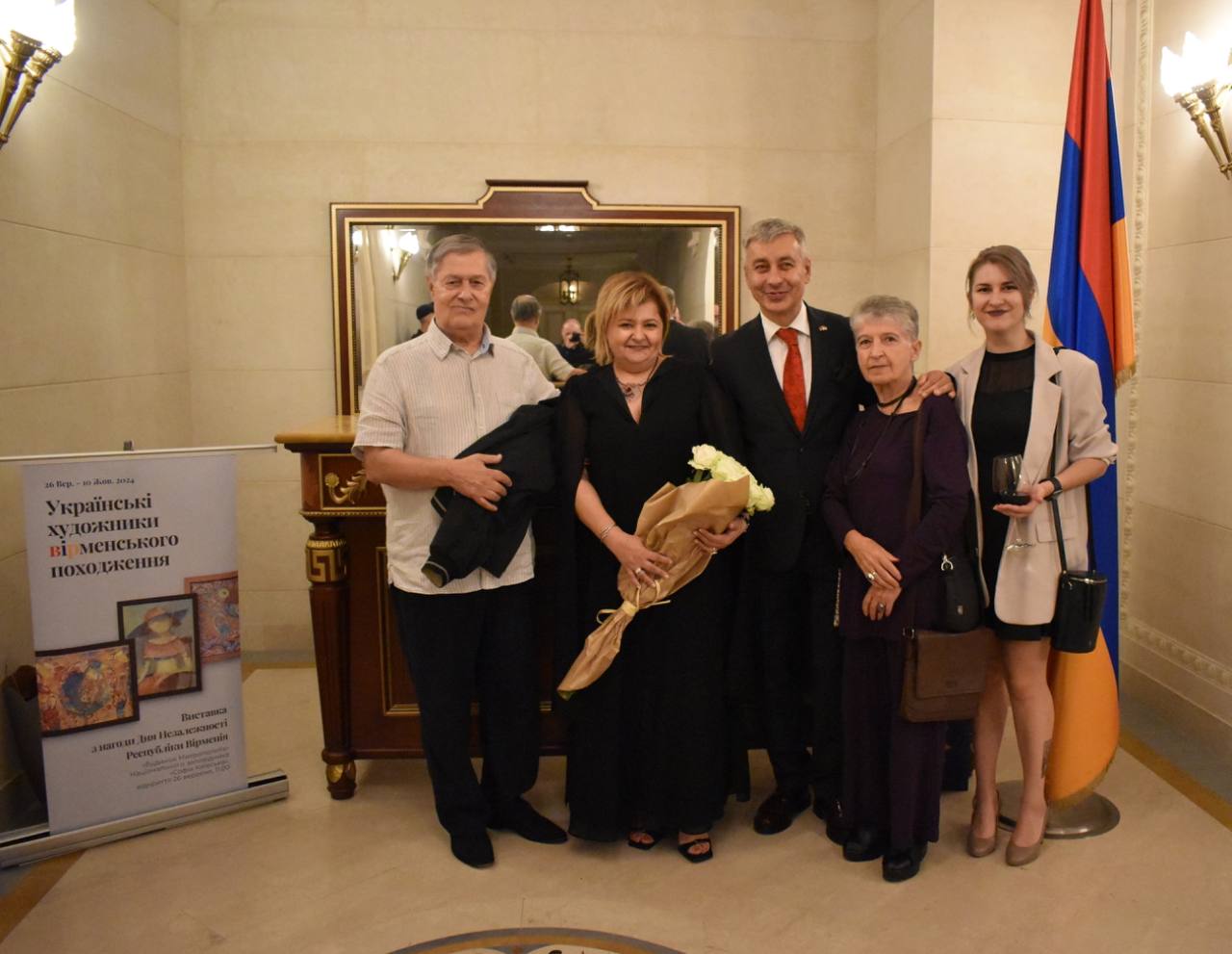
The Embassy of the Republic of Armenia in Ukraine hosted a reception on the occasion of the Independence Day of the Republic of Armenia at the Fairmont Hotel in Kyiv, which brought together representatives of diplomatic, cultural and business circles. This event not only emphasized the historical significance of the holiday, but also became an opportunity to discuss the current challenges and achievements of the country.
“While celebratingthe achievements of our past, we must also confront the current reality. Armenia is going through a difficult path, facing unprecedented challenges to regional peace and security, which remind us of the constant need for strength and unity,” said Ambassador Extraordinary and Plenipotentiary of the Republic of Armenia to Ukraine Vladimir Karapetyan.
The Ambassador also focused on Armenia’s economic achievements, emphasizing the growth of the economy and the increase in jobs, which is evidence of the country’s resilience.
“The Armenian economy has experienced significant growth in recent years. Economic growth is almost 30 percent, and state budget revenues have increased by more than 90 percent. In addition, about 200,000 new jobs have been created,” he said.
Mr. Karapetyan expressed optimism about the process of normalization of relations with neighboring countries, in particular with Azerbaijan and Turkey. He noted the importance of peace talks, emphasizing the importance of mutual recognition of territorial integrity.
“A week ago, Prime Minister Pashinyan made a clear statement about Armenia’s readiness to sign a peace agreement right now,” he emphasized.
In addition to political and economic issues, Mr. Karapetyan also paid attention to the role of the diaspora in Ukraine, calling it a “reliable bridge” between the two countries.
“The Armenian diaspora in Ukraine is distinguished by its loyalty and patriotism to both its historical homeland and Ukraine. More than ten thousand Ukrainian citizens of Armenian origin are currently at the front,” the ambassador emphasized.
He paid special attention to recognizing the contribution of famous Armenian figures to Ukrainian culture. In particular, the ambassador mentioned film director Roman Balayan, who was awarded the Oleksandr Dovzhenko State Prize.
At the end of his speech, Mr. Karapetyan invited the audience to visit an exhibition of Ukrainian Armenian artists that will open this week at St. Sophia Cathedral.
After Ukraine declared independence on August 24, 1991, Armenia recognized Ukraine on December 25, 1991. On December 25, 1991, Ukraine and Armenia established diplomatic relations.
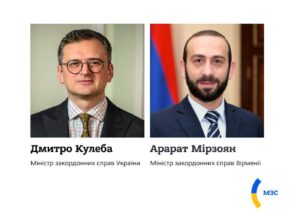
Ukrainian Foreign Minister Dmytro Kuleba and Armenian Foreign Minister Ararat Mirzoyan discussed the security situation in Europe and the South Caucasus on the margins of the Dubrovnik Forum in Croatia.
“I thanked Armenia for participating in the first Peace Summit in Switzerland and informed my counterpart about further work on the implementation of the Peace Formula on the way to a just and sustainable peace in Ukraine,” Kuleba wrote on social network X.
The ministers also focused on ways to deepen bilateral ties and international cooperation, especially in light of Ukraine’s future membership in the EU.

Active Group and Experts Club have conducted a joint study on the attitudes of Ukrainians towards the countries of East Asia and the Middle East. The research was presented at the Interfax-Ukraine news agency in June 2024. The research was presented by Maksym Urakin and Oleksandr Poznyi. The results of the study are as follows:
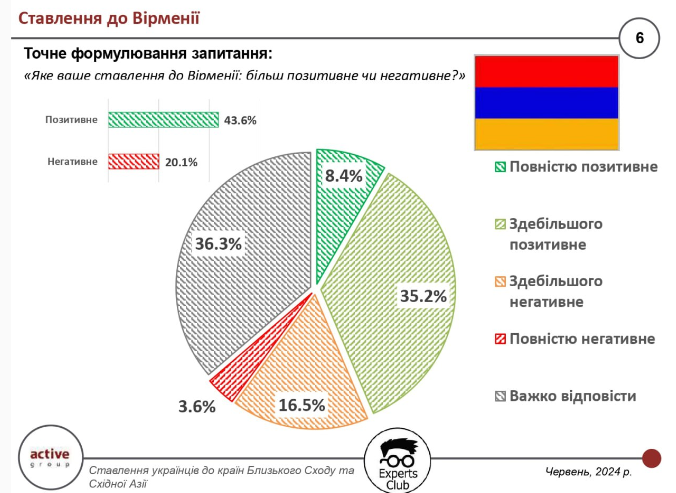
The results of the survey are as follows:
Completely positive – 8.4
Mostly positive – 35.2
Mostly negative – 16.5
Completely negative – 3.6
Difficult to answer – 36.3%.
Positive – Negative – 23.4
On December 25, 1991, Ukraine and Armenia established diplomatic relations.
The joint research by Active Group and Experts Club on the attitudes of Ukrainians towards the countries of East Asia and the Middle East was conducted in April-May 2024. It covers such countries as Turkey, Iran, Israel, Egypt, Jordan, Saudi Arabia, UAE, Afghanistan, Pakistan, Azerbaijan, Uzbekistan, Turkmenistan, Kyrgyzstan, Tajikistan, Kazakhstan, Georgia, Armenia, India, China, Republic of Korea, DPRK, Japan, Vietnam, Indonesia, Syria, and Iraq. Full information on the research is available on the website of the Club of Experts at
https://expertsclub.eu/cpilne-doslidzhennya-kompaniyi-active-group-ta-experts-club-shhodo-stavlennya-ukrayincziv-do-krayin-shidnoyi-aziyi-ta-blyzkogo-shodu/



