
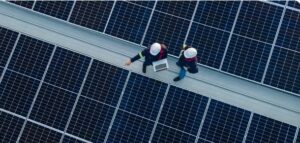
The large-scale deployment of solar power plants and battery energy storage systems could reduce the total operating costs of electric power systems by 40% in the 2030s, provided that equipment costs continue to fall and electricity consumption grows simultaneously, according to a study by the Schneider Electric Research Institute (SERI), published by the international energy technology company Schneider Electric on November 10, 2026.
As noted in the company’s official press release, the report System Costs of Electricity: A New Baseline for the 21st Century Economy analyzes 40,500 energy system development scenarios with various combinations of costs for solar generation, batteries, and grid infrastructure.
The aim of the study was to determine how the proliferation of distributed energy resources—specifically rooftop solar power plants and batteries—will affect the overall costs of the power system, including centralized generation and grid operation.
According to the researchers’ estimates, even at current global average installation costs for solar panels and batteries, an optimal combination of these technologies could reduce total system costs by approximately 10%. With the projected decline in equipment costs in the 2030s, potential savings could reach 40%.
At the same time, the company emphasizes that the realization of such a scenario depends on the synchronized development of solar generation, energy storage, and the electrification of the economy. According to Schneider Electric’s estimates, these savings could contribute an additional 0.8% of global GDP to the world economy by 2030.
Researchers cite the development of battery capacity as one of the key factors in the efficiency of the power system. Under average global price conditions, a mismatch between the characteristics and operating duration of storage systems and the needs of various facilities could, conversely, increase total system costs by 35% compared to the current baseline.
The study also showed that not only the pace of renewable energy deployment is important, but also the sequence in which generation, storage, and consumption are developed. If the pace of electrification lags behind or outpaces the deployment of new power generation capacity, grid costs may temporarily rise.
Schneider Electric notes that increased electricity consumption by electric vehicles, heat pumps, data centers, and industrial facilities will allow for more efficient use of the existing grid infrastructure. Rising consumption levels, combined with load balancing, will help spread fixed costs across a larger volume of electricity sold and reduce its system-wide cost.
“Over the past decade, solar energy has been viewed as an intermittent energy source. But we’ve been looking at this generation asset the wrong way: solar energy is the fuel, and the battery is the power plant,” said Laurent Bataille, Executive Vice President of European Operations at Schneider Electric.
According to him, battery systems significantly expand the possibilities for using solar generation; however, reducing the costs of the entire electricity system is only possible through the coordinated development of generation, storage, and demand.
“Thanks to the significantly faster scaling of solar energy and batteries, Europe can set itself on the path to energy sovereignty and competitiveness. The pieces are falling into place; now we need acceleration and coordination,” Batay emphasized.
Esther Finidori, Chief Sustainability Officer at Schneider Electric, also stressed the need to align the energy transition with economic efficiency.
“This study shows that sustainability and affordability can reinforce each other, but coordination is critically important. The priority now must be to turn ambitions into action by accelerating demand for electrified energy, ensuring more flexible energy use to smooth the load curve and free up capacity, and removing barriers to the deployment of solar power and batteries,” she said.
Researchers have identified three key areas of public policy that can accelerate the reduction of electricity costs. These include introducing incentives to balance daily consumption patterns, simultaneously supporting the development of renewable generation and electrification, and reducing equipment costs by improving supply chains, streamlining permitting procedures, and training qualified specialists.
The company believes that regulatory policy should, first and foremost, create conditions for the development of distributed generation and energy storage systems, rather than imposing strict requirements on the volume of their use by individual consumers.
For Ukraine, the study’s findings are particularly significant given the need to enhance the resilience of the power grid, develop distributed generation, and ensure an uninterrupted power supply to businesses and critical infrastructure. The combination of solar power plants, batteries, and digital energy management systems can reduce individual consumers’ dependence on the centralized power grid and increase the flexibility of the energy infrastructure.
Schneider Electric is a French multinational energy technology company whose history dates back to 1836. It specializes in energy management, industrial automation, and the digital transformation of buildings, data centers, infrastructure, and industrial facilities. The company’s portfolio includes low- and medium-voltage electrical equipment, automation systems, uninterruptible power supplies (UPS), the EcoStruxure software platform, and digital services. Schneider Electric operates in over 100 countries and employs approximately 160,000 people. As of 2025, the group’s revenue reached EUR 40.15 billion, an increase of approximately 5.2%, while net income amounted to EUR 4.2 billion.
Schneider Electric began operations in Ukraine in 1994, registered a representative office in 1996, and established Schneider Electric Ukraine LLC in 2000. The company supplies electrical equipment, automation systems, energy management solutions, and uninterruptible power supplies for the industrial, commercial real estate, energy, and infrastructure sectors. Its Ukrainian subsidiary has commercial divisions as well as logistics, engineering, and service support teams.
In August 2026, Schneider Electric announced its participation in the modernization of heating systems in 26 Ukrainian cities, which received equipment to improve the energy efficiency and operational reliability of their municipal infrastructure. In addition, in July, the company announced its support for Ukrainian universities by providing software for power grid design and training more than 200 faculty members from 30 higher education institutions.
BATTERY, ELECTRICITY, ENERGY, INVESTMENT, Schneider Electric, SOLAR
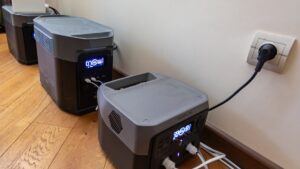
In January–October 2026, Ukrainian companies increased imports of electric batteries and separators for them by nearly 3.6 times compared to the same period last year—to $3.77 billion, according to data from the State Customs Service of Ukraine.
According to customs statistics, imports of these products totaled $583.2 million in October, which is approximately four times higher than the figure for October 2025, when $144.9 million worth of batteries were imported into Ukraine.
China remains the main supplier of electric batteries to Ukraine, with its share reaching 91.1% of total imports over the first ten months of 2026, compared to 70.2% during the same period last year.
In monetary terms, imports of Chinese products increased from $740.6 million to $3.43 billion, or approximately 4.6 times.
Other major suppliers of electric batteries in 2026 were the Czech Republic and Poland; however, their shares remain insignificant compared to China’s.
For comparison, in January–October 2025, in addition to China, significant volumes of products came from Vietnam, which accounted for 9.1% of imports, and Taiwan, with a 5.1% share.
Thus, over the course of the year, the concentration of electric battery supplies to the Ukrainian market from China increased significantly.
At the same time, exports of electric batteries from Ukraine over the first ten months of 2026 decreased by 15.4%—to $37.16 million compared to $43.9 million during the same period last year.
Poland, Germany, and France remain the main markets for Ukrainian products.
As a result, imports of electric batteries exceeded exports by more than 100 times.
As previously reported, in 2025, Ukraine increased its imports of electric batteries by 55% compared to the previous year, reaching $1.48 billion. Thus, in just the first ten months of 2026, the value of imported products exceeded last year’s total by approximately 2.5 times.
In late July 2024, Ukraine introduced tax and customs incentives for the import of certain categories of energy equipment, including batteries used to provide backup power.
Rechargeable batteries are used in energy storage systems, autonomous and backup power supplies, telecommunications equipment, industry, transportation, and household appliances. The increase in imports is driven by the need of Ukrainian businesses and households for backup power sources.
Source: State Customs Service of Ukraine, foreign trade statistics for January–October 2026.
The number of charging stations purchased at the “Foxtrot” omnichannel electronics retailer chain during the first eight days of November increased by 125% compared to the first week of October, while sales of generators rose by more than 320%; and the average receipt for the year rose by 33–45%, the company’s press office told Interfax-Ukraine.
“We began preparing for increased demand back in the summer: we planned deliveries in advance, built up inventory, and ensured a wide selection of models across various price points and higher-power segments. This allows us to respond quickly to changes in consumer demand and maintain product availability even during periods of peak demand,” said the company’s CEO, Yuriy Polishchuk.
According to the company’s estimates, Foxtrot currently accounts for 35–50% of sales of officially imported charging stations.
Sales of charging stations in August 2026 were double those of the same period last year; for the month of October as a whole, the number of charging stations purchased by Ukrainians increased by 70% compared to October 2025.
The average purchase price for charging stations over the year increased by 43% to 45,000 UAH. Several factors contributed to this increase: currency fluctuations and price hikes, as well as changing consumer preferences. In particular, buyers are gradually shifting from compact charging stations—which were popular in 2024–2025—to higher-capacity models capable of providing a full backup power supply for the home.
Foxtrot has observed the strongest growth in the segment of charging stations with a capacity of 2,001–2,500 Wh: in October, sales of these units were 7.8 times higher than during the same period last year. In the 2,501–3,000 Wh category, sales increased fivefold, and among stations with a capacity of over 3,000 Wh, sales rose 3.3 times. In contrast, more compact devices are gradually losing popularity: sales of stations with a capacity of 601–1,000 Wh fell by 62%, and sales of models with a capacity of up to 600 Wh dropped by 20%.
As for brand preferences, Marstek has “burst onto the scene” in the charging station market this year; at Foxtrot, it ranks first in sales volume. However, the trend of the “stable trio” (Ecoflow, Bluetti, Anker) in search queries has persisted.
Seasonal growth in demand is also observed in the generator category, which offers a practical solution for businesses and households during prolonged power outages (over 10 hours). In October 2026, compared to September, sales of generators increased by 59% in terms of volume.
The average transaction value rose by 33% over the year and stands at 28,000 UAH. This increase was also influenced by a shift in demand toward more expensive models with higher power output.
Generators with a capacity of 3–5 kW remain the most popular. At the same time, interest in inverter models has noticeably increased this season; these models provide more stable output voltage parameters, which is particularly important for powering sensitive electronics, computer equipment, and modern heating boilers.
There has also been a rise in buyer interest in comprehensive backup power systems, particularly inverters combined with rechargeable batteries, which enable autonomous operation not only of individual devices but also of essential household appliances in an apartment or private home.
According to “Foxtrot,” sales of inverters and backup power systems rose by 145% in volume terms in September–October 2026. Among brands, demand for Deye equipment has been particularly strong.
Demand for rechargeable batteries has increased particularly rapidly—sales have more than tripled since the beginning of fall. Among the most popular are rechargeable batteries with a capacity of about 5 kWh, as well as more powerful solutions ranging from 11 to 16 kWh. In the inverter segment, there is high interest in models with a power output of 6–12 kW.
Despite the increased demand, “Foxtrot” has ensured sufficient inventory levels in the main categories of energy independence equipment. At the same time, there is a certain shortage of specific product items on the market. In the charging station segment, this primarily applies to compact models with low capacity and power ratings of up to 1 kW. Among generators, dual-fuel models (gas/gasoline) are in high demand, particularly those with a power output of about 3 kW.
“Foxtrot continues to develop its line of energy independence products and is working to expand its range of inverters, rechargeable batteries, and ready-made integrated solutions. We see significant potential in this category, which is why we are paying special attention to collaboration with suppliers, equipment availability, and tailoring offers to meet the diverse needs and budgets of our customers,” says Polischuk.
“Foxtrot” is one of Ukraine’s largest omnichannel retail chains in terms of the number of stores and sales volume of electronics and home appliances. As of October 2026, the chain comprises 120 stores in 67 cities across Ukraine and continues to develop its omnichannel model.
According to data from YouControl, FTD-Retail LLC (Kyiv), which operates the chain, increased its net revenue to 11 billion 794 million 690 thousand UAH in the first half of 2026—a 61% increase over the same period last year—and reported a net profit of 43 million 765 thousand UAH.
The founders of the omnichannel retailer “Foxtrot” are Ukrainian businessmen Gennadiy Vykhodtsev and Valeriy Makovetskyi
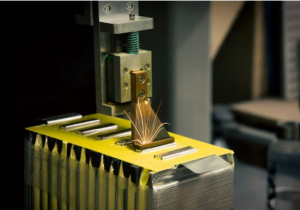
According to “Serbian Economist”, the Chinese company Reliance plans to invest 100.5 million euros in the construction of a high-tech battery manufacturing plant in the Serbian city of Indija; the project is expected to create about 250 jobs, Serbian President Aleksandar Vučić announced on August 20.
According to him, the plant will produce batteries for unmanned aerial vehicles, autonomous vehicles, robots, household appliances, and other devices.
“We are talking about a high-tech company, one of the world’s best in the production of batteries for drones, autonomous vehicles, robots, household appliances, and other devices,” the publication Danas quoted Vučić as saying, citing his interview with Radio and Television of Serbia (RTS).
A framework agreement with the investor is expected to be signed in late August 2026, and construction work could begin as early as late October.
Vucic clarified that Reliance was one of 14 companies with whose representatives the Serbian side held talks during his most recent trip to China.
Judging by the name and the product profile described by the president, this refers to Jiangsu Reliance New Energy Technology Co., Ltd., which operates under the Reliance Battery brand. However, the Serbian authorities have not yet publicly disclosed the full legal name of the investor in the Indija project.
According to Reliance itself, the company was founded in Changzhou, China, in November 2021 and specializes in the development and production of high-power cylindrical lithium-ion cells. It manufactures 21700 and 46-series cells based on NCA and LFP, and conducts research into semi-solid-state and solid-state batteries as well as dry-electrode technology.
The company explicitly lists drones, eVTOLs, humanoid and logistics robots, power tools, household cleaning equipment, electric motorcycles and bicycles, automobiles, backup power systems, and specialized equipment among the applications for its batteries.
Thus, if the project is implemented, India will gain another high-tech manufacturing facility related to the electrical engineering industry. The city has already established a large industrial cluster between Belgrade and Novi Sad. In particular, in April 2025, Europe’s first factory of the Japanese company JFE Shoji, worth over 50 million euros, began operations here; it manufactures motor cores for home appliances and the automotive industry.
The Toyo Tire Serbia plant also operates in Inji, and in 2026, the Japanese company began construction here on a new European research and development center worth 29 million euros.
China will gradually introduce a consumption tax on lithium and lithium-ion batteries, as well as solar cells, which have been exempt from taxation since 2015, according to the Xinhua News Agency.
Mercury-free, nickel-metal hydride, lithium, and lithium-ion batteries, as well as vanadium flow batteries, will be taxed at a rate of 2% starting September 1, 2026. Starting in September 2027, the rate will increase to 4%.
For photovoltaic, or solar, cells, a 2% tax will take effect on April 1, 2027, and will also be raised to 4% starting in April 2028.
The new rules were announced by China’s Ministry of Finance, the General Administration of Customs, and the State Taxation Administration.
The introduction of the tax could increase the production costs of batteries and solar cells in China. If manufacturers pass on the additional costs entirely to buyers, selling prices could rise by approximately 2% in the initial phase and up to 4% once the rate is fully implemented.
However, the actual price increase will depend on competition, corporate profitability, and contracts with buyers. Chinese manufacturers may absorb part of the costs themselves to avoid losing market share in both domestic and foreign markets.
The changes will potentially affect the cost of electric vehicles, energy storage systems, and solar power plants, as batteries and photovoltaic modules are among the key components of such projects. At the same time, due to the high proportion of other costs, the price of a finished electric vehicle or solar power plant will not necessarily increase by the full 4%.
Some promising technologies will remain temporarily exempt from the tax until December 2028. These include sodium-ion and solid-state batteries, fuel cells, as well as perovskite, tandem, and gallium arsenide solar cells.
China currently levies a 4% consumption tax on most battery products. At the same time, lithium and lithium-ion batteries, as well as solar and fuel cells, have been exempt since 2015.
This policy has facilitated rapid expansion of production capacity and helped Chinese companies become global leaders. However, the excess supply has simultaneously intensified price competition and reduced profitability for some manufacturers.
Analysts at Citic Securities estimate that the tax changes could generate an additional 45 billion yuan, or about $6.6 billion, in revenue for the Chinese government.
Following the announcement of the new rules, shares of solar cell manufacturer Longi Green Energy Technology rose 2.1%, JinkoSolar’s rose 4%, and those of CATL, the world’s largest battery manufacturer, rose 4.6%.

In January–June 2026, Ukraine reduced imports of lead and lead products by 74.4% compared to the same period last year, down to $1.027 million.
According to customs statistics, imports of lead and lead products in June totaled $68,000.
Exports of lead and lead products for January–June of this year rose by 9.2% to $4.872 million, and in June, they totaled $1.054 million.
As previously reported, in 2025, Ukraine increased its imports of lead and lead products by a factor of 3.3 compared to 2024, reaching $7.801 million. Exports of lead and lead products in 2025 decreased by 17.8% to $9.377 million.
Lead is currently used primarily in the production of lead-acid batteries for the automotive industry. In addition, lead is used in the manufacture of bullets and certain alloys.



