
Ukraine is proposing that the European Union increase the existing duty-free export quota for Ukrainian bioethanol—currently set at 125,000 metric tons per year—to account for the volume of bioethanol that Ukraine imports from the EU as part of automotive gasoline, Minister of Agrarian Policy and Food Taras Vysotsky told reporters.
“We have calculated that Ukraine currently imports about 10,000 metric tons of bioethanol per month as part of gasoline… This proposal applies to the period of martial law, as the current security situation prevents Ukraine from blending gasoline with bio-components, so we have to import it,” the minister explained.
He noted that the requirement for a mandatory bioethanol content of at least 7% in A-92 and A-95 automotive gasoline took effect in Ukraine on July 1 of this year, while the quota of 125,000 metric tons was set last year, when gasoline was imported without any bioethanol content.
Vysotsky noted that the quota can be flexible: if, for example, 5,000 metric tons of bioethanol are imported in a given month, then an additional 5,000 metric tons of export quota becomes available; if 15,000 metric tons are imported in a given month, then 15,000 metric tons.
According to him, this could amount to an additional 120,000 metric tons of bioethanol over the course of a year.
In the opinion of the Minister of Agrarian Policy, this proposal from Ukraine is very likely to be accepted and implemented by European partners.
Bioethanol, EU, EXPORTS, QUOTA, UKRAINE
The Cabinet of Ministers of Ukraine has refined the procedure for determining the maximum production capacity of equipment used to produce ethyl alcohol and bioethanol, according to the industry publication SEEDS.
The government adopted the corresponding resolution on September 23, 2026. The new rules are intended to ensure a more accurate and technically sound calculation of equipment capacity. This metric is used to determine the guaranteed excise tax liability for alcohol and bioethanol producers.
In particular, the calculations now require determining the actual capacity of processing equipment and taking it into account. The regulations also clarify which changes to equipment should be considered a change in its maximum capacity.
The government has established a mechanism for performing the updated calculation and provided for the possibility of accounting for permissible deviations in actual capacity related to the specifics of the production process or the characteristics of measuring instruments.
One of the most significant changes is the allowance for actual production capacity of process equipment to deviate from the calculated maximum production capacity by up to 3% inclusive.
In addition, the procedure for applying coefficients related to the cleaning and disinfection of production equipment has been clarified. Calculations will take into account the possibility of performing such work during scheduled production shutdowns.
The government explains the need for these changes by citing the technological characteristics of the alcohol industry. The actual productivity of equipment may be influenced by the characteristics of the raw materials used, auxiliary materials, seasonal changes in energy source parameters, and other factors, which in and of themselves do not imply a change in the enterprise’s maximum technical productivity.
Thus, the updated procedure must simultaneously take into account both the technical characteristics of the equipment and the actual technological conditions of ethyl alcohol and bioethanol production.
The mechanism for determining maximum production capacity was introduced by Cabinet of Ministers Resolution No. 350 of March 28, 2025, in accordance with amendments to tax legislation regarding the specifics of excise taxation of ethyl alcohol and bioethanol. The calculation is performed by an authorized state agency based on the technical and technological parameters of production.
According to the government’s assessment, updating the methodology should increase the predictability of operating conditions for alcohol and bioethanol producers and ensure a more accurate determination of the indicators used to calculate excise tax liabilities.
ALCOHOL, Bioethanol, CABINET OF MINISTERS, EXCISE TAX, UKRAINE
The European Union is not yet ready to review the volume of quotas for Ukrainian agricultural products, but Ukraine will continue the dialogue on expanding them, particularly with regard to bioethanol, said Minister of Agrarian Policy and Food Taras Vysotsky at a briefing on Thursday.
“The current socio-political situation in the EU does not allow for a review of agricultural product quotas in any category. We will nevertheless continue the dialogue and make our case for what is important,” he said.
According to the minister, one of the areas where Ukraine considers it appropriate to review the quota is bioethanol. Among his arguments, he cited the reduction in EU corn production for bioethanol to about 15 million metric tons and the European Union’s continued imports of corn.
“Essentially, increasing the quota is really just a way to allow the export of bioethanol, which will then be re-exported to Ukraine,” Vysotsky noted.
The head of the Ministry of Agrarian Policy added that Ukraine imports gasoline from the EU that contains about 7% bioethanol.
“We are requesting a quota to export approximately the same amount of bioethanol that Ukraine already imports as part of fuel—in gasoline from the European Union—plus 60,000 metric tons,” the minister explained.
Following the completion of construction of the first phase of its bioethanol plant with an annual capacity of 83,000 metric tons, the OKKO Group plans to build the second phase with an annual capacity of 120,000 metric tons, according to the group’s CEO, Vasyl Danyliak.
“We are first building the first phase of the plant with a capacity of 83,000 metric tons of bioethanol, and then we will expand capacity. And we want to produce 120,000 metric tons of bioethanol per year in the second phase,” Danilyak said on the Fedoriv vlog on YouTube.
He added that the group plans to consume 50% of the bioethanol it produces in the future and export the remaining 50% to European markets.
Citing the experience of bioethanol production in the U.S., he noted that the capacity of plants in that country is at least 1 million metric tons, which, he said, allows for “economies of scale.”
As reported in early July 2026, citing Vasyl Danylyak, CEO of the OKKO Group of Companies, the group had to postpone the full launch of its EUR110 million bioethanol plant from the third quarter of 2026 to the first quarter of 2027. Danylyak attributed this to delays in the manufacture of certain units.
He noted, however, that part of the facility—specifically, the storage area for finished products—has already been completed.
Danylyak also pointed out that the retail chain itself would not be able to consume all of the plant’s bioethanol—which has a design capacity of 83,000 metric tons—even if it were to add 10% bioethanol to gasoline on its own. At the time, he noted that the group would be able to consume up to 60% of the bioethanol production capacity.
The group planned to sell the remainder to other retail chains or export it.
Of the total investment in the plant during 2024–2026, amounting to EUR 110 million, EUR 35 million is the group’s own contribution, and EUR 75 million is debt financing. Of this amount, EUR 60 million was provided by the EBRD for a nine-year term, and another EUR 15 million by Raiffeisen Bank Ukraine for a seven-year term.
According to Danilyak, the plant’s annual capacity is 83,000 metric tons of bioethanol, 70,000 metric tons of animal feed, and 270,000 metric tons of corn processing.
OKKO Group brings together more than 10 diverse businesses in the fields of manufacturing, trade, construction, insurance, services, and other sectors. The group’s flagship company is the “Galnaftogaz” concern, which operates one of Ukraine’s largest gas station networks under the “OKKO” brand, comprising approximately 400 gas stations.
The group’s founder and ultimate beneficiary is Vitaliy Antonov.
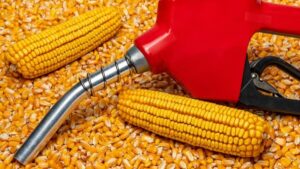
In Ukraine, approximately 1 million tons of capacity for processing corn into bioethanol is currently being built within industrial parks, which will require 3 million tons of corn annually to meet their raw material needs, according to Taras Mykolayenko, director of the Ukrainian Association of Bioethanol Producers.
“As soon as there is talk of creating a new industrial park, every second one envisages the production of bioethanol. We have 1 million tons of capacity that is just starting to be laid. If we convert (these figures – IF-U) into corn, we need 3 million tons. So, in an optimistic scenario, at full capacity (of bioethanol plants – IF-U), corn will be processed here,“ he said at the conference ”Agribusiness in Ukraine” in Kyiv on Thursday.
Mykolaienko specified that Europe currently consumes 6 million tons of bioethanol per year, so Ukrainian products could definitely be exported to the European Union. As part of the updated trade agreement, the EU, under the influence of its own producers, planned to set a quota for Ukraine at 100,000 tons, which, as a result of negotiations, the Ukrainian side was able to increase to 125,000 tons. The industry plans to increase it to 300,000 tons by 2026.
At the same time, he recalled that in July 2025, a bill was registered in the Verkhovna Rada, which provides for the introduction of a mandatory addition of more than 7% bioethanol to fuel in Ukraine from July 2026, the share of which should ideally be 10%. A similar requirement will apply to imported goods. Accordingly, bioethanol consumption in the domestic market will increase.
In addition, Mykolaienko said that the industry association will try to protect its own domestic market in 2026.
“We are faced with the fact that, in addition to quotas, there are technical regulations in the European Union. These are real non-trade barriers that work well. (…) If necessary, Europeans have a mechanism to stop exports. We plan to develop the same mechanisms, develop and implement a domestic environmental certification system, and we will also protect the Ukrainian market,” concluded the head of the Ukrainian Association of Bioethanol Producers.
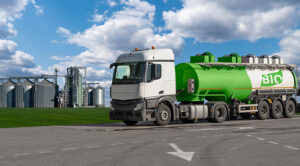
Ukraine exported 99,300 tons of bioethanol in 2024, with private producers accounting for 62% of this export, and three private bioethanol plants accounting for 38,100 tons According to Nina Yuzhanina, a member of the Verkhovna Rada Committee on Finance, Tax and Customs Policy, the key factors for the development of bioethanol production in Ukraine were the replacement of Russian methanol with Ukrainian bioethanol by oil and gas companies.
She noted that of the 17 bioethanol plants operating in Ukraine, with a production capacity of over 420,000 tons per year, 12 have been privatized in recent years.
According to her, the key factors for the development of bioethanol production in Ukraine were the replacement of Russian methanol with Ukrainian bioethanol by oil and gas companies; the supply of consolidated batches of bioethanol (min. 10,000 tons) to the EU market; logistical features of bioethanol exports by tankers to EU oil refineries with return delivery of gasoline to Ukraine; the abolition of quotas on bioethanol exports to the EU (as of today, the quota of 100,000 tons of ethyl alcohol per year has already been restored) and the introduction of a mandatory 5% bioethanol blend in gasoline in Ukraine.
The MP also criticized the government for failing to protect foreign markets for one of Ukraine’s most promising processing industries.
As reported, the European Commission has approved quotas for Ukrainian agricultural products, which will be in effect from June 6 until the end of 2025 as part of the Deep and Comprehensive Free Trade Area Agreement. According to a document published on the EU website, by the end of 2025, Ukraine will be able to supply the EU market under the Deep and Comprehensive Free Trade Area in a 7/12 month regime (7 out of 12 months of the year) with wheat, flour, and meslin – 583,330 tons , corn – 379,167 thousand tons, barley – 204,167 thousand tons, poultry meat – 52,511 thousand tons, beef – 7 thousand tons, eggs – 3,500 tons, milk and cream – 5,833 tons, dry milk – 2,917 tons, butter – 1,750 tons.
In 2024, Ukraine exhausted its quota for bioethanol supplies to EU markets, which amounted to 100,000 tons per year, for the first time since signing the Association Agreement with the EU. Under the updated terms of 7/12, Ukrainian producers will be able to supply 58,000 tons of bioethanol to the EU market by the end of 2025.



