

According to the Interfax-Ukraine Culture project, artificial intelligence can be a useful assistant for authors, students, and researchers, but it cannot replace a writer because it lacks its own life experience, according to Rostyslav Semkiv, director of the Smoloskyp publishing house, who stated this in an interview with the “Interfax-Ukraine” agency.
“I view artificial intelligence much the same way I view nuclear energy. It can be used for good, or it can be used for harm. It all depends on how a person uses this tool,” Semkiv said.
According to him, AI can help find sources, organize information, select relevant literature, and improve the logic of texts—just as professors, editors, or academic advisors used to do.
At the same time, he cautioned against completely delegating creative and intellectual work to algorithms.
“As an assistant, it’s a wonderful tool. As a substitute for one’s own thinking, it’s a bad idea,” Semkiv emphasized.
He also noted that artificial intelligence still often makes mistakes, especially when it comes to Ukrainian literature or highly specialized topics, and in some cases may even invent facts that do not exist.
Commenting on the emergence of books written with the help of AI, Semkiv noted that it is becoming increasingly difficult to distinguish such texts based solely on formal characteristics. However, the main difference, in his opinion, lies elsewhere.
“Literature is, first and foremost, the transmission of experience. A person writes based on their own life, observations, and experiences. Artificial intelligence does not have such experience,” he said.
According to Semkiv, a writer always brings their own life context, emotions, and observations into the text, whereas artificial intelligence merely generalizes a vast number of already existing texts.
“True literature is always an attempt to express oneself, one’s environment, one’s context, and one’s own story. And this is precisely where artificial intelligence has very serious limitations,” Semkiv concluded.
As previously reported, Rostyslav Semkiv, director of the “Smoloskyp” publishing house, believes that Ukrainian libraries should be transformed into modern community cultural centers, and the world is becoming increasingly interested in Ukraine through literature, while the full-scale war has already shaped a new generation of Ukrainian writers. He also stated that Ukraine’s book market continues to grow despite the war, and audiobooks could become one of the drivers of its development. Additionally, in June, due to an accident on the heating network, the Smoloskyp publishing house building in Kyiv was flooded, resulting in damage to about 30% of the book collection.

According to the Interfax-Ukraine Culture project, about 100 translations of Ukrainian books will be published in 2026 in 33 countries around the world under the Translate Ukraine translation support program, said Oleksandra Koval, acting director of the Ukrainian Book Institute, in an interview with Interfax-Ukraine.
“This year, under the Translate Ukraine program alone, about 100 translations of Ukrainian books will be published in 33 countries around the world. And in total, since the program’s inception in 2020, we have supported about 300 translations,” Koval said.
According to her, the sale of translation rights for Ukrainian books is currently one of the most successful avenues for Ukrainian literature to enter the international market.
Koval noted that Ukraine remains a key topic for the international cultural community, which contributes to growing interest in Ukrainian authors and their works abroad.
She emphasized that one of the most significant changes in recent years has been the perception of Ukraine as a distinct and independent participant in the international book market.
“Ukraine has finally become a distinct and independent entity in the international book market. It is no longer perceived as part of the Russian-speaking sphere and is increasingly associated with its own language, literature, and culture,” Koval emphasized.
According to the Ukrainian Book Institute, the database of translations of Ukrainian literature already includes over 1,500 titles in various languages of the world. The works of Andriy Kurkov, Serhiy Zhadan, Yuriy Andrukhovych, Oksana Zabuzhko, and the “Agrafka” creative workshop have the most translations. Among the new wave of authors who are actively attracting the attention of foreign publishers and readers, Koval highlighted Artem Chapay, Oleksandr Mykhed, Yevheniia Kuznetsova, Sofiia Andrukhovych, and Yuliia Ilyukha. At the same time, she recalled the significant contribution to the promotion of Ukrainian literature abroad made by the writers Viktoria Amelina and Volodymyr Vakulenko, who died during the war.
At the same time, one of the main challenges for the further promotion of Ukrainian literature abroad remains the shortage of translators from the Ukrainian language. According to Koval, demand for Ukrainian books is growing faster than the number of specialists capable of providing high-quality translations, and many translators already have orders booked several years in advance.
The head of the UIC also noted that international book fairs play an important role in promoting Ukrainian authors, where Ukrainian publishers negotiate new translations, contracts, and partnerships.
As reported, book piracy remains one of the biggest problems facing the Ukrainian publishing market and costs the industry hundreds of millions of hryvnias in losses every year.
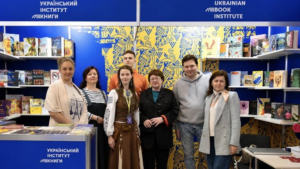
Approximately 7 million hryvnias per year are currently allocated for programs to promote reading and support related projects in Ukraine, which does not meet the industry’s actual needs, said Oleksandra Koval, acting director of the Ukrainian Book Institute, in an interview with the Interfax-Ukraine news agency.
“As for the activities of the Ukrainian Book Institute specifically, the main problem remains insufficient funding. We have about 7 million hryvnias per year for programs to promote reading and support related projects. This allows us to support only 15–20 projects across the country. For a country the size of Ukraine, this is extremely little,” Koval said.
According to her, real change in the field of reading requires not dozens, but thousands of events each year, which should be held in libraries, schools, communities, at festivals, and book fairs.
Koval emphasized that one of the key challenges remains Ukrainians’ access to books, especially in small towns and villages.

She also noted that the systematic updating of library collections should become an important focus of state policy.
“We are convinced that new books are the strongest draw for libraries. That is precisely why Ukraine needs a systematic update of its library collections. In my opinion, libraries should receive at least one million new books each year, and ideally—around three million copies,” said the head of the UIC.
According to her, only under such conditions will the changes be noticeable to readers across the country, particularly in small towns and villages.
As reported, Ukrainians have spent over 3.5 billion hryvnias on book purchases under state support programs since late 2021, and in 2026, the Translate Ukraine program plans to publish about 100 translations of Ukrainian books in 33 countries worldwide. Book piracy causes losses to the Ukrainian market amounting to hundreds of millions of hryvnias.
BOOKS, CULTURE, OLEXANDRA_KOVAL, READING, UKRAINIAN_INSTITUTE_OF_BOOKS

According to the Interfax-Ukraine Culture project, “this year, the competition received 179 applications from publishers around the world—experts at the Ukrainian Book Institute received 18 more applications than last year. A total of 176 projects submitted by 119 publishers from 44 countries passed the technical screening. Based on the evaluation results, the Expert Council approved 100 translation projects. According to the plan, all of them will be published this year,” the Institute stated in its announcement.
It is noted that the most translations are planned into Polish—9 publications, English—8, Serbian—7, followed by Czech and German—6 publications each, and 5 books will be published in Arabic, French, and Italian.
“In total, Ukrainian books will be translated into 30 languages. In addition to those mentioned, the list includes Slovak, Spanish, Lithuanian, Latvian, and Macedonian—4 books each; Greek, Croatian, Bulgarian, and Georgian—3 each; and Swedish, Azerbaijani, Portuguese, and Bengali—2 each. One book each will be published in Finnish, Romanian, Hebrew, Japanese, Estonian, Hungarian, Danish, Albanian, and Bosnian,” the UIC reported.
The Institute noted that foreign publishers were most interested in the book on modern warfare *Hemingway Knows Nothing* by Artur Dron; specifically, it will be published in Swedish, Polish, Lithuanian, English, Slovak, Georgian, French, and Portuguese.
In addition, Illarion Pavliuk’s mystical detective novel *I See You Are Interested in Darkness* will be available to Finnish, Czech, Polish, Romanian, and Azerbaijani readers, while Sofia Andrukhovych’s *Amadok* is set to be published in French, Spanish, Lithuanian, and Azerbaijani.
A detailed list of the winning projects is available at the link: https://docs.google.com/spreadsheets/d/1LqUVQOfAiPASGYxuIpLqJwjTnj3giqZsaIOWIYO2eRg/edit?gid=0#gid=0
As reported, 75 new translations of Ukrainian books have been published as part of the Translate Ukraine 2025 program.
https://interfax.com.ua/news/culture/1156991.html

According to the Interfax-Ukraine Culture project, at least six bookstores closed in Ukraine in March alone, including in Vinnytsia, Kropyvnytskyi, and Kyiv, as reported by Viktor Kruglov, publisher and CEO of the “Ranok” publishing house, on his Facebook page.
After analyzing the published information and the situation in the book market, journalists from the “Culture” department of the Interfax-Ukraine agency sought comment from Artem Bidenko, chairman of the board of the Ukrainian Publishers Association.
“The market situation is difficult: people are buying less and less, while book production is becoming more expensive. Bookstores, both small and large, have already begun to close. Books are becoming unprofitable for retailers because they take up space and don’t sell well,” said Artem Bidenko, chairman of the board of the Ukrainian Publishers Association, in a comment to Interfax-Ukraine.
According to Viktor Kruglov, bookstores in Vinnytsia and Kropyvnytskyi—which opened in 2023–2024 amid a wave of enthusiasm and expectations of state support—have closed permanently.
In addition, next week “Yakaboo” is closing its only brick-and-mortar location at the Main Post Office on Khreshchatyk, and the publishing house “ArtBooks” is liquidating its flagship bookstore on Velyka Vasylkivska Street due to unprofitability.
Earlier, “Knyholand” closed its bookstore in the underground shopping center on Maidan Nezalezhnosti, and the future of the bookstore in Rusanivka, Kyiv, remains uncertain.
Additionally, according to Kruglov, the owner of the bookstore “My Bookshelf” announced the closure of the business, while the “Ridit” and “Sens” chains reported losses in the millions for the year.
According to Bidenko, in January–March, the average receipt at bookstores fell by nearly half: whereas shoppers previously chose 3–5 books, they now select 1–2.
Against the backdrop of falling demand, publishers are forced to offer significant discounts in an attempt to recoup at least part of their investment, but this does not solve the systemic problem.
“For retailers, books are becoming economically unprofitable: they take up space, require specific storage conditions, yet sell significantly worse,” he explained.
According to the expert, the next stage could be a payment crisis in the industry, which will first affect publishers and later printing houses.
“These are signs of a systemic crisis in the market that cannot be overcome without government intervention,” Bidenko emphasized.
He also noted that one of the key reasons for the rising cost of books is the increase in production costs.
“Raw materials are imported, logistics are complicated, and there is a shortage of personnel in both transportation and printing houses. All of this increases costs and, consequently, the final price of books,” he said.
Piracy in the e-book and audiobook sector remains a separate factor putting pressure on the market.
“About 80% of digitized content is illegal. Because of this, it is impossible to objectively assess real demand: we don’t know whether people are reading more in digital format or simply buying fewer books and reading less in general,” noted Bidenko.
He added that certain segments, particularly children’s literature, have been in crisis since the start of the full-scale war.
Assessing government policy, Bidenko stated that the market currently sees no practical implementation of the declared support.
“So far, these are just statements. There are no real actions, although we expect the situation to change. If these tools start working, the market will be able to return to pre-war levels and resume development. Without state participation, the publishing industry, which is subsidized in most countries, will not be able to function stably,” he concluded.
Text: Olga Levkun
https://interfax.com.ua/news/culture/1154870.html
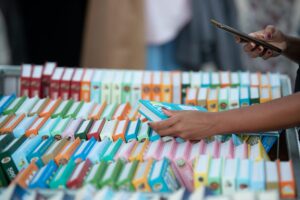
The books were handed over to the warehouses of corporate enterprises JSC “Ukrvydavpoligrafia” JSC. From there, publications are sent to cities in Ukraine and Europe.
During this hour, almost 320,000 books were already handed over to volunteer centers in Ukrainian cities and European countries where refugees currently live. Delivery of literature is carried out by trucks of volunteers and volunteer organizations.
The largest number of books was transferred to the Lviv region — more than 25,000. Also, over 125,000 books were sent to Kropyvnytskyi, Ternopil, Drohobych, Chernivtsi, Kamianets-Podilskyi, Ivano-Frankivsk, Uzhgorod, Khmelnytskyi.
In addition, more than 190,000 copies of literature were sent abroad, namely: 45,000 books to Poland, almost 28,000 to Austria, more than 1,000 to Romania, 76,000 to Slovakia, 4,000 to the Czech Republic, more than 1,000 – to Hungary, 2 thousand – to Albania, about 2 thousand – to Croatia, more than 2 thousand – to Switzerland, 2 thousand – to the Netherlands, almost 5 thousand – to Germany, almost 8 thousand – to Great Britain.
Another 18,000 copies of the books are now on their way to Slovakia and Austria.
The campaign was launched on March 15 by the State Committee for Television and Radio Broadcasting of Ukraine together with the Office of the President of Ukraine and the Ministry of Culture and Information Policy.
The purpose of the campaign is to provide children who were forced to relocate to escape Russian armed aggression with textbooks, study aids, and fiction free of charge.
We will remind you that 100,000 copies of literature were sent to different European countries during this campaign.
As you know, the books were delivered to Poland, Lithuania, Great Britain and other countries as part of the “Books without Borders” project for children from Ukraine who were forced to leave for other countries.



