

According to Serbian Economist, Bosnia and Herzegovina will receive €140.5 million in grant funding from the European Union following the country’s Presidency’s ratification of the IPA III package for 2025–2027.
The EU Delegation to Bosnia and Herzegovina announced the completion of the ratification on July 25. The funds are intended to bring the country’s legislation and institutions into line with European standards, support economic development, and implement reforms.
“The European Union remains Bosnia and Herzegovina’s most consistent partner,” the EU Delegation stated in its announcement.
The funding is provided under the Instrument for Pre-Accession Assistance (IPA III). According to the program approved by the European Commission, of the total amount, 30 million euros are allocated for 2025, 38.5 million euros for 2026, and 72 million euros for 2027. All funding is in the form of grants and does not require repayment.
The program covers four main areas: the rule of law, fundamental rights, and democracy; public administration and the alignment of legislation with EU standards; the “green” agenda and sustainable infrastructure; and enhancing competitiveness and inclusive economic growth.
https://t.me/relocationrs/3322

According to Serbian Economist, the Serbian company Trayal from Krusevac plans to open a production facility in the municipality of Rudo in the Republic of Srpska (Bosnia and Herzegovina), where rocket fuel production will be located, the Rudo municipal administration reported following an informational meeting between company representatives and local residents.
According to the Rudo municipality, Trayal representatives held a meeting on May 19, during which they presented the terms of future operations and plans to launch the company’s division in this municipality. Rudo authorities had previously invited interested citizens to attend a meeting dedicated to the launch of production and new jobs.
According to the local administration, prospective employees will first have to undergo a detailed medical examination, after which they will receive paid training in Kruševac or Belgrade.
Company representatives emphasized that the work will require a high level of responsibility and concentration, as the facility will handle flammable and sensitive materials.
Production is to be located on the site of the former Yugoslav People’s Army barracks in Rudo. According to BiznisInfo, Trayal has been collaborating with the Rudo community for several years and uses part of the former barracks, where eight people are currently employed.
For Rudo, the project is significant primarily as a source of new jobs and industrial activity in a small community in eastern Bosnia and Herzegovina. For Trayal, this means expanding its manufacturing presence beyond Serbia and strengthening the company’s regional role in the specialty chemical and defense industries.
Trayal korporacija a.d. is a company based in Krusevac that manufactures rubber, chemical, and protective products. In official documents from the State Audit Institution of Serbia, the company is listed as a manufacturer of rubber and chemical products.
https://t.me/relocationrs/2855
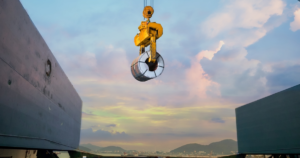
According to Serbian Economist, the authorities of Bosnia and Herzegovina are considering the introduction of a temporary duty of 30% on imports of steel and steel products for a period of 200 days. The proposal was prepared by the Ministry of Foreign Trade and Economic Relations at the request of Nova Željezara Zenica, the final decision after public consultations should be made by the Council of Ministers of BiH.
The initiative is explained by a sharp increase in the supply of certain categories of metal products. According to the Ministry, in 2025, imports of reinforcement mesh in BiH increased by 192.87% compared to the average of the previous four years, with Serbia being the largest supplier, with more than 9,000 tons, which is 408% higher than the 2021-2024 average. In second place was Italy (7,794 tons, about double the previous level).
Separately, the dynamics of imports from Turkey are pointed out: the supply of rebar in coils in 2025 increased by 885% relative to the four-year average, while imports of bars increased by 229.56%. The ministry believes that this creates pressure from foreign producers and leads to underutilization of local capacity.
In an explanation of the initiative, the ministry notes the risk of increased dependence of the construction sector on imports and warns of possible consequences, including job cuts, lower budget revenues, falling investment and higher prices on the domestic market.
The decision is being discussed against the backdrop of Serbia’s recent protective measures: as of January 1, 2026, Belgrade introduced a temporary import quota scheme for a number of iron and steel products (as well as Portland cement) with an additional duty of 50% on shipments above the quotas.
Nova Željezara Zenica itself, acquired last year by H&P Zvornik (Pavgord Group), had previously initiated bankruptcy proceedings against the company, explaining that it had been insolvent for a long time.
https://t.me/relocationrs/2256

According to Serbian Economist, the mountain river Drina in eastern Bosnia and Herzegovina was again blocked by a large accumulation of floating waste near the barriers of a hydroelectric power plant in the vicinity of the city of Visegrad, media reported, citing local activists and utility services.
During the winter, rubbish washed away by flooded rivers and tributaries accumulates near the protective line of the hydroelectric facility, forming “islands” of plastic bottles and other household and construction waste. Machinery is working to clear the riverbed, but activists note that the problem recurs every year.
Euronews specifies that some of the waste may come from illegal landfills not only in Bosnia and Herzegovina, but also in neighboring Serbia and Montenegro, which gives the problem a cross-border character and requires coordination between the countries of the Drina basin.
According to estimates cited in publications, the volume of waste entering the dam area during peak periods can be measured in thousands of cubic meters, with activists claiming that medical materials are also found among the waste.

According to Serbian Economist, associations of truckers from Serbia, Montenegro, Bosnia and Herzegovina, and North Macedonia have announced their intention to start protest actions on January 26, 2026, by blocking freight terminals at border crossings in the direction of Schengen countries. The planned actions were reported by regional media outlets, citing statements from the relevant associations.
The carriers cite the practical application and future tightening of controls in connection with the introduction of the Entry/Exit System (EES) as the reason for their actions. According to them, professional drivers from non-EU countries will effectively be subject to the 90-day rule within a 180-day period for short stays in the Schengen area, just like ordinary tourists. Carriers warn that with the “strict” application of the rules from spring 2026, some drivers may quickly exhaust their stay limit, which will create risks for supply chains and freight traffic between the EU and the Western Balkans region.
The European Commission has stated that it is monitoring the situation and is in contact with its Western Balkan partners, while pointing out that the rules for short stays in Schengen are “clear” and that practical decisions at the external borders are the responsibility of the member states.
EES is an automated EU IT system for registering the entry and exit of non-EU citizens on short-term trips, including recording document and biometric data, with the aim of improving the efficiency of external border controls and detecting overstays. The European Commission has announced that the system is being implemented in stages, with full deployment at all border crossing points planned for April 10, 2026, when electronic records are to finally replace stamps in passports.
If blockades are implemented at freight terminals, queues and delays are possible in a number of EU-Western Balkans directions, which may affect the timing of commercial deliveries in the region and throughout Europe.
Blockade, Bosnia, CARGO, Macedonia, MONTENEGRO, Schengen, SERBIA, Trucking company

The pharmaceutical company PrJSC Darnitsa (Kyiv) has registered a drug in Bosnia and Herzegovina for the treatment and prevention of neuromuscular transmission disorders, including myasthenia gravis, stimulation of the intestines and bladder after surgery, and restoration of muscle activity after anesthesia.
According to a press release from the company, the drug was registered at the end of December.
The registration certificate is valid for five years.
As previously reported, Darnitsa also registered an antifungal drug in Bosnia and Herzegovina.
Currently, Darnitsa’s drugs are available in more than 20 countries around the world.
Darnitsa has been operating on the market for over 90 years, is one of the ten largest pharmaceutical manufacturers in Ukraine, and produces 180 brands of drugs in 15 different forms. The strategic areas of portfolio development are cardiology, neurology, and pain management.
The net loss of PJSC “Pharmaceutical Firm ”Darnitsa“” (Kyiv) in January-June 2025 amounted to UAH 479.473 million, while in the same period of 2024, the company received a net profit of UAH 6.528 million. According to the Unified State Register of Legal Entities and Individual Entrepreneurs, the ultimate beneficiary of the company is Gleb Zagoriy.



