

The Business Expectations Index (BEI) for enterprises rose to 105.8% in January–March 2026, compared to 102.1% in October–December 2025, breaking a three-quarter downward trend, according to the National Bank of Ukraine (NBU) based on the results of a survey of company executives.
“In Q1 2026, businesses expected a revival in business activity over the next 12 months. Respondents forecast growth in the volume of goods and services produced and strengthened their positive assessments of their own companies’ development. Inflation expectations remained unchanged, while exchange rate expectations strengthened slightly,” the regulator noted in a press release.
The NBU notes that military operations and their consequences remain the dominant factor (83%) limiting enterprises’ ability to increase production volumes. The shortage of skilled workers continues to have a significant impact. More than any other factor, the influence of excessively high energy prices was expected to intensify.
According to the published data, businesses have significantly improved their assessments of production volumes in Ukraine over the next 12 months: the balance of responses stood at 0.6% compared to -1.8% in Q4 2025. Optimistic sentiment was demonstrated by enterprises in the energy and water supply, agriculture, manufacturing, transportation, and communications sectors. Negative sentiment was demonstrated by enterprises in the trade sector, small businesses, as well as those engaged solely in import/export operations.
According to the survey results, business inflation expectations stabilized: projected annual inflation stood at 11.1%, unchanged from the previous quarter. At the same time, exchange rate expectations strengthened slightly—to 45.00 UAH/$1 (in Q4 2025—44.27 UAH/$1). Respondents also provided a forecast for the EUR exchange rate in 12 months for the first time, with an average value of 54.00 UAH/EUR.
The assessment of the current financial and economic condition of enterprises remains subdued, though the balance of responses improved slightly to -4.7% (-5.8% in Q4 2025). Expectations regarding changes in the financial condition of their own companies next year rose to 2.0% (in Q4 2025 – 0.8%). It is noted that transport and communications enterprises, as well as those in other sectors, have optimistic expectations, while representatives of construction and trade expect the future financial and economic condition of their own enterprises to remain at the current level.
Respondents are more confident in expecting growth in product sales volumes: the balance of responses rose to 14.5% (from 9.6% a quarter earlier), and for sales in foreign markets—from 11.7% in Q4 2025 to 15.8% in Q1 2026. Expectations regarding investment spending on machinery and equipment improved—from 7% to 12.8%—while expectations regarding construction work turned positive for the first time in a year—1.6% (Q4 2025 recorded -2.9%).
Companies attracting foreign investment maintained their expectations regarding growth in foreign investment volumes next year: the balance of responses was 11.6% (15.5% in Q4 2025). Expectations were highest among energy and water supply companies. The share of respondents planning to attract foreign investment in the next 12 months stood at 20.9%, compared to 21.5% in the previous survey.
In the labor market, the trend toward a softening of negative assessments regarding the number of employees continues: the balance of responses was -1.8%, compared to -3.8% in Q4 2025. Energy and water supply companies expected to increase their workforce. In contrast, respondents from agriculture, the extractive and processing industries, trade, and other sectors had negative expectations, with agriculture showing the most negative outlook.
Respondents raised their assessments of the need for borrowed funds in the near future: the balance of responses stood at 34.7% compared to 31.7% in Q4 2025. The share of respondents planning to take out bank loans remained virtually unchanged: 35.6% compared to 35.7% in Q4 2025. Those planning to take out loans traditionally prefer loans in the national currency—83.5% (80.9% in Q4 2025). Excessively high interest rates and the availability of other sources of financing remain the most significant obstacles to new loans—44% and 43.4%, respectively. Additionally, the influence of the factor “significant fluctuations in the hryvnia exchange rate against foreign currencies” has increased by 4.3 percentage points, to 17.8%.
The NBU notes that respondents slightly softened their assessments regarding the strictness of conditions for accessing bank loans: the balance of responses was 11.4% (11.6% in Q4 2025). 6.6% of respondents planned to raise funds abroad, compared to 7.1% in the previous quarter.
The quarterly survey was conducted from January 29 to February 27, 2026, among executives of 664 enterprises from 21 regions of Ukraine. An index value above 100 indicates a predominance of positive economic sentiment.
Among those surveyed, 21.1% were trading companies, 19.1% were in the manufacturing industry, 14.5% in agriculture, 13.9% in transportation and communications, 5.9% were in the extractive industry, 4.8% in energy and water supply, and 3.2% in construction. In terms of size, 30.4% of respondents were large enterprises, 37.7% were medium-sized, and 31.9% were small.
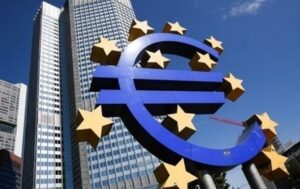
Business activity in the euro area at the end of 2025 grew weaker than expected amid a deepening recession in manufacturing and slower growth in the dominant services sector, according to preliminary data from the business activity index (PMI) prepared by HCOB and S&P Global.
According to the assessment, the HCOB Flash Eurozone Composite PMI declined to 51.9 points in December from 52.8 points in November, falling to its lowest level in three months and below the forecast of analysts polled by Reuters. The value above 50 points still indicates an increase in business activity.
The situation in industry continues to drag the index down: the eurozone manufacturing PMI in December fell to 49.2 points, the lowest since April, reflecting the continued decline in output and a steeper new orders slump, the largest since February. Deepening weakness in German industry was cited as the main factor, while France showed cautious signs
In the services sector, business activity is still picking up but the pace is slowing, with the services PMI down to 52.6 points from 53.6 points in November. Meanwhile, companies continue to increase employment, but business optimism fell to its lowest level since May, indicating that businesses are cautious about the outlook for 2026.
According to a Reuters poll of analysts, rising cost pressures and output prices at the end of the year do not change the overall picture: inflation in the eurozone has moved closer to the 2% target on average, and the market in the baseline scenario expects the European Central Bank’s key rates to remain unchanged until at least 2027.

The indicator of business confidence in industry in Ukraine in February 2024 increased by 2 p.p. compared to January 2023 – up to “minus” 9%, while in the processing industry it increased by 3.6 p.p. – To “minus” 8.3%, reported the State Statistics Service.
In turn, the indicator of business climate in industry increased by 0.2 p.p., to +0.2%. – to +0.2%, while in the processing industry increased by 0.4 p.p. to 0.4%. – to 0.4%.
As reported, expectations for business activity prospects in 2023 began to deteriorate in May, when the business confidence indicator stood at “minus” 6.8% and “minus” 5% in industry and processing, respectively, and continued to decline during June-December, amounting to “minus” 13.5% and “minus” 15.6% in December, respectively.
However, in January this year, this indicator increased by 2.6 pp y-o-y to “minus” 11% in December-2023, while in the processing industry it increased by 3.9 pp y-o-y to “minus” 11.8%. – To “minus” 11.8%.
At the same time, the indicator of business climate in industry and processing industry in January, as well as in December-2023 remained at the zero level.
The components for calculations of these indicators have seasonally adjusted values of balances formed on the basis of reports submitted by enterprises. In particular, the assessment of the current volume of orders for production (demand) in industry in February amounted to “minus” 42% (in January – “minus” 44%), in processing industry – “minus” 45% (against “minus” 47%).
In turn, February expectations for output in the next three months improved significantly – in industry they rose to +5% from zero in January-2023, in processing – to +11% from “minus” 1%.
As reported, the best value in 2023 was reached in April-2023 at +10% in manufacturing and +17% in processing.
The estimate of current finished goods inventories in February was “minus” 10% and “minus” 9%, respectively (“minus” 11% and “minus” 12% in January); the estimate of output for the previous three months was “minus” 1% and +1% (“minus” 6% and “minus” 3% in January).
At the same time, the assessment of the current volume of export demand in industry worsened by 2 p.p. to “minus” 31%, and in processing industry remained at the level of “minus” 38%.
According to the statistical agency, the supply of orders of enterprises, still, on average, for four months.
As detailed by the State Statistics Committee, based on the results of the survey of industrial enterprises in February, the growth of selling prices for products in the next three months (February-April) is expected by 31% of surveyed industrial enterprises compared to 33% in January, while the decrease – still 2%; in the processing industry, respectively, 35% and 2%.
At the same time, 25% of industrial enterprises expect in February-April 2024 a decrease in the volume of manufactured products (20% in January), and 20%, as a month earlier, expect growth.
In the processing industry, 28% of respondents expect production growth (8 p.p. more), while 17% of respondents expect a decrease (20% in January).
In the next three months, 17% of the surveyed industrial enterprises expect a decrease in the number of employees, 7% – growth, whereas in January this indicator amounted to 16% and 6%, respectively.
For the previous three months (November 2023-January 2024), 23% of the industrial enterprises noted an increase in production volumes, while a decrease – 31% (in January, respectively, 28% and 29%), and the current volume of production orders (demand) above normal was noted by only 1%, while 39% – below normal and 60% – normal for the season.
The main factor restraining the production is still insufficient demand – its growth in November-January was noted by 19% of industrial enterprises (in processing – 18%), while the decrease was noted by 30% and 32%, respectively.

The Business Activity Outlook Index (BAOI) with a BAOI reading above the neutral level of 50 implying a positive business outlook and below the neutral level implying a negative business outlook compared with the previous month grew by 2.1 points in September, to 56.6, the National Bank of Ukraine (NBU) said on Wednesday. “In September, all sectors approved the results of economic activity. Enterprises also expected growth in new orders, cost of contractor services and purchase prices. Companies that provide services were optimistic,” the NBU said in the study.
According to the results of the survey in September, the companies that provide services and industrial enterprises are the most optimistic, for which the index was 57.3 and 58.1 respectively.
According to the report, the largest increase in BAOI was seen in the construction sector – by 7.6 points (to 56.2), thanks to a significant increase in the optimistic expectations of enterprises regarding product prices, the emergence of expectations about the volume of purchases of raw materials and optimistic attitude about the increase in the number of employees in the field.
Along with the general increase in BAOI, the indicator fell by 1 point (to 54.5) in the field of trade. According to the results of the study, despite high estimates of trade turnover, expectations about the goods stocks remain pessimistic.



