

A petition on the website of the Cabinet of Ministers of Ukraine calling for the mobilization age limit to be lowered to 55 has reached the number of votes required for consideration.
According to the platform on the government’s website, the petition was submitted on July 27 and, as of October 14, had gathered the 25,000 votes required for consideration.
“Practical experience in carrying out combat and special missions demonstrates the need to revise the regulations to lower the upper age limit to 55,” the petition states.
According to the petition’s author, men aged 55–60 in most cases experience significant age-related changes in health and chronic illnesses, which substantially reduce their physical endurance in extremely challenging field and combat conditions.
Furthermore, according to the author, staffing units with personnel based on their physical capabilities will help improve the overall combat readiness and mobility of military units.
Furthermore, in her view, citizens in this age group are highly qualified specialists whose work in the civilian sector and at critical infrastructure facilities provides substantial support to the country’s economy.
In this regard, the author of the petition proposes: to draft and submit to the Verkhovna Rada of Ukraine a bill amending the Law “On Military Duty and Military Service” and the Law “On Mobilization Preparation and Mobilization,” which would lower the age limit for military service during martial law from 60 to 55 years for enlisted personnel, sergeants, senior noncommissioned officers, and officers, as well as establish a provision granting the right to voluntary discharge from military service to service members who have reached the age of 55 during martial law.
A general mobilization is currently in effect in Ukraine, covering men subject to military service between the ages of 25 and 60.
As previously reported, a petition posted on the Cabinet of Ministers’ website failed to garner the number of votes required for consideration. The petition called for allowing the demobilization of military personnel over 55 years of age who have served more than three years; lowering the upper age limit for conscription from 60 to 58 years; demobilize men over 55 who are eligible for a civilian pension for working in hazardous conditions.
CABINET OF MINISTERS, military service, mobilization, PETITION, UKRAINE
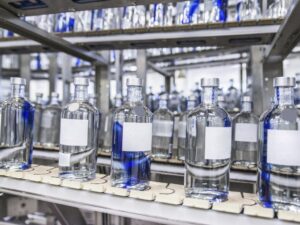
The Cabinet of Ministers of Ukraine has refined the procedure for determining the maximum production capacity of equipment used to produce ethyl alcohol and bioethanol, according to the industry publication SEEDS.
The government adopted the corresponding resolution on September 23, 2026. The new rules are intended to ensure a more accurate and technically sound calculation of equipment capacity. This metric is used to determine the guaranteed excise tax liability for alcohol and bioethanol producers.
In particular, the calculations now require determining the actual capacity of processing equipment and taking it into account. The regulations also clarify which changes to equipment should be considered a change in its maximum capacity.
The government has established a mechanism for performing the updated calculation and provided for the possibility of accounting for permissible deviations in actual capacity related to the specifics of the production process or the characteristics of measuring instruments.
One of the most significant changes is the allowance for actual production capacity of process equipment to deviate from the calculated maximum production capacity by up to 3% inclusive.
In addition, the procedure for applying coefficients related to the cleaning and disinfection of production equipment has been clarified. Calculations will take into account the possibility of performing such work during scheduled production shutdowns.
The government explains the need for these changes by citing the technological characteristics of the alcohol industry. The actual productivity of equipment may be influenced by the characteristics of the raw materials used, auxiliary materials, seasonal changes in energy source parameters, and other factors, which in and of themselves do not imply a change in the enterprise’s maximum technical productivity.
Thus, the updated procedure must simultaneously take into account both the technical characteristics of the equipment and the actual technological conditions of ethyl alcohol and bioethanol production.
The mechanism for determining maximum production capacity was introduced by Cabinet of Ministers Resolution No. 350 of March 28, 2025, in accordance with amendments to tax legislation regarding the specifics of excise taxation of ethyl alcohol and bioethanol. The calculation is performed by an authorized state agency based on the technical and technological parameters of production.
According to the government’s assessment, updating the methodology should increase the predictability of operating conditions for alcohol and bioethanol producers and ensure a more accurate determination of the indicators used to calculate excise tax liabilities.
ALCOHOL, Bioethanol, CABINET OF MINISTERS, EXCISE TAX, UKRAINE
The government’s draft law “On the State Budget of Ukraine” for 2027 was registered with the Verkhovna Rada on Tuesday evening under No. 16000.
The relevant information has been published on the parliament’s website.
At this time, the text of the budget bill and accompanying materials are not yet available, nor is there a statement from the Cabinet of Ministers regarding its adoption at the meeting held on Tuesday evening.
According to the Budget Code, the government must submit the draft state budget for the following year to parliament by September 15 inclusive.
BUDGET, CABINET OF MINISTERS, DRAFT LAW, UKRAINE, VERKHOVNA RADA

The government has once again approved and submitted to the Verkhovna Rada a bill introducing value-added tax (VAT) on international postal shipments to Ukraine valued at up to 150 euros, Prime Minister Serhiy Koretskyi announced on Telegram on Wednesday evening.
“We must create a level playing field for all market participants. This is a matter of supporting Ukrainian manufacturers and ensuring fair competition. We expect this decision to generate over 10 billion hryvnias in additional budget revenue each year,” he noted.
The prime minister emphasized that Ukrainian manufacturers and sellers pay VAT, while some imported goods enjoy tax breaks.
“It is unacceptable that Ukrainian manufacturers—for example, in the light industry—pay taxes, while citizens buy clothing on foreign marketplaces, and those same goods are not taxed at all. It is equally unacceptable that a number of unscrupulous players split up their shipments to evade paying taxes,” the head of government stated.
Koretsky also noted that the repeal of the current exemption will bring Ukrainian regulations into line with European Union legislation.
“Importantly, personal gifts valued at up to 45 euros that are sent free of charge will, as before, remain tax-exempt,” the prime minister added.
According to him, if lawmakers support this decision, the new rules will take effect in 2027, giving businesses, marketplaces, and delivery operators time to prepare.
Separately, Koretsky instructed the Ministry of Finance and all relevant agencies to thoroughly discuss this issue with lawmakers at the committee level and with representatives of all factions and groups, as well as to explain in detail to the public the provisions of the bill and the need for its adoption.
As previously reported, the Verkhovna Rada’s adoption of the bill to abolish the tax exemption for international parcels valued at up to 150 euros is a condition for Ukraine to receive the third tranche under the program with the International Monetary Fund in the amount of approximately 0. 7 billion, and the second tranche of macro-financial assistance from the
European Union in the amount of 3.7 billion euros as part of a 90 billion euro loan to support Ukraine.
In the updated Memorandum on Financial and Economic Policies under the IMF’s EFF program, Ukraine committed to adopting this law by the end of July as a new structural benchmark, whereas the original version required its approval by the end of March along with other tax regulations; however, that structural benchmark was not met.
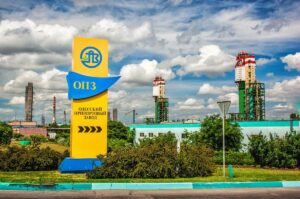
At a meeting on Wednesday, the Cabinet of Ministers approved the terms for the privatization of the Odesa Port Plant (OPP), as well as the sale of two sanctioned assets—Demurinsky Mining and Processing Plant (GZK) LLC and Motordetal-Konotop LLC, Prime Minister Yulia Svyrydenko announced; her resignation from this post had been approved by the Verkhovna Rada the day before.
“The state’s stake in OPZ will be put up for an open electronic auction with a starting price of over 4.3 billion hryvnias. The goal is to attract a strategic investor who will restore full-scale operations at one of Ukraine’s largest chemical complexes,” she wrote on Telegram.
Svyrydenko noted that among the key conditions for the buyer are investing at least 500 million hryvnias in modernization and improving the energy efficiency of production, as well as preserving the company’s core business activities.
According to her, the starting price for the sale of “Demurynskyi GZK” has been set at 1.82 billion hryvnias, and for “Motordetal-Konotop” at 415.5 million hryvnias.
All three assets will be sold through open online auctions on the Prozorro.Sales platform, and the proceeds will go to the Fund for the Elimination of the Consequences of Armed Aggression and will be used for Ukraine’s recovery, the prime minister clarified.
In another post, Svyrydenko referred to this meeting as the final meeting of the current government.
asset, CABINET OF MINISTERS, PRIVATIZATION, PROZORRO.SALES, ОПЗ
Members of the “Ukrcement” association expect the newly formed Cabinet of Ministers to engage in an open dialogue with the industry regarding problematic issues and to prioritize the interests of domestic producers, Lyudmyla Kripka, executive director and head of the scientific and technical information department at the “Ukrcement” association, told the “Interfax-Ukraine” news agency.
“We expect the new government to engage in an open dialogue and be willing to listen to the industry’s position on problematic issues. We hope that protecting domestic producers will remain a priority of state policy, and that there will be a timely and state-oriented response to the challenges currently facing the cement industry,” she noted.
Among the achievements of the current government, Kripka highlighted the successful harmonization of national standards with European Union legislation as part of the implementation of Ukraine’s Law “On the Supply of Construction Products to the Market.” In addition, she emphasized the support provided to domestic producers, which has been a key factor in maintaining the competitiveness of Ukrainian industry.
At the same time, despite numerous appeals by the Association and its partners to the government, it has not been possible to protect Ukrainian cement producers from the discriminatory impact of the CBAM (Carbon Border Adjustment Mechanism), Kripka added.
“The default CO2 emission values set for Ukraine have effectively become a barrier to the export of Ukrainian cement products to European Union countries,” she explained.
For building materials manufacturers, it is important that issues related to infrastructure development, national reconstruction, and industrial policy remain among the government’s priorities regardless of the organizational model of central executive bodies, Kripka said in response to a question about the possible separation of a standalone Ministry of Infrastructure from the Ministry of Community and Territorial Development.
“We believe that the effectiveness of public administration is determined not so much by the number of ministries as by the quality of their work, the level of coordination, and the speed of decision-making. Furthermore, any structural changes should not lead to delays in the implementation of government programs, duplication of functions, or complications in business interactions with government agencies,” the executive director concluded.
The “Ukrcement” Association was established in January 2004 through the reorganization of the Ukrainian Concern of Cement Industry Enterprises and Organizations “Ukrcement.” The association comprises five groups of companies, including nine cement plants.
CABINET OF MINISTERS, CBAM, CEMENT, RECONSTRUCTION, UKRCEMENT



