
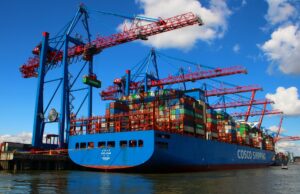
In April 2026, Ukrainian ports handled 35.8% more cargo than in April 2025—8.2 million tons, the Ukrainian Sea Ports Authority (USPA) reported on Telegram on Friday.
“This occurred despite a significant increase in attacks on port infrastructure,” the statement noted.
According to USPA data, in total, from January to April 2026, Ukraine’s seaports handled 29.5 million tons of cargo, which is more than during the same period last year.
It is noted that grain accounted for the bulk of the cargo flow—16 million tons, which is 7% more than last year.
In April, over 500 UAV attacks on logistics infrastructure were recorded.
“Despite security risks and regular shelling, port workers ensured the continuity of the industry’s operations and the fulfillment of foreign trade contracts,” the USPA emphasized.
As reported by Oleksiy Kuleba, Deputy Prime Minister for the Recovery of Ukraine and Minister of Community and Territorial Development of Ukraine, Ukrainian ports reduced cargo handling volumes by 8.3% in the first quarter of 2026 compared to the same period in 2025, down to 21.1 million tons.
Kuleba noted at the time that since the beginning of 2026, 193 port infrastructure facilities and 25 civilian vessels had been damaged.
Cargo turnover at Ukraine’s seaports in 2025 decreased by 15.9% compared to 2024—to 81.7 million tons, Kuleba noted. According to him, agricultural products accounted for the bulk of cargo turnover—44.2 million tons, which is 26.3% less than in 2024; at the same time, container traffic increased by 66.1%—to 215,750 TEU.

TK-Home Textiles, part of the Textile-Contact (TK Group) of companies, shipped goods worth over EUR160,000 to a customer in Denmark, marking the largest export shipment since the start of this year, according to TK Group owner Oleksandr Sokolovskyi.
“We’ve had our largest export shipment since the start of the year—two full truckloads of products manufactured by TK-Home Textiles were shipped to Denmark. And this is just for one client who started working with us very cautiously last year but has already increased the order volume fivefold since the start of the year compared to 2025,” Sokolovsky wrote on Facebook.
He reported that the shipment included jackets, thermal underwear, knitwear (sweaters, hats, scarves), and children’s shoes.
“And while we’ve only recently started manufacturing shoes ourselves at the factory in Chyhyryn (which we took over), we’ve been sewing all other items for a long time at our own production facilities in Kyiv, Chernihiv, and Odesa. Cotton fabrics and insulation (siliconized synthetic down) also come from our own factories, which allows us to minimize costs and remain independent of imports with their constant logistical risks,” the post reads.
Sokolovsky emphasized that the company’s European partners primarily value geographical proximity and fast logistics; full-cycle, diversified production—from the creation of threads and fabric to the finished product; the quality of natural cotton materials; consistent quality control at every stage; as well as “fair and competitive prices.”
“The last point is very important because all customers are counting their money, and we have to withstand fierce competition from Chinese, Turkish, and other powerful manufacturers who, at the same time, operate in peaceful and stable conditions without facing our military, energy, personnel, and other risks,” he emphasized.
Sokolovsky also added that it has become more difficult for Ukrainian manufacturers to “compete” for European customers, and the company must constantly prove that even in the event of force majeure at any of the TK-Group factories, other factories will cover the orders and the products will be shipped on time.
“While in 2022–2023 European customers genuinely sympathized with us and sincerely tried to support us with orders, over the past couple of years—even when we offer competitive prices and guarantee quality—it has been very difficult to turn discussions into signed contracts. Whether they’ve ‘grown tired’ of our war, whether their insurance companies are giving them a hard time, or whether it’s just politics—who knows… But their protocols point to risks, and it’s easier for them to turn us down and shift orders somewhere in Asia,” he wrote.
In addition, the owner of “TK-Group” emphasized that we must fight for every foreign client also because demand for textile products in the domestic market has significantly decreased for obvious reasons (population decline and reduced purchasing power).
“Cheap imports, mostly contraband, have unfortunately not disappeared either,” the post notes.
“TK-Home Textiles” is a leading manufacturer of fabrics, home textiles, and children’s products in Ukraine. Its portfolio of assets includes one of the few finishing factories in Ukraine producing cotton fabrics in Chernihiv, “TK-DT Chernihiv.” Its assets also include sewing factories in Kyiv, Ternopil, Chernihiv, and Odesa; a shoe factory in Chyhyryn; a knitting facility; and a synthetic fiber production facility in Chernihiv.
As reported, the countries importing “TK DT” products include Denmark, Germany, Lithuania, Latvia, Georgia, France, Romania, Sweden, and Slovakia.
TK Group was founded in 1995. It currently operates as a holding company that encompasses the full range of services in the textile industry—from raw materials and yarns to finished solutions for B2B, B2G, and B2C clients. The group’s founder is Sokolovsky, chairman of the Light Industry Defense Procurement Committee at the Federation of Employers of Ukraine.

The production of trawls for transporting large-sized cargo in Ukraine in 2025 increased by 18% to 415 units, according to Dmytro Kysilevsky, deputy chairman of the Verkhovna Rada Committee on Economic Development.
“We have achieved good results in the machine-building industry, which we risked losing just a few years ago. Demand generated by farmers, logistics companies, and partly by the state has been transformed into domestic production thanks to the ”Made in Ukraine” policy. The main instruments were localization in public procurement and compensation of 15% of the cost of Ukrainian equipment,” he wrote on Facebook.
Kysilevsky noted that last year, trawls in Ukraine were manufactured by three companies that are actively investing in the development and establishment of exports. Production of a new type of product, modular trawls, has also begun.
At the same time, the MP emphasizes that low-quality Turkish and Chinese trawls are still widely present in defense procurement.
“Bill No. 13392 on localization in defense procurement is designed to correct this. It will extend localization requirements to the procurement of civilian goods by the defense forces, including this type of product,” Kysilevsky wrote.
He recalled that in 2025, the share of the processing industry in the state budget was the largest – 18%, meaning that it is gradually becoming one of the driving forces of the Ukrainian economy.
The “Made in Ukraine” policy for the development of Ukrainian manufacturers combines programs that stimulate production, industrial investment, and non-raw material exports.
As reported, draft law No. 13392, co-authored by Kysilevsky, was adopted by the Verkhovna Rada in the first reading on November 4, 2025.
In particular, the document provides for amendments to the Law “On Public Procurement,” whereby, until December 31, 2032, localization requirements will temporarily apply to defense procurement of civilian goods worth more than UAH 1 million, provided that such goods are included in the list of goods with a confirmed degree of localization of production directly by their manufacturer.
The required level of localization in 2026 is 30% (2025 – 25%).
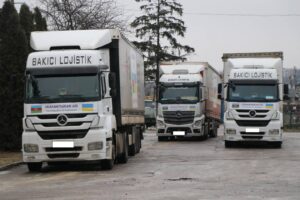
Another shipment of energy equipment has been sent from Azerbaijan to Ukraine, provided by organizations, enterprises, and concerned citizens of the Republic of Azerbaijan as part of the Ukrainian Ministry of Foreign Affairs’ initiative “Warmth for Ukraine” (#WarmthforUkraine), initiated by Foreign Minister Andriy Sibiga.
This was reported by the Ambassador of Ukraine to the Republic of Azerbaijan, Yuriy Gusev.
According to him, the aid is primarily intended to support the State Emergency Service of Ukraine (SES), as well as a number of affected communities. The shipment includes:
17 generators of various capacities, 4 portable power systems, and 3 heat guns. “This is not just equipment—it is warmth, light, and the ability to work, recover, and support each other amid daily Russian terrorist attacks on energy infrastructure,” the ambassador emphasized.
Gusev expressed his sincere gratitude to Azerbaijan, its top leadership, enterprises, organizations, and the entire Azerbaijani people for their consistent and concrete support of Ukraine during difficult times.
“Such assistance is extremely valuable. It once again confirms the friendship between our peoples and the strength of the Ukrainian-Azerbaijani strategic partnership,” the diplomat stressed.
The Ukrainian Foreign Ministry continues to work to attract similar assistance and is already coordinating with partners on the next shipment of necessary energy equipment.

According to Serbian Economist, associations of truckers from Serbia, Montenegro, Bosnia and Herzegovina, and North Macedonia have announced their intention to start protest actions on January 26, 2026, by blocking freight terminals at border crossings in the direction of Schengen countries. The planned actions were reported by regional media outlets, citing statements from the relevant associations.
The carriers cite the practical application and future tightening of controls in connection with the introduction of the Entry/Exit System (EES) as the reason for their actions. According to them, professional drivers from non-EU countries will effectively be subject to the 90-day rule within a 180-day period for short stays in the Schengen area, just like ordinary tourists. Carriers warn that with the “strict” application of the rules from spring 2026, some drivers may quickly exhaust their stay limit, which will create risks for supply chains and freight traffic between the EU and the Western Balkans region.
The European Commission has stated that it is monitoring the situation and is in contact with its Western Balkan partners, while pointing out that the rules for short stays in Schengen are “clear” and that practical decisions at the external borders are the responsibility of the member states.
EES is an automated EU IT system for registering the entry and exit of non-EU citizens on short-term trips, including recording document and biometric data, with the aim of improving the efficiency of external border controls and detecting overstays. The European Commission has announced that the system is being implemented in stages, with full deployment at all border crossing points planned for April 10, 2026, when electronic records are to finally replace stamps in passports.
If blockades are implemented at freight terminals, queues and delays are possible in a number of EU-Western Balkans directions, which may affect the timing of commercial deliveries in the region and throughout Europe.
Blockade, Bosnia, CARGO, Macedonia, MONTENEGRO, Schengen, SERBIA, Trucking company

The passage of trucks with cargo through the checkpoints on the Polish border “Medika” (in Ukraine, the checkpoint “Shegini”), “Khrebenne” (in Ukraine, “Rava-Ruska”) has been suspended, and at the ‘Korchova’ checkpoint (in Ukraine, “Krakovets”), it has been slowed down, the State Border Service reported on its Telegram channel on Sunday.
“According to information from the Polish side, the database used to process freight vehicles leaving Ukraine (entering the Republic of Poland) has been temporarily suspended at the Medyka and Hrebenne border crossing points. At the Korczowa checkpoint, the Polish customs service database is operating at a slower pace,” the border guards said in a statement.
Empty freight vehicles are being processed as usual. Other types of transport are undergoing border and customs procedures without any changes.
“According to preliminary information, the Polish customs database is expected to resume full operation by 10 p.m. (Ukrainian time) on January 18, 2026,” the State Border Service said in a statement.



