
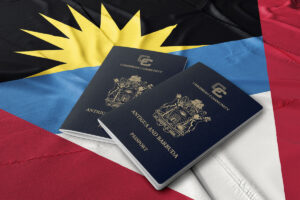
The House of Representatives of Antigua and Barbuda has approved amendments to the citizenship-by-investment program that call for an increase in the mandatory period of physical presence in the country, regular independent audits, and stricter oversight of intermediaries.
The main change will be an increase in the minimum period of physical presence in the country for new citizens from five to 30 days. These days may be spent in Antigua and Barbuda cumulatively over the first five calendar years after obtaining citizenship, rather than annually. The requirement also applies to family members included in the application.
Until now, an investment citizenship holder could lose their citizenship if they did not spend at least five days in the country during the first five years. The amendments replace this requirement with 30 days.
The changes also provide for an annual independent financial audit of the Citizenship by Investment Unit (CIU) and an operational audit every two years. The regulator will have the authority to set common standards for the five Eastern Caribbean states offering investment citizenship, vet agents, and revoke the licenses of intermediaries that do not meet the established requirements. ECCIRA is expected to begin operations in September 2026.
The reform is taking place amid increasing pressure from the European Union. In a letter dated June 25, 2026, the European Commission proposed that Antigua and Barbuda gradually phase out its citizenship-by-investment program by June 1, 2028. Brussels also demanded that individuals subject to EU sanctions be excluded from the program and that background checks on applicants of all nationalities be strengthened.
The government of Antigua and Barbuda emphasizes that it does not intend to shut down the program without securing comparable sources of revenue. Authorities cite revenue from the investment citizenship program as a vital component of non-tax revenue, which funds infrastructure, schools, healthcare facilities, and post-disaster recovery efforts.
The latest detailed statistics published by the CIU cover January–June 2024. During this period, 739 applications were received. The official report takes into account the country of birth of the principal applicant, so these figures cannot be directly equated with the number of passports issued. A single application may also include a spouse, children, and other dependents.
The largest number of applications in the first half of 2024 came from natives of:
China—90 applications, or 12.18%;
the United States—81, or 10.96%;
Nigeria—67, or 9.07%;
Lebanon—50, or 6.77%;
Turkey—44, or 5.95%;
Pakistan—32, or 4.33%;
the United Kingdom—25, or 3.38%;
Iraq – 22, or 2.98%.
Over the past six months, 19 applications were received from Ukrainian nationals, accounting for 2.57% of the total. The same number of applications were submitted by Egyptian nationals. India, Canada, and Morocco each accounted for 21 applications.
From the program’s launch through June 30, 2024, Antigua and Barbuda received 5,203 applications. Chinese nationals accounted for 1,117 applications, or 21.47%; Nigerians—496; the U.S. – 347, Lebanon – 342, Russia – 222, and Syria – 208. However, no new applications from natives of Russia and Belarus were registered in the first half of 2024.
The program has been in effect since 2013 and offers several participation options. The minimum non-refundable contribution to the National Development Fund is $230,000; investment in approved real estate starts at $300,000; and direct investment in a business starts at $1.5 million. Another option involves a contribution of at least $260,000 to the University of the West Indies Campus Fund. Government fees and background check costs are paid separately.
Extending the mandatory stay to 30 days does not change the minimum investment thresholds but increases participants’ actual expenses for airfare and accommodation. At the same time, regular audits and unified regional oversight are intended to increase the program’s transparency and help Caribbean nations maintain visa-free travel with European countries.
Antigua and Barbuda, Caribbean region, CITIZENSHIP, INVESTMENT, MIGRATION



