
Ukraine’s industrial poultry sector remains highly concentrated: by 2027, the six largest vertically integrated companies will account for more than 75% of chicken meat production, according to a forecast by the U.S. Department of Agriculture (USDA).
MHP remains the largest player, accounting for well over half of Ukraine’s industrial chicken production, according to the USDA FAS report Poultry and Products Annual, published on August 19, 2026.
Industrial broiler farms accounted for about 90% of Ukraine’s total chicken production in 2025. Another 8% came from household farms, and about 2% came from culled laying hens, parent stock, and other categories of poultry.
The USDA expects the role of industrial production to continue to grow, while the share of household farms will gradually decline.
Despite MHP’s dominance, the U.S. agency characterizes the Ukrainian market as competitive. Several medium-sized producers launched expansion and productivity improvement programs in 2025–2026, and some of the new capacity is expected to enter the market in 2026–2027.
Vertical integration allows companies to simultaneously engage in poultry farming, feed production, grain and oilseed cultivation, and processing, which helps offset price and military risks. The industry’s growth is currently financed primarily through companies’ own funds, as Ukrainian businesses’ access to international capital markets remains limited.
At the same time, the country’s largest producer continues its active international expansion.
In July 2025, MHP acquired 92% of Spain’s Grupo UVESA for EUR 270 million. According to USDA estimates, following the transaction, the group controls more than 10% of the Spanish poultry market, and the acquired capacity adds approximately 160,000 metric tons of chicken meat per year.
Sales in MHP’s European segment exceeded $1 billion by the end of 2025.
In May 2026, MHP acquired a 70% stake in Th. Nitsiakos AVEE, Greece’s largest vertically integrated chicken producer, with an option to acquire the remaining 30%.
The USDA reports that the Greek company’s revenue in 2025 was nearly EUR540 million, and the transaction is expected to be completed in several tranches by December 2028.
The number of Ukrainian enterprises with access to the European Union market is also growing. In 2026, the number of Ukrainian producers, processors, poultry slaughterhouses, and cold storage facilities approved by the EU increased by two, bringing the total to 19.
Among the most notable new entrants, the USDA highlights the Lutsk Agricultural Company, part of the Avesterra Group. According to the company’s management, it is implementing a large-scale expansion program with the aim of intensifying competition with MHP in both domestic and international markets.
The USDA forecasts that chicken meat production in Ukraine will increase from 1.386 million metric tons in 2025 to 1.48 million metric tons in 2026 and 1.54 million metric tons in 2027. The bulk of this growth is expected to come from industrial enterprises in the central and western regions of Ukraine.
Source: USDA Foreign Agricultural Service, Ukraine: Poultry and Products Annual, report UP2026-0022.
Agroholding MHP, the largest producer of chicken meat in Ukraine, in July 2022 reduced chicken production by 8% – to 52.04 thousand tons, but increased its sales by 4% – to 56.54 thousand tons, the agricultural group on the London Stock Exchange on Friday.
It is noted that the operating activity of the holding is still below last year’s figures due to the full-scale Russian invasion of Ukraine: in July 2022, chicken production amounted to 81% of July 2021, and its sales – 88%, respectively.
It is specified that in the domestic market in July 2022, chicken sales remained at the level of July 2021 and June 2022 – 25.56 thousand tons. Chicken export in July this year amounted to 30.98 thousand tons, which is still 20% less than in July last year, but 3% more than last month.
Thus, the share of chicken exports in July of this year decreased by 5 percentage points (p.p.) against July 2021, to 55% from 60%, but increased by 3 p.p. compared to June 2022.
The average selling price of poultry meat in July increased by 21% year on year – up to $2.1/kg, and by 2% compared to the previous month.
During the reporting period, MHP also reduced sales of meat products and semi-finished products by 49% compared to July 2021, to 2.5 thousand tons, but this figure was 1% higher than in June 2022.
According to the agricultural holding, in July 2022, sales of sunflower oil increased by 1.9 times compared to July last year and by 13% compared to June of this year, to 22.55 thousand tons. At the same time, sales of soybean oil decreased by 5.8 times by July 2021 and by 3.5 times by June 2022 to 1.16 thousand tons.
“Harvesting of winter crops (wheat, rapeseed, etc.) is being carried out on an area of about 69.7 thousand hectares. Rapeseed harvesting has been completed on about 27.5 thousand hectares with a yield of about 3.8 t/ha. Wheat harvesting continues on an area of about 40.7 thousand hectares, 85% completed, with a current yield of 5.5 t / ha,” the agricultural holding states in a stock exchange message.
According to him, spring crops are in good condition. In general, the weather conditions are also relatively favorable for a good harvest, apart from a number of regions with extremely hot and dry weather conditions.
MHP is the largest chicken producer in Ukraine. It is also engaged in the production of cereals, sunflower oil, meat processing products. On the European market, MHP supplies chilled half-carcasses of chickens, which are processed, including at its enterprises in the Netherlands and Slovakia. In February 2019, the agricultural holding completed the acquisition of the Slovenian company Perutnina Ptuj.
MHP generated $393 million in net profit in 2021 against a net loss of $133 million in 2020, while its revenue grew by 25% to $2.37 billion.
The founder, majority shareholder and head of the board of MHP is Ukrainian businessman Yuriy Kosyuk.
MHP Agroholding sold 159.02 thousand tons of chicken meat in January-March 2022, which is 3% more than in January-March 2021, while its sales in Ukraine decreased by 6% to 66.8 thousand tons , and exports increased by 9% – up to 89.34 thousand tons, the agricultural holding said on the London Stock Exchange on Friday.
According to its production report, the agrarian group produced 175.64 thousand tons of chicken meat during the reporting period (+5% compared to the first quarter of 2021). Thus, the agricultural holding managed to sell 90.5% of its products.
“From the start of the war, the company faced serious logistical and infrastructural problems in Ukraine. While MHP continued commercial sales in Ukraine from the start of the war, export sales stopped due to the closure of seaports, and export deliveries by road remained almost impossible,” clarified the chicken producer of the consequences of Russian aggression.
MHP also noted that it was forced to reduce the capacity utilization of poultry farming to 80-85% of the nominal in March due to reduced demand for chicken meat in Ukraine and logistical difficulties in exporting its products, due to which the agricultural holding is forced to look for alternative export routes.
In January-March 2022, the share of chicken exports reached 56% against 53% in the same period in 2021.
MHP in the report noted an increase in the price of chicken for the reporting period by an average of 28% compared to the first quarter of 2021 – up to $1.84/kg (excluding VAT), including in Ukraine up to $1.6/kg (+8%) , in export markets – up to $2.01/kg (+45%). The increase in prices was mainly due to a significant increase in prices for energy resources (mainly natural gas) and utilities.
The non-approval of an order of the Ministry of Health amending the maximum residue levels of veterinary drugs in foodstuffs of animal origin by the State Regulatory Service could result in a ban on the sale of poultry meat, the European Business Association (EBA) said on its website.
The association said that on February 17, the Ministry of Health of Ukraine issued an Order amending the maximum residue levels of veterinary drugs in foodstuffs of animal origin.
The document proposes to bring the safety of poultry meat in line with European standards. The project concerns the authorization of the use of therapeutic feed additives for preventing coccidiosis. Without the proper prevention, this disease may lead to the death of 80-90% of all young birds.
The association said that as it became known, the State Regulatory Service, whose task is to implement the state regulatory policy, the policy on supervision (control) in the field of economic activity is preparing a draft refusal to this order. The draft order has already been approved by the Ministry of Economic Development, Trade and Agriculture, as well as the State Service for Food Safety and Consumer Protection.
The EBA said that the non-approval of this normative act will lead, in fact, to a ban on the sale of poultry meat both on the territory of Ukraine and abroad. After all, food products that are prohibited for domestic consumption are also prohibited for export.
The EBA has already sent a letter to the Ministry of Health and the State Regulatory Service asking them to support the proposed changes and to prevent a ban on the use of feed additives for poultry in Ukraine. This situation can lead to a loss in the total number of poultry, which in turn can lead to a sharp and uncontrolled rise in prices for this category of products.
The association said that these feed additives are not harmful to humans (including those used in European countries). However, they are very important for raising poultry and are used throughout its life cycle up to two or three days before slaughter.
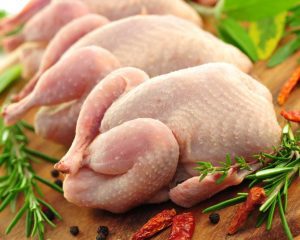
Myronivsky Hliboproduct (MHP) in July-September 2020 sold 195,120 tonnes of chicken meat, which is 18% more than a year ago.
MHP said on Wednesday that chicken meat sales grew by 2%, to 523,760 tonnes in January-September 2020.
“Third parties sales amounted to 523,759 tonnes of poultry, which is 2% higher than in 9M 2019, driven mainly by substantial increase in exports in Q3 2020 – 37% year-on-year to 108,472 tonnes due to the increased sales to MENA region predominantly as well as to Africa and CIS,” the company said.
MHP said that overall chicken meat sales volumes in Q3 2020 increased by 18% compared to Q3 2019 and by 14% compared to Q2 2020, driven mainly by the company’s strategy to decrease its poultry stocks accumulated during the preceding periods – in late 2019 and 2020.
In Ukraine, sales of chicken in the third quarter remained at the level of last year – 86,650 tonnes, and in nine months increased by 1%, to 244,740 tonnes, while the export of chicken in the first nine months increased by 3%, to 279,030 tonnes.
Notwithstanding the turbulent times, MHP continued to follow its strategies of both geographic diversification and of a product mix optimization developing partnerships across the MENA, CIS, EU and Africa countries. Total poultry exports in 9M 2020 constituted around 53%, same as in 9M 2019, of total poultry sales volumes.
Prices on the domestic market decreased by 11% year-on-year, mainly for the same reasons as export prices as well as a higher proportion of lower priced frozen chicken sales in Ukraine. The price was $1.36 per kg (VAT not included), and in 9M 2020 it was 9% lower – $1.34 per kg (VAT not included).
The prices fell both on the Ukrainian market by 7% in Q3 2020 and by 11% in 9M 2020 and on the foreign market – by 8% and 9% respectively, mainly driven by the product mix change during H1 2020 (significant decrease in sales of fillet to the EU and increased sales to MENA) and weaker prices on breast fillet in EU as many global competitors experienced reduced demand, which resulted in excess stocks.
Poultry production volumes in Q3 2020 remained relatively stable, decreased by 3%, constituting 181,661 tonnes (Q3 2019: 186,555 tonnes) mainly due to increased share of small birds production (dedicated to MENA region predominantly). In 9M 2020 poultry production volumes were relatively stable and constituted 541,592 tonnes (9M 2019: 540,133 tonnes).
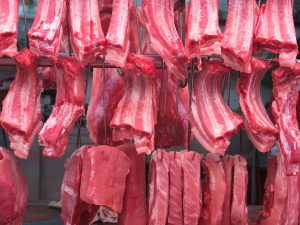
Singapore has opened its market for Ukrainian pork. “For the first time since long a foreign market has opened for Ukrainian pork. Singapore’s regulator has accredited a Ukrainian enterprise for export of thermally processed/tinned pork and chicken meat,” the State Service of Ukraine on Food Safety and Consumer Protection said.
It also said that those were the first steps towards the opening of the global market for Ukrainian pork.



