

The European Union is facing a serious crisis in the supply of critical materials after the decision of the Chinese government to impose new export restrictions on rare-earth magnets and raw materials for their production, reports Politico.
As noted, Beijing’s decision in early October has escalated the trade standoff with the United States and created risks for European industry, which is almost entirely dependent on imports of such elements from China.
“A crisis in the supply of critical raw materials is no longer a remote risk. It is already on our doorstep,” European Commission President Ursula von der Leyen told MEPs on the eve of the EU summit.
She emphasized the need for “decisive and urgent action” to ensure faster and more reliable supplies of critical materials “both within Europe itself and from trusted partners.”
European Trade Commissioner Maroš Šefčovič said the EU was not interested in escalating tensions, but emphasized the need to resolve the situation quickly. “However, this situation casts a shadow on our relations. Therefore, a quick solution is essential,” he said.
Šefčovič said China and the EU will “strengthen contacts at all levels” to discuss the restrictions. Chinese Commerce Minister Wang Wentao is due to arrive in Brussels for consultations in the coming days.
“The European Union is also holding talks with the G7 countries on an agreed response to the crisis ahead of a ministerial meeting to be held October 30-31 in Canada,” the report said.
Earlier, the information and analytical center Experts Club analyzed the global market of rare earth metals of the world and Ukraine, the video is available here -.
https://youtu.be/UHeBfpywpQc?si=0L-2nSUrLlIbqVZ5?si=Fk6Oi_13NKpEW81K
CHINA, EUROPEAN UNION, EXPERTS CLUB, EXPORT, rare earth elements
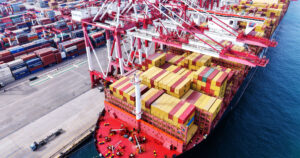
In September, the Chinese economy showed higher-than-expected growth rates in industry and retail trade, indicating a gradual recovery in domestic demand and business activity.
According to the National Bureau of Statistics of China, industrial production grew by 6.5% year-on-year, the highest rate since June. In August, growth was 5.2%, and analysts had expected a slowdown to 5%.
The largest contributors were:
manufacturing — +7.3%,
mining — +6.4%,
oil and gas — +8.9%,
automobile production — +16%,
computers and telecommunications equipment — +11.3%.
Growth was recorded in 36 of 41 sectors of the economy. Overall, industrial production increased by 6.2% in the first nine months of 2025 compared to the same period last year.
Retail sales in September grew by 3% year-on-year. This is slightly less than in August (3.4%), but still better than analysts’ forecasts (2.9%).
The largest increases were in sales of food products (+6.3%), jewelry (+9.7%), and clothing (+4.7%). Car sales rose by 1.6%, while petroleum product sales fell by 7.1%.
Since the beginning of the year, retail turnover has reached 36.6 trillion yuan (about $5.1 trillion), which is 4.5% more than a year earlier.
Investments in fixed assets as a whole declined slightly, by 0.5%, mainly due to a decline in the construction sector (-13.9%). At the same time, investments in infrastructure and manufacturing grew by 1.1% and 4%, respectively.
The unemployment rate in September fell to 5.2% from 5.3% a month earlier.
Experts from the Experts Club analytical center note that the Chinese economy remains stable despite the slowdown in global demand and difficulties in the real estate sector.
Reference: Experts Club.
For several years now, China has ranked first in the world in terms of economic size, calculated in terms of purchasing power parity (PPP), ahead of the US and the EU. This confirms its status as the largest industrial and consumer center on the planet.
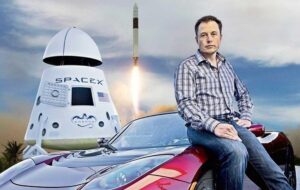
The Starship will be the first to fly to the moon, and China will not win the moon race, said Elon Musk, founder of SpaceX.
SpaceX is “moving at lightning speed compared to the rest of the space industry,” he wrote on social media. According to Musk, Starship will be the first spacecraft to complete a full lunar mission.
The spacecraft is scheduled to land humans on the moon as part of NASA’s Artemis program in 2027. Musk wants to certify Starship for human flights as early as next year. China plans to make a manned landing on the moon in 2030.
SpaceX’s reusable rocket system consists of the Starship spacecraft and the Super Heavy launch vehicle. It is over 120 meters tall. It is taller than any other rocket ever built in the world. The Super Heavy launch vehicle is twice as powerful as NASA’s Space Launch System (SLS) heavy rocket, which is being developed for manned flights to the Moon.
The rocket has already been launched on 11 test orbital flights, five of which ended in failure.
China’s economy grew by a minimal 4.8% year-on-year in the third quarter of 2025, according to a report by the National Bureau of Statistics. GDP growth slowed from 5.2% in April-June. Analysts also expected growth to slow to 4.8% on average, according to Trading Economics.
China’s GDP growth in July-September was 1.1% compared to the previous three months (with an average forecast of 0.8%). In the second quarter, the figure increased by a downwardly revised 1% quarter-on-quarter.
In January-September, the economy grew by 5.2% year-on-year to 101.5 trillion yuan ($14.24 trillion).
China’s disposable income per capita rose 5.1% to 32,510 yuan in the first nine months, according to the NBS.
At the end of 2024, the Chinese economy grew by 5%, and the same growth is envisaged in the socio-economic development plan for 2025.

The volume of imports of motorcycles (including mopeds) and bicycles with auxiliary engines to Ukraine in January-September 2025 increased by 46.2% compared to the same period in 2024, reaching $99.57 million, according to statistics from the State Customs Service.
According to the statistics, as in the previous year, most motorcycles were imported from China – in January-September, their imports increased by 71.3% to $68.1 million, but their share in total imports remained almost unchanged compared to January-September 2024 and amounted to 58.3%.
The second largest supplier of motorcycles is Japan, imports from which increased by 49.1% to $15.5 million in the first nine months of this year, and its share in total imports also increased slightly to 15.58%.
Germany remains the third largest exporter of this equipment in terms of volume, with imports to Ukraine remaining at $7.9 million, while its share fell to 8% from 19% last year.
In September, Ukraine imported motorcycles and motorized bicycles worth $7.86 million, which is 54% more than in September 2024.
According to the State Customs Service, in 2024, motorcycles worth $83.8 million were imported into Ukraine, which is 50.3% more than in 2023, including $49.1 million from China.
At the same time, the AUTO-Consulting information and analytical group notes in a publication on its website that in January-September 2025, the market for new motorcycles in Ukraine grew by 20% (excluding deliveries to the front), in particular, by 11% in September.
Analysts note that only two segments are popular in Ukraine: classic or city motorcycles (62% of sales) and enduro (30%).
The sales leader in September was the Chinese Lifan, which was also the leader in April and August of this year, and Spark was the leader for the first nine months.

Apple Inc. intends to continue increasing investment in business development in China and further strengthening cooperation with the aim of achieving mutually beneficial development, said the company’s chief executive Tim Cook at a meeting with China’s Minister of Industry and Information Technology Li Lichen.
The minister noted that China’s massive domestic market and comprehensive industrial system have enormous potential in terms of investment and consumption, according to Xinhua News Agency.
“We hope that Apple will continue to develop the Chinese market, actively participate in China’s reindustrialization, and work with Chinese companies to promote innovative development across the entire production chain,” Li Lichen said.
He added that China is committed to a policy of openness to the outside world, intends to promote the application of intelligent technologies in industrialization and the intelligent transformation of industry, and will contribute to the creation of a favorable business environment for enterprises with foreign capital participation, including Apple.



