

The Norwegian government has proposed tightening the conditions for obtaining citizenship by changing the requirements regarding length of residence in the country and knowledge of the Norwegian language for certain categories of applicants.
Under the government’s initiative, applicants will be required to have lived in the country continuously for eight years to obtain a Norwegian passport. Currently, most applicants must have resided in Norway for a total of eight years over the past 11 years, provided they hold a permanent residence permit. The new model is intended to simplify the calculation of residency periods and reduce the number of different requirements for specific groups of applicants.
Norway’s Minister of Labor and Social Integration, Kjersti Stenseng, stated that obtaining citizenship should be viewed as a privilege, and that the current rules are too complex, particularly regarding residency requirements.
Separately, the government proposes to increase the residency requirement for stateless persons from three to seven years. For applicants in this category who were born in Norway or arrived in the country before the age of 18, the plan is to set a residency requirement of five years.
The changes will also affect foreigners who are married to, in a registered partnership with, or in a de facto relationship with a Norwegian citizen. For them, the period required to obtain citizenship is proposed to be increased from a minimum of five years of residence and marriage to six years of continuous residence in the country.
In addition, the government wants to raise the Norwegian language proficiency requirements for stateless persons aged 18 to 67—from level A2 to B1. Residence on the Svalbard archipelago will no longer be considered grounds for applying for Norwegian citizenship.
The government explains the changes as necessary to make the rules more consistent and understandable, as well as to speed up the processing of applications. At the same time, the stricter requirements effectively make the path to a Norwegian passport longer for a number of categories of foreign nationals.
In total, as of early 2026, there were 987,120 immigrants in Norway, accounting for 17.5% of the country’s population. Another 238,507 people were born in Norway to immigrant families, accounting for 4.2% of the population. Collectively, people of immigrant origin make up more than one-fifth of the country’s population.
The largest group of immigrants in Norway remains those from Poland—111,740 thousand people. Next are Ukraine—85,461 thousand, Lithuania—43,065 thousand, Syria—42,040 thousand, Sweden—37,732 thousand, Germany—28,145 thousand, Somalia—27,769 thousand, Eritrea—25,819 thousand, the Philippines—25,673 thousand, and Pakistan—24,821 thousand people.
The structure of immigration to Norway reflects a combination of several waves: labor migration from EU countries and Eastern Europe, refugee migration from Syria, Somalia, Eritrea, and Ukraine, as well as long-standing diaspora communities from Pakistan, Iraq, Turkey, and other countries. Ukrainian migration is characterized by rapid growth over a short period and a high proportion of women and children among those who arrived after 2022.
Norway remains one of the countries with the most powerful passports in the world. According to the Henley Passport Index, the Norwegian passport is among the most prestigious and grants visa-free or simplified entry to over 180 countries. Since 2020, Norway has allowed dual citizenship.

According to The Serbian Economist, the European Commission believes that Serbia’s granting of citizenship to Russian citizens poses potential security risks to the EU, as holders of Serbian passports are entitled to visa-free entry into EU countries.
Guillaume Mercier, the European Commission’s Enlargement Commissioner, stated that this issue had already been raised in the 2025 Enlargement Report. In that report, the European Commission recommended that Serbia continue to align with EU visa policy and ensure more thorough screening of third-country nationals, particularly those from countries that may pose security risks or contribute to illegal migration.
At the same time, the scale of Serbia’s naturalization of Russians remains incomparably lower than in EU countries. According to Serbia’s Migration Profile, 191 former Russian citizens received Serbian citizenship in 2024. In 2023, there were 532 such cases, and in 2022, 275.
By comparison, Germany alone granted citizenship to 12,980 former or current Russian citizens in 2024. That is nearly 68 times more than Serbia granted in the same year. Spain granted citizenship to 2,588 Russians, Finland to about 1,600, Switzerland to 815, Norway to 782, and the United Kingdom to over 2,300.
According to Eurostat, in 2024, approximately 31,000 Russians received citizenship in EU countries.
Estimated data on the granting of citizenship to Russians in Europe in 2024:
EU total – about 31,000 people
Germany – 12,980
Spain – 2,588
United Kingdom – over 2,300
Finland – about 1,600
Switzerland – 815
Norway – 782
Serbia – 191
For Belgrade, this issue is part of a broader dialogue with Brussels regarding visa policy, migration, and European integration.
For Serbia itself, the situation is ambiguous. On the one hand, the country is interested in maintaining relations with Russia, attracting capital and migrants, and supporting a visa-free regime for Russians. On the other hand, visa and migration policy could become an additional source of friction in relations with the EU.
https://t.me/relocationrs/3012

In 2025, Spain granted citizenship to a record number of foreign residents—299,732 people—which is 18.7% more than the previous year. This was the highest figure since 2013, when the INE began compiling these statistics. In 2024, 252,476 foreigners received Spanish citizenship; in 2023, 240,208; and in 2022, 181,581.
The largest group of new Spanish citizens in 2025 were immigrants from Morocco—42,114 people. They were followed by citizens of Colombia—37,712, Venezuela—36,271, Honduras—20,745, Peru—15,920, Cuba—14,390, Ecuador—13,689, Argentina—11,291, the Dominican Republic—9,915, and Nicaragua—8,951
Thus, nine out of the ten largest groups of new Spanish citizens came from countries in Latin America and the Caribbean. This reflects the specifics of Spanish legislation: for citizens of Ibero-American countries, as well as certain other categories, the residency requirement for applying for citizenship can be significantly shorter than the standard 10-year period.
In terms of the method of obtaining citizenship, the majority of cases involved naturalization through residency—253,836. Another 45,715 people obtained citizenship through an option applicable, in particular, to individuals who were under the parental authority of a Spanish citizen, or to those whose father or mother was Spanish and was born in Spain.
Women accounted for 55.4% of Spain’s new citizens, while men accounted for 44.6%. The largest age group was people aged 30 to 39, followed by those aged 40 to 49.
Regionally, the highest number of new citizens was registered in Catalonia—70,933—and the Community of Madrid—69,566. Together, these two regions accounted for 46.9% of all cases of Spanish citizenship acquisition in 2025. They were followed by the Valencian Community—32,388, Andalusia—27,538, the Basque Country—14,230—and the Canary Islands—13,366
Ukrainian citizens were also included in Spain’s naturalization statistics but do not belong to the largest groups of new citizens. According to a detailed INE table, 2,588 Ukrainian citizens obtained Spanish citizenship in 2024.
In 2023, there were 2,693 such cases, in 2022 – 3,206, in 2021 – 2,167, and in 2020 – 2,254.
The Ukrainian presence in Spain remains significant. According to data from Spain’s Ministry of Inclusion, Social Security, and Migration, as of December 31, 2025, there were 338,576 Ukrainian citizens in the country with valid residence permits. By March 31, 2026, that number had risen to 345,995 people.
The growth in the number of new Spanish citizens is occurring against the backdrop of an increase in the country’s foreign population and Madrid’s active migration policy. Spain remains one of the key destinations for migrants from Latin America, North Africa, and Eastern Europe, as well as one of the EU’s most popular markets for relocation, labor migration, and real estate purchases.
These statistics are important for the real estate market, as naturalization and long-term residency boost domestic demand for housing. Unlike traditional foreign investors, new citizens and long-term residents are more likely to purchase real estate not only for investment or vacation purposes, but also for permanent residence, work, family integration, and their children’s education.
For Ukrainians, Spain also remains a notable destination for residence, although the mass naturalization of Ukrainian citizens has not yet reached the scale seen among Latin American and Moroccan groups.
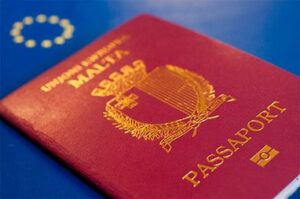
According to Experts.news, Malta took first place in the ranking of the world’s most valuable passports according to the Nomad Passport Index 2026, compiled by Nomad Capitalist. The country scored 109 points, ahead of Ireland, Greece, and Romania, which tied for second place with 108 points.
Unlike traditional passport rankings, which primarily consider the number of visa-free destinations, the Nomad Passport Index evaluates citizenship more broadly—as a tool for global mobility, tax planning, personal freedom, and international reputation. The methodology uses five criteria: visa-free access, taxation of citizens, the country’s global reputation, the possibility of holding dual citizenship, and the level of personal freedoms.
The top ten of the ranking looks like this: Malta—1st place, Ireland, Greece, and Romania—2nd place, Cyprus—5th place, the Czech Republic, New Zealand, Italy, and Bulgaria—6th place, Hungary and the UAE—10th place. Thus, the top of the ranking is dominated by European countries, particularly EU member states, which combine a high level of mobility, the ability to live and work within the single European area, and a relatively strong international reputation.
Malta scored 172 points for travel, 40 points for taxation, and the maximum 50 points for international perception, dual citizenship, and personal freedoms. This balance allowed it to take first place, despite the fact that it lags behind a number of other passports in terms of the number of visa-free destinations.
An interesting feature of the ranking was Romania’s high placement, which tied for second place with Ireland and Greece. Romanian citizenship received 108 points, including 172 points for travel, 40 points for taxation, 40 points for country perception, and top marks for dual citizenship and freedoms.
Singapore, which often ranks first in passport rankings for visa-free access, came in only 20th in the Nomad Passport Index. Its passport has a high travel score of 175, but a low score for dual citizenship limits the overall result. This highlights a key difference in the Nomad Capitalist ranking: it evaluates not only travel freedom but also the practical flexibility of citizenship for globally mobile people.
The U.S. ranked 43rd with 100 points. Despite strong international perception and a high level of mobility, U.S. citizenship receives a low score on the tax criterion, as the U.S. is one of the few countries in the world that taxes its citizens based on citizenship rather than residency alone.

The Swedish Parliament has approved stricter rules for obtaining citizenship: starting June 6, 2026, the minimum total period of residence in the country required to apply for a passport will increase from five to eight years.
The new rules apply to adult applicants. The Swedish Migration Agency notes that different timeframes will apply to certain groups, but the basic requirement is being increased to eight years. Stricter criteria for “an orderly life” are also being introduced: individuals who have committed crimes will have to wait longer before obtaining citizenship.
The reform is part of a broader policy by the Swedish government to tighten immigration rules. In addition to extending the residency requirement, authorities also plan to introduce mandatory requirements regarding knowledge of the Swedish language, basic social studies, and the financial independence of applicants. According to Reuters, the government had previously proposed requiring applicants to have an income of over 20,000 Swedish kronor per month, as well as passing language and social studies tests.
The U.S. Library of Congress, analyzing the Riksdag’s decision, notes that the new residency requirements will take effect on June 6, 2026. At the same time, the language test is set to take effect on October 1, 2027, or earlier if the government so decides, while the social studies test will be introduced on a date determined by the Cabinet.
One of the most controversial aspects of the reform is the lack of a full transition period. More than 100,000 people whose applications are already under review may be affected by the new rules. This means that some applicants who were counting on the previous five-year period may be denied or forced to wait longer.
For foreigners who were planning to naturalize in Sweden, the reform significantly extends the waiting period. This could have a particularly noticeable impact on labor migrants, refugees, foreign professionals, and families who have been living in the country for several years and made plans based on the previous rules.
In recent years, Sweden has been consistently tightening its immigration policy following a long period of a more liberal approach to accepting foreigners. Authorities explain the changes by the need to strengthen integration, raise requirements for language proficiency and self-sufficiency among migrants, and bolster trust in the institution of citizenship. Critics of the reform warn that the retroactive application of the new rules could create legal uncertainty and reduce the country’s appeal to skilled professionals.

Portuguese President Marcelo Rebelo de Sousa has signed a revised version of the citizenship law that significantly tightens naturalization requirements for foreigners. The law will take effect upon publication in the Diário da República.
The main change concerns the length of residence required to apply for citizenship. For most foreigners, it increases from 5 to 10 years, and for citizens of EU countries and Portuguese-speaking Commonwealth states, to 7 years. Additionally, the period will be calculated not from the date of application for a residence permit, but from the date the first residence card is issued.
The reform also introduces additional integration requirements. Applicants for citizenship will need to demonstrate proficiency in Portuguese at the A2 level, pass a test on culture, history, and the rights and responsibilities of citizens, confirm their commitment to democratic principles, prove sufficient means of support, and demonstrate no serious criminal convictions.
A separate part of the reform, concerning the possibility of losing citizenship in the event of serious crimes, remains under review by the Constitutional Court. Previously, the court had already ruled unconstitutional a number of provisions related to automatic denial of citizenship and vague grounds for its revocation.
For foreigners who viewed Portugal as one of the fastest EU jurisdictions for obtaining citizenship through legal residence, the reform means a significant lengthening of the planning horizon. This could have a particularly noticeable impact on residence permit holders and investors under the Golden Visa program: the residency program itself, according to available data, remains unchanged, but the path from residency to citizenship is becoming longer.
The tightening of rules comes amid rapid growth in the number of foreigners in Portugal. According to AIMA, as of the end of 2024, more than 1.5 million foreign citizens resided in the country, which is roughly double the number from three years earlier. The largest group consists of Brazilians—more than 450,000 legal residents.
According to available estimates, the largest groups of foreigners in Portugal also include citizens of India, Angola, Ukraine, Cape Verde, Nepal, Bangladesh, the United Kingdom, Guinea-Bissau, and Pakistan. According to data cited from preliminary AIMA statistics for 2024, the number of Ukrainians in Portugal was estimated at approximately 79,200 people. Separately, regarding temporary protection, according to the Prague Process, as of February 2025, approximately 56,700 Ukrainians with temporary protection status were residing in Portugal. According to some estimates, the number of Ukrainians in Portugal could reach 300,000.



