
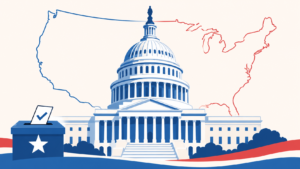
The US Democratic Party won majorities in both the Senate and House of Representatives following the November 3, 2026 midterm elections, ending two years of Republican control of Congress. However, vote counting continues in several districts, with final certification of results expected in November and December, the Experts Club information and analytical center reports.
According to figures published by The Guardian on November 4, Democrats secured at least 228 seats in the House of Representatives, compared with 139 for Republicans. Winners had been determined in 367 of the 435 districts, leaving 68 seats undecided. A majority in the House requires 218 seats.
In the Senate, Democrats and two independent senators who caucus with the party secured 54 seats, compared with 44 held by Republicans. The outcomes of two Senate races remained undecided at the time of publication.
Among the most significant developments were Democratic victories in states long regarded as Republican strongholds. Democrats captured previously Republican-held Senate seats in Texas, Kansas, Iowa, Ohio, Maine, North Carolina and South Carolina.
In Texas, Democrat James Talarico became the first member of his party elected to the Senate from the state in 38 years. In Kansas, Adam Hamilton defeated incumbent Senator Roger Marshall, while former Democratic Senator Sherrod Brown returned to the Senate in Ohio.
The party also achieved victories in gubernatorial elections. Democrat Gina Hinojosa defeated incumbent Texas Governor Greg Abbott, while Keisha Lance Bottoms won in Georgia, Amy Acton in Ohio and Rob Sand in Iowa.
According to voter surveys, the main sources of public dissatisfaction included the high cost of living, inflation, economic difficulties, the war with Iran and the trade policies of President Donald Trump’s administration. Nearly nine in ten respondents identified the cost of living as an important factor in their voting decisions.
Nevertheless, final election results have yet to be established. In particular, Senate races in Alaska and Mississippi remained unresolved, while votes were still being counted in dozens of House districts.
According to Ballotpedia, most states will complete official certification of their results during November and December. California, for example, plans to certify its results by December 11.
Democratic control of Congress could significantly affect US economic policy. The party will gain greater influence over the federal budget, tax legislation, government spending and regulation of the financial and technology sectors.
The election results are also important for Ukraine because Congress plays a role in approving defense expenditures and international assistance programs. Democrats will have greater opportunities to influence US support for Ukraine, although specific decisions will depend on cooperation between Congress and the Trump administration.
The newly elected Congress will begin its term on January 3, 2027. Until then, the current Congress will remain in office.
Thus, the main political outcome of the midterm elections is already clear: Democrats have secured control of both chambers of Congress, although the final distribution of seats will not be known until vote counting and official certification are completed.

The Ukraine Investment Congress, dedicated to investing in the country’s future, took place on July 30 at the Parkovy Congress and Exhibition Center in Kyiv and brought together over 2,000 representatives from the real estate development, investment, architecture, banking, and government sectors.
According to the organizers, the central theme of the congress was the slogan “Me, You, Society: Investing in the Country’s Future.” Participants discussed the development of the real estate market, the reconstruction of Ukrainian cities, the digitization of government services, investments in domestic tourism, energy independence, and the implementation of accessibility principles in urban planning.
At the same time, the XVII All-Ukrainian Architectural Competition “Interior of the Year 2026” took place at the “Parkovy” Exhibition and Convention Center, during which projects by Ukrainian architects, designers, and development companies were presented.
The congress was attended by Natalia Kozlovska, Deputy Minister of Community and Territorial Development of Ukraine; Roman Dzhuranuk, Deputy Head of the State Regulatory Service of Ukraine for Digital Development, Digital Transformation, and Digitalization; Ihor Reva, Deputy Minister of Community and Territorial Development of Ukraine for Digital Transformation; Artur Melezhik, Head of the Department of Industrial Parks and Investment Support; and Nazarii Volyanskyi, Director of the Kyiv Region Regional Development Agency.

Among the representatives of the business community and expert circles, the event was attended by Oleksandr Seleznyov, Founder and CEO of Spatium Group; Andriy Vavrysh, Founder and CEO of SAGA Development; Vitaliy Borul, CEO of CREDO Development; Mark Kestelboim, CEO of Well-Being Contech; Pavlo Somov, Founder and CEO of EcoBud Building Group; Serhiy Odarych, founder and CEO of ODA Development; Yuriy Podolchuk, CEO of the Ukrainian BIM Community; Andriy Dligach, founder of Advanter Group; Dmytro Karpilovskyi, co-founder of the UkrInvestClub; and Anna Iskierdo, co-founder and CEO of AIMM.
A separate panel discussion was dedicated to domestic tourism as an investment asset. Participants examined which tourism and recreational projects Ukrainian investors are currently funding and discussed the prospects for the development of hotel, resort, and income-generating real estate.
During the panel discussion “The State on a Smartphone,” representatives from government agencies and the business community discussed the impact of digitalization on reducing bureaucratic procedures, simplifying investor interactions with the state, and increasing the transparency of permitting processes.
As part of the “Battle of Assets 2026–2027” discussion, experts analyzed various capital investment instruments and the prospects for investing in real estate, business, financial assets, and infrastructure projects.

The program also included discussions on accessibility and inclusivity in urban development, the economic efficiency of facade systems, the use of BIM technologies, the energy self-sufficiency of facilities, and new design standards.
Separately, during the congress, the State Regulatory Service held a workshop for over 70 representatives of ministries and government agencies. Participants addressed issues of government regulation, deregulation, permitting procedures, and the creation of a favorable investment environment.
The event concluded with an awards ceremony for the winners of the “Interior of the Year 2026” competition. According to the organizers, the competition is intended to promote the professional selection of architectural and design projects and raise standards in the Ukrainian market.
The Ukraine Investment Congress was organized by the DMNTR media group. The general partner of the event was “Creator-Bud,” the general sponsor was Elio Home, the strategic partner was Viyar Stone, the premium partner was Itum, and the climate partner was Raum Engineering.
Detailed information about the event and a photo report are available on the official website of the Ukraine Investment Congress—www.ibc-ua.info.
Interfax-Ukraine is the information partner.

On Thursday, July 30, Kyiv will host the Ukrainian Investment Congress and the 17th All-Ukrainian Annual Architectural Competition “Interior of the Year 2026.”
The event will take place on the third floor of the “Parkovy” Congress and Exhibition Center at 16a Parkova Road.
The Ukrainian Investment Congress is positioned as a professional platform for investors, developers, representatives of the construction industry, architects, designers, and company executives operating in the Ukrainian real estate market to meet.
According to the organizers, the congress program is expected to attract over 6,000 visitors and more than 100 speakers, feature 15 panel discussions, and include over 50 exhibition booths. The main objectives of the event are to identify partners and investors, present new projects and technologies, develop business contacts, and discuss the prospects of the Ukrainian investment and construction market.

At the same time, the Parkovy Exhibition and Convention Center will host the 17th All-Ukrainian Annual Architecture Competition “Interior of the Year 2026,” organized by the DMNTR media group. The competition brings together interior designers, architects, developers, entrepreneurs, and investors and aims to promote completed architectural and interior design solutions.
The competition features projects for residential interiors of various sizes, private homes, offices, commercial spaces, HoReCa establishments, and public and administrative buildings. Separate categories are dedicated to product design, landscape architecture, lighting, and unbuilt projects and visualizations.
The organizers note that the competition aims to showcase solutions that increase the added value of real estate properties, facilitate their sale, and set new quality standards for residential and commercial spaces.
The event program and registration are available on the website: www.ibc-ua.info/program.
Contact numbers:
+380 77 777 25 47
+380 44 461 91 28
Venue: “Parkovy” Exhibition and Convention Center, 16a Parkova Road, Kyiv, third floor.
Interfax-Ukraine is the information partner.
ARCHITECTURE, CONGRESS, DMNTR, INVESTMENT, KYIV, Parkovy, REAL ESTATE

On 26 March, the Parkovy Exhibition and Convention Centre hosted the 2026 Investment and Construction Congress, as well as the REM Awards and ‘Interior of the Year. Real Estate 2026’ ceremonies, which brought together 4,033 participants – developers, investors, architects, and representatives from government and business.
According to the organisers, this year’s congress was dedicated to the role of real estate and development as tools for economic growth, Ukraine’s recovery and the transformation of the urban environment.
The event featured an official opening attended by representatives of state and city authorities, as well as a press conference entitled “Urban Environment Development Strategy: Me, You, Society”, which set the tone for the event. The programme also included a panel discussion titled “The Property Market in 2026”, a discussion on the interaction between developers and estate agents, a session on factors driving property value growth, and a discussion on urban planning reform.

According to the organisers, the key takeaways from the congress were the market’s transition from a phase of adaptation to the formation of a new model, the growing role of development in the country’s reconstruction, a shift in focus from square metres to the quality of the environment, and the increasing importance of trust, reputation and human capital for companies in the sector.
The evening part of the event included the presentation of awards to the winners of the REM Awards and the ‘Interior of the Year 2026’ competition, as well as a charity auction and a special performance by Valery Kharchyshyn, frontman of the band ‘Druga Rika’.
The general partner of the event was ‘Creator-Bud’, the premium partner was Europzol, and the general media partners were ‘Interfax-Ukraine’ and ‘Focus’. The event was organised by the DMNTR media group.
Details about the congress and a photo report have been published on the event’s official website.
Interfax-Ukraine is the official information partner of the event.
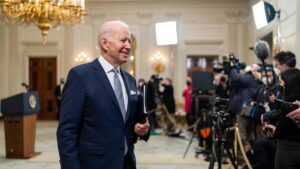
US President Joe Biden has asked Congress to allocate an additional $37.7 billion in aid to Ukraine, AP reported.
The information notes that $21.7 billion is defense aid to continue providing Ukraine with equipment and restocking the Defense Department.
The Biden administration is asking for $14.5 billion for humanitarian aid and support for the functioning of the Ukrainian government, as well as $900 million for health care and support services for Ukrainians living in the United States, and $626 million to support Ukrainian nuclear security and modernize the Strategic Petroleum Reserve.

On Wednesday, U.S. President Joe Biden said that he asked Congress to approve his request for additional financial assistance to Ukraine as soon as possible.
“I just signed a request to Congress for important security, economic, and humanitarian assistance to Ukraine. (…) It is critical this funding gets approved and approved as quickly as possible,” Biden said, speaking at the White House.
He said he acknowledges that such assistance is “not cheap.”
Biden said the U.S. administration needs additional funds to transfer artillery, air defense systems, and armored vehicles to Ukraine.
“This assistance will give Ukraine additional artillery, armored vehicles, anti-tank and anti-air capabilities,” he said.
He said that a request to the U.S. Congress for additional funds for Ukraine should meet both the current defense needs of the Ukrainian military and longer-term security needs.
Biden said the United States and allies have already delivered over 50 million pieces of military equipment to Ukraine, including thousands of anti-tank and anti-aircraft systems, helicopters, drones, grenade launchers and machine guns.
Additional funding to help Ukraine is needed, as the previously allocated funds are almost completely used.
Biden called on Congress to allocate $33 billion to help Ukraine in the defense and humanitarian spheres, as well as to strengthen the defense of European countries, the White House said. This funding is intended for the period until September 2022, the CNBC channel said.
The White House said in the statement that, among other things, some $20.4 billion is expected to be allocated both for military assistance to Ukraine and for “U.S. efforts to strengthen European security in cooperation with our NATO allies and other partners in the region.” This is about the supply of weapons to Ukraine and a number of European countries, artillery, armored vehicles, anti-tank and anti-aircraft weapons. It is also planned to direct this assistance to strengthening the means of protection against cyberattacks, demining territories. At the same time, they plan to send $4 billion to the program of foreign military financing of the U.S. Department of State.
Of the funds requested by Biden, some $ 8.5 billion will be directed to support the Ukrainian economy. These funds are intended to finance the Ukrainian government, help Ukraine in the food, energy and medical fields.
The CNBC television channel, in turn, said, thus, in nine months, the total U.S. spending on Ukraine would exceed $36 billion.
In addition, according to the White House, some $3 billion will be allocated for humanitarian assistance around the world in the form of supplies of wheat and other goods. In addition, they plan to allocate $500 million as assistance to domestic production. This amount is expected to support U.S. production of food crops that are in short supply around the world due to Russia’s aggression against Ukraine.
In addition, Biden decided to ask Congress for approval of a package of laws that will help the administration use the confiscated assets of individuals associated with Russia to provide assistance to Ukraine. The White House said in the statement that the president “will send a proposal for a comprehensive legislative package that will enhance the United States Government’s authority to hold the Russian government and Russian oligarchs accountable for President Putin’s war against Ukraine.” Biden’s proposals, in particular, provide for the use of confiscated assets of persons subject to sanctions.
In parallel, similar measures are being considered in the U.S. Congress. Thus, on Thursday night, the House of Representatives approved a bill that gives the president the opportunity to use some of the assets frozen under sanctions against Russia to provide humanitarian and military assistance to Kyiv. ” The Asset Seizure for Ukraine Reconstruction Act takes an important step in rebuilding the country Russia has destroyed,” Congressman Tom Malinowski, co-author of the document, said on social media.
The New York Times said that 417 congressmen supported the bill, with eight opposed.



