

According to Serbian Economist, the Ukrainian chain of seafood restaurants Chernomorka has announced the launch of a farm for growing mussels, sea bass, and sea bream in the Adriatic Sea near the city of Ston (Croatia).
According to the chain, the project is being implemented in the form of mariculture in collaboration with a Croatian team. It provides for constant monitoring of water quality and living conditions, as well as compliance with European food safety standards.
The first commercial deliveries of mussels, sea bass, and sea bream are planned for March 2026. The main sales channel will be the chain’s restaurants, with the possibility of expanding sales to the partner market in the restaurant segment.
Chernomorka was founded in Kyiv in 2013. The founder and co-owner of the project is Olga Kopylova. According to the chain’s website, in December 2025, Chernomorka operated 40 establishments in Ukraine, Moldova, Slovakia, the Czech Republic, and Poland.
https://t.me/relocationrs/2174

According to the Serbian Economist, Croatia is officially reintroducing compulsory military service on January 1, 2026 after a 17-year hiatus.
According to changes to the Defense Law approved by the Croatian Parliament in October 2025, the country is introducing two months of basic military training for conscripts amid rising tensions in Europe and the Balkans.
According to Ministry of Defense clarifications and government communications, the mandatory service will apply to men, primarily young men born in 2007 and onward, while women will be able to participate on a voluntary basis. The first calls for medical examinations are scheduled to be sent out at the end of December, while the first conscripts will enter military units in March 2026.
Basic service (temeljno vojno osposobljavanje) will last two months and include handling personal weapons, use of modern equipment, first aid and basic self-defense skills.
Recruits will receive about 1,100 euros per month (2,200 euros for the entire term of service), with payment for food, accommodation and travel; the time of service will be counted in the employment record. For conscientious objectors, civilian service in the civil protection system for up to three or four months with a lower payment (about 250 euros per month) is envisaged.
Previously, compulsory conscription in Croatia was abolished in 2008 amid the transition to a professional army and NATO membership. The authorities explain the decision to return military service by the need to strengthen defense capabilities and prepare the population to act in crisis situations against the backdrop of Russia’s war against Ukraine and the general growth of instability in the region.
https://t.me/relocationrs/2005
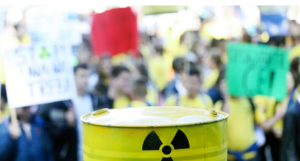
According to Serbian Economist, the Croatian parliament has approved a law paving the way for the construction of a radioactive waste management center at the Čerkezovac site on Trgovska Gora Mountain in Sisak-Moslavina County, less than a kilometer from the border with Bosnia and Herzegovina.
According to the law, the Čerkezovac site will become the central facility for storing low- and medium-level waste from the Slovenian-Croatian Krško Nuclear Power Plant, as well as so-called “institutional” radioactive waste from Croatian hospitals and industry. The site is located approximately 800 m in a straight line from the BiH border and about 1 km from the water intake of the Novi Grad community, which supplies drinking water to about 15,000 people.
The adopted act creates a regulatory framework for the design and construction of the facility and establishes Čerkizovac as a priority location for a waste management center. Geological surveys, seismic risk assessments, and measurements of the “zero” radiation background have already been carried out at the site, as reported by the Croatian side in documents sent to international organizations.
A surface storage facility is planned to operate until the 2090s, after which the waste will be transferred to a deep geological repository.
Strong reaction from Bosnia and Herzegovina
Zagreb’s decision has been strongly criticized by politicians and environmental activists in Bosnia and Herzegovina. The country’s authorities had previously set up interdepartmental expert and legal groups to follow up on the issue at international forums and insist that the facility poses a risk to the Una River, border communities, and drinking water supplies.
Political parties and authorities in BiH consider the law to be a violation of the principles of good neighborliness and are demanding that Croatia reconsider its decision or seek an alternative site, citing, among other things, the Espoo Convention on Environmental Impact Assessment in a Transboundary Context.
The Croatian side, in turn, states that the environmental impact assessment procedure will include the participation of the public and the competent authorities of BiH.
https://t.me/relocationrs/1977
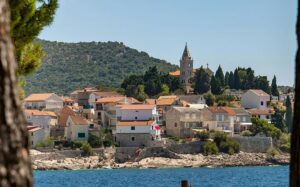
As Serbian Economist reports, the short-term tourist rental market in Croatia from June 2026 will operate under new EU rules, which provide for the complete removal of “gray” rentals from the shadows and strict control over tax revenues.
According to the published explanations, each object rented to tourists (apartments, houses, apartments) will be assigned a unique registration number. It will become a mandatory identifier when placing advertisements on online rental platforms. Placing objects without such a number on services like Airbnb and Booking.com will be prohibited – the absence of the code will automatically mean that the object operates outside the legal framework.
The procedure for obtaining a registration number for owners will be free of charge and, according to the authorities, should simplify control over compliance with the law, as well as reduce the share of unregistered objects rented without paying taxes.
Additionally, part of the control powers will be transferred to the local level: community tourist boards will directly monitor the payment of compulsory tourist tax and will be able to promptly respond to violations by landlords operating illegally or understating real income.
It is expected that the tightening of rules will make the rental market in Croatia more transparent and predictable for tourists, as well as equalize the conditions of competition for legal landlords, while increasing tax revenues to budgets at different levels.
As a consequence, experts predict an increase in the price of vacation in Croatia by 10-12%.
https://t.me/relocationrs/1950
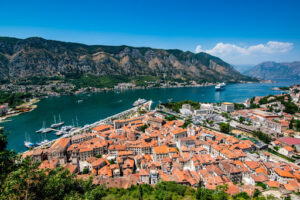
In January-November 2025, the Croatian residential real estate market cemented its status as one of the most expensive and dynamically growing in the EU. Official statistics and private research show double-digit price growth amid a slowdown in the number of transactions and an increased role of the state in addressing the issue of housing affordability.
According to the State Statistics Office (DZS), the average price per square meter of new housing in Croatia in the first half of 2025 was €2,754. This is approximately 15.9% more than in the first half of 2024 and 5.3% higher than in the second half of 2024.
By region. – Zagreb: around €2,958 per square meter (+4.5% year-on-year), rest of Croatia: around €2,511 per square meter, with growth in these cities and towns reaching 22% over the year, reflecting the rapid rise in housing prices in coastal and tourist regions.
The House Price Index shows that in the second quarter of 2025, residential property prices rose by 4.4% compared to the previous quarter and by 13.2% compared to the same period in 2024. According to Eurostat, this is one of the highest figures in the EU in terms of quarterly and annual growth.
According to market analysts’ estimates, the average price of housing (including secondary housing) in the fall of 2025 approached €2,800–2,900 per square meter across the country, which is approximately 70–80% higher than in 2020. At the same time, the average price of apartments is estimated at over €3,800–4,100 per square meter, while houses are slightly cheaper.
Market data shows that the gap between the coast and inland regions is widening:
In Split, the average asking price in October 2025 reached around €5,315 per square meter, almost 15% more than a year earlier.
In Dubrovnik, an apartment costs on average more than €4,100 per square meter, and in prestigious locations, the range is €5,000–7,000 and above.
In Istria and popular locations in Central and Southern Dalmatia, typical prices range from €3,500 to €7,000 per square meter, depending on the class of the property and its proximity to the sea.
Inland regions (e.g., Slavonia) remain significantly cheaper, often in the range of €1,000–2,000 per square meter.
In Zagreb, the average price for apartments is estimated at around €3,400–3,500 per square meter, but there is a significant gap between districts within the city. Analysis of private listings shows that the central and “tram” areas of the capital are significantly more expensive than the suburbs.
A separate trend in 2025 is stagnation and even a slight decline in house prices in some segments. According to one of the largest ad portals, the average price of houses in Zagreb in the middle of the year was around €1,200 per square meter, with price growth slowing more sharply than for apartments.
Despite high prices, the market has not yet shown a full correction. Some analytical reviews note a decline in the number of transactions in the first half of 2025, but this has had virtually no impact on price levels, especially in coastal regions, where supply remains limited.
At the same time, rising interest rates and tighter mortgage lending conditions, which began in 2023–2024, are limiting the options for some households, especially young families. In 2025, the Croatian National Bank tightened macroprudential requirements for banks and mortgage loans in an effort to curb overheating in the housing market and risks to financial stability.
According to Arvio’s report for the first quarter of 2025, foreigners accounted for about 7.19% of all real estate transactions in Croatia. The most active buyers were:
citizens of Slovenia – approximately 30.2% of foreign transactions,
Germany – approximately 21.1%,
Austria – approximately 10.4%.
The total number of transactions involving foreigners has been declining for the third consecutive year: an estimated 13,300 in 2022, 12,300 in 2023, and 11,600 in 2024.
Foreigners traditionally concentrate on the Adriatic coast (Istria, Kvarner, Dalmatia) and the islands, where new apartments and houses ready for immediate occupancy or rental are in demand. It is external demand, combined with limited supply, that largely supports the high and rising price level.
The sharp rise in prices and the decline in housing affordability prompted the government to adopt the first comprehensive National Housing Policy Plan until 2030 in 2025.
Key facts on which the document is based:
there are about 2.39 million housing units in the country, with about 40% not used for permanent residence,
over the past five years, the price of new apartments has increased by approximately 54%,
young families face difficulties in accessing mortgages and a shortage of affordable housing.
In fact, the state is trying to simultaneously cool down overheated market segments and expand the supply of affordable apartments, especially in the medium and long-term rental market.
Based on statistics for the first three quarters and market participants’ expectations, the baseline scenario for the end of 2025 and 2026 is as follows:
Prices will continue to rise, but at a slower pace than the double-digit rates seen in 2023-2024. Already in the second half of 2025, some analysts are noting a slowdown in growth, especially in the housing segment and in regions far from the sea.
The gap between the coast and inland regions will remain: tourist and premium locations will become more expensive faster, while “continental” Croatia will remain relatively affordable, which may support internal migration and local demand.
According to analysts’ estimates, the share of foreign buyers will remain at around 8% of all transactions by the end of 2025 or will decline slightly due to high prices and affordability issues.
The implementation of the National Housing Plan until 2030 will play an important role, including the launch of affordable rental programs, the activation of vacant housing stock, and the adjustment of subsidized home purchase programs.
For Croatia, where real estate has become a key tool for household savings and an object of interest for foreign capital, the coming years will be a test of its ability to combine the goals of economic growth, tourism development, and ensuring basic housing affordability for its own citizens.

According to Serbian Economist, Croatia has expressed its readiness to consider buying Serbian oil and gas company Naftna Industrija Srbije (NIS) if it will help to settle the consequences of US sanctions against the company, Croatian Economy Minister Ante Šušnjar said.
“Our hand is outstretched – if this is the solution, we are ready for this option as well,” the minister said, commenting on the situation after the US sanctions against NIS came into force.
According to Šušnjar, if such a scenario is realized, Croatia would guarantee the stability of the Jadranski naftovod (JANAF) oil pipeline, which has been cooperating with NIS for more than 40 years, without interfering in Serbia’s retail fuel market.
“This would simplify the situation both for us and for Serbia,” emphasized the minister, who represents the Domovinski pokret party, which is in coalition with Prime Minister Andrej Plenkovic’s ruling HDZ party.
The minister noted that the NIS Pančevo refinery provides up to 20% of Bosnia and Herzegovina’s oil products market, and the current sanctions situation poses additional challenges for the entire region.
“By the end of the month, we will complete the modernization of the refinery in Rijeka, which will allow us to increase refining capacity and thus help Bosnia and Herzegovina, and partially Serbia,” Šušnjar said.
He also emphasized that sanctions against NIS will not affect Croatia’s position in negotiations with Hungarian MOL on oil supplies. According to him, the country is ready to provide sufficient volumes of fuel for Hungary, Slovakia and Serbia when it is possible in terms of geopolitical conditions.
Experts note that Croatia’s possible participation in the fate of NIS could be a compromise option to stabilize the energy market in the Balkans and ensure uninterrupted operation of the JANAF oil pipeline, which is a key link of oil supplies to the region.



