
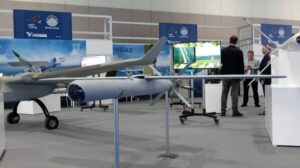
According to the “Serbian Economist,” a new plant for assembling Israeli-designed military drones has been built in Serbia. According to Aleksandar Vučić, the plant will employ about 100 people, and its products are intended for both the Serbian Armed Forces and the armed forces of other countries.
Journalists were not allowed inside the plant.
Vucic attributed this to the confidentiality of the production process. Some of the models being produced were shown only in a video he released.
At the same time, the current plant is intended to be only the first phase of cooperation with Israel. Vucic stated that he expects to open at least three more similar plants in Serbia. He named areas near the Lajevci and Niš airports as potential locations for the new production facilities.
Earlier, an investigation by BIRN and Haaretz reported that Serbia’s partner in the project is Elbit Systems, Israel’s largest defense company. According to the journalists, Elbit is set to hold a 51% stake in the joint venture, while the Serbian state-owned company Yugoimport-SDPR will hold 49%.
The plan is to produce both drones for close-range missions and more sophisticated aircraft for long-range flights. Elbit and SDPR have not publicly disclosed details of the project.
Serbia is gradually building its own drone manufacturing cluster by bringing together local defense companies with the technologies of foreign partners. Vučić stated that the project’s goal is to strengthen the capabilities of the Serbian army while also expanding exports of military products.
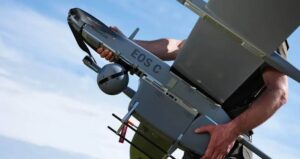
Estonian Defense Minister Hanno Pevkur stated that the republic provided Ukraine with military aid totaling over EUR50 million in 2026, of which over EUR40 million consisted of products from the Estonian defense industry.
“This year’s contribution of at least 0.28% of GDP and the growing share of Estonian defense products in our aid to Ukraine demonstrate the consistency of our support. Ukraine can count on both us and its other allies,” said Pevkur, as quoted by the ministry’s press service.
He noted that in 2023, the Estonian government set a goal of providing support to Ukraine at a level of at least 0.25% of GDP per year. In 2025, this aid reached 0.35% of GDP.
The bulk of Estonia’s military aid is provided in the form of products from Estonian companies. Part of the aid package for 2026 has already been delivered: Estonia has purchased drones and related equipment for Ukraine. Aid measures for 2027 will be announced shortly.
As part of the NATO PURL (Prioritized Ukraine Requirement List) initiative, products from the U.S. defense industry are also being procured for Ukraine. Estonia has contributed EUR 21 million to the initiative.
In total, since the start of the war in Ukraine in 2022, Estonia has provided over EUR 850 million in support to the country through various military aid initiatives, according to the Ministry of Defense.
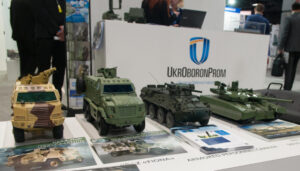
The Cabinet of Ministers of Ukraine has decided to restrict access to public data on defense industry enterprises in state registers for the duration of martial law.
According to Prime Minister Yulia Svyrydenko, the decision was made at the request of Ukrainian arms manufacturers in order to increase their security and protection from Russian attacks and sabotage.
According to her, the restriction will apply exclusively to defense industry enterprises and only for the duration of martial law.
The government emphasizes that the new rule will not affect the reporting of enterprises to state bodies and partners within the framework of existing contracts.



