
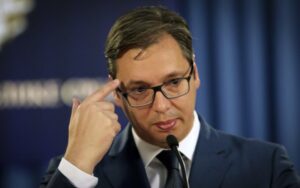
According to Serbian Economist, Serbian President Aleksandar Vučić has announced that the country will soon open its first large military drone factory in cooperation with a foreign partner. According to him, serial production in the republic should begin by the end of April. The announcement was made during the presentation of the national development strategy “Serbia 2030.”
Vucic noted that in the current international environment, “might makes right,” and stressed that Serbia must not remain weak. He linked the development of defense production to the task of maintaining peace and stability, stating that strengthening the army and police is necessary precisely as a deterrent. According to the president, Serbia allocates more than 2.5% of its GDP to the army and police.
The president specified that smaller drones had previously been assembled and developed in Serbia, both in the army and in the private sector. In particular, he mentioned the Komarac 1 and Komarac 2 models. The existence of such systems is confirmed by materials from the Serbian Ministry of Defense, which mention the use of Komarac 1 and Komarac 2 drones, with the latter designed, among other things, to destroy more heavily defended targets.
At the same time, Vucic described the new project as significantly larger and more technologically advanced, calling it a product of “the highest global standard.” Neither the name of the foreign partner, nor the investment parameters, nor the estimated production volumes have been officially disclosed at this time.
https://t.me/relocationrs/2393

NAEK Energoatom plans to complete the construction of all planned second-level protective structures (concrete structures against drone strikes and missile debris) for important elements of Ukraine’s operating nuclear power plants in 2026, according to the company’s CEO Pavlo Kovtonyuk.
“The first is passive protection of critical elements of nuclear power plants. It consists of several levels, and the first level (gabions and big bags – ER) is already complete. The second level is nearing completion. This work is being carried out according to the approved schedules and plans,” Kovtonyuk said in a conversation with journalists during a trip to one of the nuclear power plants, specifying that the construction of level 2 structures at all nuclear power plants is planned to be completed within the current year.
He noted that the second aspect is active protection provided by the Armed Forces of Ukraine, and Energoatom is allocating funds to purchase the necessary systems for such protection of the sky near nuclear power plants. Kovtonyuk did not specify the amount of funding for protection work and the funds allocated to the military, noting that “plans and projects agreed with the General Staff are financed without restrictions.”
Regarding the third level of protection (including underground structures designed to withstand direct missile strikes), the head of Energoatom noted that such projects can be considered individually.
“The third level involves very large-scale work, which can be considered as local projects. There is an example at one of the nuclear power plants where certain elements are protected by the third level. As for scaling, we will consider this possibility,” Kovtonyuk commented.
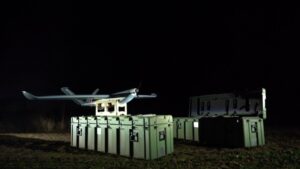
As part of Rinat Akhmetov’s Steel Front military initiative, Metinvest provided the 1st Corps of the National Guard of Ukraine (NGU) Azov with a batch of drones worth UAH 214 million, with total assistance for the year reaching UAH 600 million.
According to a statement released by the group on Wednesday, Akhmetov’s Steel Front military initiative delivered another large batch of drones to the 1st Corps of the NGU Azov. The cost of the equipment delivered is 214 million hryvnias. This delivery was the next stage in the Metinvest Group’s systematic support for the corps in 2025.
It is specified that the total amount of aid to the Azov Corps during the year reached UAH 600 million. The funds were used to provide the most critical technological solutions for the front line, as well as logistical and technical support for the units.
‘In 2025, we continued to support the 1st Corps of the National Guard of Ukraine ’Azov” in areas that are critical for combat operations: electronic warfare, UAVs, communications, as well as logistical and technical support. The total amount of this assistance is UAH 600 million,‘ said Alexander Vodoviz, Head of the Office of the CEO of Metinvest.
In turn, the 1st Corps of the National Guard of Ukraine ’Azov” emphasised that this support is very important, as modern warfare requires constant and rapid updating of the technological base.
‘In 2025, the requirements for equipment have increased significantly. REBs, drones, and secure communications determine the success of operations and save the lives of our soldiers,’ said Ivan Ignatiev, deputy commander of the corps for logistics.
Since the start of the full-scale war, Metinvest has reportedly delivered more than 1,500 UAVs to various units of the Ukrainian Armed Forces. Recently, another batch of ‘birds’ was received by the 27th Military Unit of the Ukrainian Ground Forces. The shipment included 200 FPV drones, 30 DJI Mavic FMC drones and 20 DJI Mavic 3T drones with thermal imaging cameras. Earlier, the Azov special forces brigade of the National Guard of Ukraine received a large shipment of vehicles and equipment worth UAH 40 million from Metinvest.
In total, over the course of a year and a half of full-scale war, Metinvest has allocated UAH 2 billion to support the Ukrainian army as part of Rinat Akhmetov’s Steel Front military initiative.

The widespread use of unmanned systems in Russia’s war against Ukraine represents not just a technological evolution, but a profound change in the logic of warfare, for which most European countries are not yet prepared, according to participants in the panel discussion “The Russia–Ukraine Drone War: Innovation on the Front Line and Beyond. What Can We Learn for Our Own Defense?” at the Ukraine Recovery Forum in Bucharest.
Panel VIa was moderated by Greg Melcher, Chief Operating Officer of the New Generation Warfare Centre (USA). The discussion was attended by Andriy Sirko-Galushchenko, an expert in the development of UAVs for military applications; Terry Jamison, International Director of Boeing’s Vertical Takeoff and Landing Aircraft Division; Mustafa Nayem, Director of Public Communications at GTX; former Prime Minister of Romania, retired General Nicolae Ciucă, and Deputy Chief of Staff for Operations and Training, Lieutenant General Julian Berdila.
According to the speakers, what until recently was perceived as a “distant technological horizon” has already become an everyday operational reality. The development of unmanned systems, open architectures, and the rapid integration of new capabilities indicate that the “future of warfare” has arrived much sooner than many Western players expected. Ukraine’s combat experience has shown that accelerated innovation cycles are leading to a structural transformation in the planning of air, ground, and joint operations.
Participants emphasized that the combined use of manned and unmanned platforms, as well as immediate technical interoperability between them, are becoming a basic requirement for the adaptation of modern armed forces. Drones are already being used systematically for reconnaissance, high-precision strikes, logistics, mining and demining, artillery fire correction, and special operations support. Massive coordinated attacks on critical infrastructure have demonstrated the limitations of purely reactive defense and highlighted the need to neutralize threats “at the source.”
At the same time, counter-drone systems are rapidly developing, combining existing surveillance and electronic warfare capabilities with new solutions to counter large numbers of small, low-altitude targets. “This is no longer an episodic tool, but a full-fledged layer of the modern battlefield that requires a separate doctrine, forces, and means,” Berdila noted.
A separate emphasis in the discussion was placed on Europe’s vulnerability to hybrid forms of aggression. According to experts, traditional threat assessments do not correspond to the realities in which the enemy acts mainly with asymmetric, scattered, and difficult-to-attribute methods. Incidents involving the appearance of unknown drones near critical infrastructure in various European countries, they said, expose the gap between public perception, the level of institutional preparedness, and the actual nature of the risks.
Following the discussion, the participants concluded that “drone” warfare is not only a technical issue but also a challenge for institutional capacity and defense planning. Adapting to the new operational environment requires flexible institutions, short innovation cycles, coordinated investments, and a doctrine capable of quickly integrating the lessons learned from Ukraine’s experience. Modern warfare, they emphasized, has become a space where speed of adaptation, integration of systems, and simultaneous readiness for offensive and defensive actions are key elements of strategic resilience.
The forum “Rebuilding Ukraine: Security, Opportunities, Investments” is being held on December 11-12 in Bucharest under the auspices of the Romanian Ministry of Foreign Affairs and the Ukrainian Ministry of Foreign Affairs and organized by the New Strategy Center. According to the organizers, more than 30 panel discussions and parallel sessions are planned over two days with the participation of representatives of governments, international organizations, the private sector, financial institutions, and experts from Europe, North America, and Asia. The topics of the panels cover security and defense, infrastructure, financing and investment, green energy, digitalization, human capital, and cross-border cooperation.
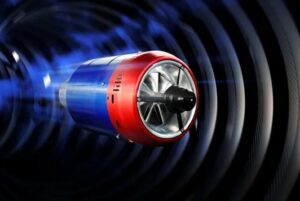
According to Serbian Economist, Michal Strnad’s Czech defense and industrial holding company Czechoslovak Group (CSG) has acquired a controlling stake in Belgrade-based Mechatronics Unmanned Systems & Technology Solutions (MUST Solutions), which manufactures power plants and components for drones.
According to sources, the purchase was made through a new subsidiary, AviaNera Technologies: CSG acquired 51% of the shares from the company’s founder, Vladimir Yazarevic; the amount is undisclosed. MUST specializes in the development and production of compact turbojet and other propulsion solutions for UAS (propulsion systems), which expands CSG’s portfolio in the unmanned systems segment.
CSG notes that the asset will deepen the holding’s expertise in high-tech UAV subsystems and integrate the Serbian development base into the European supply chain.
CSG is one of the largest private defense and industrial holdings in Central Europe (Tatra Trucks, Fiocchi Munizioni, etc.), actively expanding through M&A; its owner is Michal Strnad, who was named the richest Czech in 2025 by a number of ratings. According to Forbes/Bloomberg, the growth took place against the backdrop of increased demand for weapons and ammunition; the group is expanding its presence in Europe and the US.
MUST Solutions (Belgrade) is an engineering company specializing in power plants and components for UAVs; after the deal, control (51%) passed to CSG (through AviaNera), while founder Vladimir Yazarevich retained his stake. The company is known for developing small jet and other engines for UAS.
Source: https://t.me/relocationrs/1749

Insurance company ARX (Kyiv) made payments totaling UAH 50.831 million in January-September 2025 under military risk insurance, according to information from the insurer.
Payments were made for 104 insured events. Of these, 97 related to motor vehicles insured against damage or destruction as a result of damage or total loss of the vehicle from missiles and drones, including damage from their debris, or debris from structures and trees caused by the fall of such debris.
In addition, seven cases involved payments under insurance contracts for buildings and structures with finishes and communications, integral property complexes, as well as equipment, office equipment, and inventory damaged as a result of rocket and/or drone attacks, for a total amount of over UAH 40 million.
ARX is part of the international insurance holding company Fairfax Financial Holdings Ltd.



