

It is extremely difficult to protect a bridge from significant damage in the event of a direct hit by powerful ballistic or cruise missiles, however, properly designed pre-detonation screens are an effective means of protecting such structures from drones and small missiles such as the “Banderole,” noted Andriy Ozeychuk, director of the construction company Rauta and chairman of the board of directors of the Ukrainian Center for Steel Construction (UCSB), in comments to the “Interfax-Ukraine” news agency.
“The most effective structure for protecting the roadbed consists of metal cables with a mesh stretched between them,” he remarked, assessing the effectiveness of a number of engineering solutions to protect bridges across the Dnipro River from Russian strikes.
According to him, to protect the piers and the sides of the spans, spacers made of lattice steel structures must be used. This engineering solution can be quickly implemented using available materials. Metal pre-detonation screens provide high strength without placing a heavy load on existing structures, are easily adaptable to the individual geometry of bridges, can be quickly repaired in the event of localized damage, and can be reinforced if necessary.
The expert emphasized that it is important to make effective use of existing bridge structures as a substructure for attaching steel cables and mesh. For example, for the Northern Bridge, this could be the central cable support to protect the roadway, and for the Darnytsia Bridge, the sides of the roadway can be used as a base for the upper attachment of pre-detonation protection for the supports.
The Ukrainian Steel Construction Association (USCA)—a nonprofit organization registered in July 2013—brings together participants in the steel structure supply chain in the form of an association. USCA members include leading manufacturers and distributors of rolled steel, plants producing metal structures, roofing and facade systems, and light-gauge steel structures; industry-specific design, architectural, and scientific organizations; installation and construction companies; and providers of fire protection and anti-corrosion materials for steel structures, as well as software, equipment, and tools.

Ukraine needs to develop a comprehensive program for the protection and resilience of bridge infrastructure; the foundation for this approach was laid as early as 2022, according to the website of the Ukrainian Center for Steel Construction (UCSB).
As explained by the UCSB, Ukraine developed the “Fortress Country” concept for the comprehensive protection of critical infrastructure facilities at that time, which was subsequently approved at the national level. It provides, in particular, for standard solutions for the protection of road and rail bridges.
“Today, it is important to implement these solutions as part of a systematic program for the protection of bridge infrastructure. Critical bridges must be assessed, priorities identified, appropriate design solutions developed, reserves of materials and structural components for repairs established, and the responsible organizations and procedures for responding to damage defined. Otherwise, we will always be reacting: first, damage occurs, then an inspection, a search for design solutions, materials, and contractors—and only then does restoration begin,” notes military officer Artem Bilyk, a member of the Coordination Headquarters for the Engineering Protection of Critical Infrastructure and a leading co-author of the “Fortress Country” concept.
According to him, this model is far too slow for critical infrastructure. We must act proactively, anticipate what the enemy might target, and protect the infrastructure’s vulnerabilities.
A comprehensive program should include at least five areas, such as: surveying and ranking bridges by criticality and the potential consequences of their damage; engineering protection of the most critical structural elements and facilities; organizational and technical measures, including surveillance, security, and countermeasures against drone and missile threats; preparation of reserves for rapid restoration: design solutions, materials, steel structures, and equipment; and the creation of a network of Ukrainian manufacturers capable of producing the necessary structures as quickly as possible and ensuring their installation.
A large-scale program for the engineering protection of bridges could have the added benefit of supporting the Ukrainian steel industry and manufacturers of steel construction products,” notes Andriy Ozeychuk, director of the construction company Rauta.
According to Bilyk, the top priority for bridges should be to identify the most critical elements of a specific structure and reinforce them, taking into account possible damage scenarios.
Depending on the structural design and operating conditions, various solutions may be applied: protective structures, gabion structures, concrete and other barrier elements, steel protective structures, and so on.
Another approach involves creating pre-detonation screens, which increase the distance between the explosion source and the main structural elements. Such solutions must be designed individually for each structure and should not pose additional risks to the bridge’s operation, the expert notes.
Metal-based solutions are best suited for protecting bridges. These can include lattice steel structures, metal mesh, and cables, or a combination thereof, depending on the bridge’s design and the required distance to the pre-detonation screen,” Ozeychuk clarified. He noted that high strength combined with low weight, along with the modular approach to creating protection from various elements, makes it possible to adapt existing metal products to the specific geometry of bridges, as well as to easily replace or reinforce structures locally.
Equally important is protection against secondary damage factors: fires, fragment damage, and damage to auxiliary systems. It is advisable to protect vulnerable elements of the bridge infrastructure with appropriate non-combustible structures.
As for alternative crossings, according to the expert’s assessment, it is extremely difficult to fully replace the existing city bridges across the Dnipro River with temporary structures. A temporary crossing must be integrated with road and rail infrastructure, have the necessary capacity, and meet safety requirements, explains Bilyk.
In addition, it is noted that a modern bridge is far more than just a means of road traffic. Bridge crossings can accommodate railroad tracks, subway lines, utility lines, pipelines, cables, and other systems. Therefore, a pontoon bridge or other temporary crossing can serve as a backup solution but is not a full-fledged replacement for the developed bridge infrastructure of large cities, according to the website.
As noted in the press release, the strategy should not involve choosing between a bridge and a pontoon, but rather creating a multi-tiered resilience system where a protected main bridge is complemented by rapid restoration capabilities and backup transportation solutions.
BRIDGE, INFRASTRUCTURE, OZEYCHUK, PROTECTION, steel structure, UKRAINE

Switzerland will maintain the temporary protection status (Status S) for Ukrainians who fled Ukraine due to Russia’s full-scale invasion until March 4, 2028, but will tighten the eligibility criteria for obtaining it.
“There are still no signs of long-term stabilization of the situation in Ukraine. Therefore, Status S for individuals from Ukraine seeking protection will be extended until March 4, 2028. Support measures for individuals with Status S (Program S) will also continue until that date,” the Swiss government stated in a Wednesday announcement on its website.
It is reported that the Federal Council made this decision at its meeting on August 19 following consultations with relevant stakeholders.
At the same time, it is noted that as of August 20, S protection status will be restricted for certain other groups of individuals—S protection status will now be granted only to those performing military duties they may have in Ukraine. “This new rule applies to all new applicants who submitted their applications on August 20 or later. It does not affect individuals who have already been granted S protection status,” the government statement notes.
As explained by the Swiss government, this decision was made to align with EU policy on this matter. “Switzerland has thus far closely coordinated its actions with the EU regarding S protection status and will continue to do so. On July 30, EU member states decided to extend temporary protection until March 4, 2028. At the same time, they decided to restrict access to temporary protection in the EU: as of July 31, temporary protection is granted only to those performing military duties in Ukraine. The requirement to perform military duties applies, in particular, to Ukrainian citizens of draft age, those in the reserves, and those who have voluntarily joined the armed forces. “Switzerland is not legally obligated to implement this decision adopted by the Council of the EU. However, the Federal Council believes that it is in Switzerland’s interest to align its practices with those of the EU,” the statement reads.
Should the situation in Ukraine stabilize sustainably, the Federal Council will review the status of protection for Ukrainians.
As previously reported, in late July, the European Union extended temporary protection for Ukrainians until March 4, 2028, with a new provision stipulating that newly arrived Ukrainian citizens subject to military service will be eligible for protection only if they have no issues with their military registration documents.
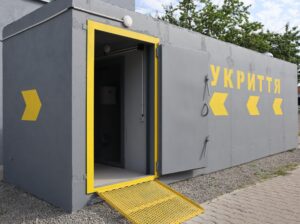
Ukrzaliznytsia JSC is deploying over 800 modular shelters across the country to enhance employee protection in light of the increasing number of attacks on railway infrastructure, according to a company statement released on Wednesday.
“These shelters allow people to take cover quickly during an alert and protect against debris during shelling. And this isn’t just theory: yesterday (May 5 – IF-U), such a shelter in the Kharkiv region saved the life of a female conductor who evacuated in time after receiving a danger alert,” Ukrzaliznytsia reported on Telegram.
It is noted that these shelters will be installed in the most dangerous locations.
Ukrzaliznytsia emphasized that this initiative is part of the company’s resilience plan, which aims to ensure uninterrupted operations and protect people under difficult conditions.
Since the beginning of 2026, approximately 983 attacks on railway infrastructure have been recorded, Ukrzaliznytsia noted.
As reported, on May 5, the enemy attacked Ukrzaliznytsia infrastructure in the Kharkiv, Poltava, and Dnipropetrovsk regions.

NAEK Energoatom plans to complete the construction of all planned second-level protective structures (concrete structures against drone strikes and missile debris) for important elements of Ukraine’s operating nuclear power plants in 2026, according to the company’s CEO Pavlo Kovtonyuk.
“The first is passive protection of critical elements of nuclear power plants. It consists of several levels, and the first level (gabions and big bags – ER) is already complete. The second level is nearing completion. This work is being carried out according to the approved schedules and plans,” Kovtonyuk said in a conversation with journalists during a trip to one of the nuclear power plants, specifying that the construction of level 2 structures at all nuclear power plants is planned to be completed within the current year.
He noted that the second aspect is active protection provided by the Armed Forces of Ukraine, and Energoatom is allocating funds to purchase the necessary systems for such protection of the sky near nuclear power plants. Kovtonyuk did not specify the amount of funding for protection work and the funds allocated to the military, noting that “plans and projects agreed with the General Staff are financed without restrictions.”
Regarding the third level of protection (including underground structures designed to withstand direct missile strikes), the head of Energoatom noted that such projects can be considered individually.
“The third level involves very large-scale work, which can be considered as local projects. There is an example at one of the nuclear power plants where certain elements are protected by the third level. As for scaling, we will consider this possibility,” Kovtonyuk commented.

The number of people from Ukraine seeking protection in Germany has increased significantly in recent weeks, Die Welt reported Wednesday.
The publication writes that the lifting of the travel ban for Ukrainian men between the ages of 18 and 22 who are fit for military service has led to an increase in the number of asylum requests from this group.
“The number of applications has risen from around 100 per week before these provisions came into force to around 1,000 per week,” a spokeswoman for the Federal Interior Ministry said.
“It is impossible to assess at this point how temporary this phenomenon is,” she added.
According to the information, the total number of people from Ukraine in Germany increased during the summer. According to the Interior Ministry, 7,961 Ukrainians were distributed through the Free registration system in May, 11,277 in August and 18,755 in September. Unlike asylum seekers, protection seekers from Ukraine are granted a residence permit under Article 24 of the Residence Act, which entitles them to immediate access to the labor market and social services.