
On the night of November 1, 2026, a series of four earthquakes was recorded in Romania’s Vrancea seismic zone; another tremor occurred that morning in the Black Sea. The earthquakes ranged in magnitude from 2.1 to 3.6, according to data from the National Institute for Research and Development in Earth Physics (INCDFP).
The first earthquake occurred at 12:46 a.m. local time in Vrancea County. It had a magnitude of 3.0, and its epicenter was located at a depth of 69.9 km.
At 1:35 a.m., a second, stronger tremor with a magnitude of 3.6 was recorded at a depth of 124.4 km. The epicenter was located approximately 37 km south of the city of Focșani and 64 km south of Buzău.
A third earthquake, with a magnitude of 2.1, occurred at 02:26 at a depth of 110.3 km. A fourth tremor, with a magnitude of 2.5, was recorded at 06:33 in Buzău County at a depth of 144.4 km.
Another earthquake occurred at 07:03 in the Black Sea, approximately 87 km south of Sevastopol. Its magnitude was 3.6, and the epicenter was at a depth of 69.8 km.
Experts classified all five earthquakes as minor. No reports of damage or casualties have been received.
The strongest earthquake in Romania since the beginning of 2026 occurred on October 19 in Buzău County. Its magnitude reached 4.8.
The Vrancea seismic zone, located in the Eastern Carpathians, is considered one of the most active seismic regions in Europe. Earthquakes here often occur at significant depths, and stronger tremors can be felt far beyond Romania’s borders, particularly in Moldova, Serbia, and Ukraine.
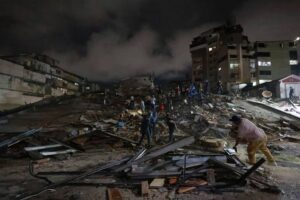
At least 164 people were killed and 971 were injured as a result of two powerful earthquakes in Venezuela that occurred on the evening of June 24, according to international news agencies, including the Associated Press, CNN, and Reuters, citing the country’s acting president, Delcy Rodríguez.
“At least 164 people were killed and 971 were injured after two powerful earthquakes shook Venezuela,” Acting President Delcy Rodríguez said on Thursday, adding that rescue teams are rushing to the hardest-hit areas to free people trapped under the rubble,” the AP reported on its website on Thursday.
The 7.2- and 7.5-magnitude earthquakes, which struck on Wednesday evening, were among the strongest to hit Venezuela in over a century and were felt throughout the region. The country’s main airport sustained damage and was closed, and buildings were evacuated even in such remote areas as the Brazilian Amazon, located approximately 1,700 km from Venezuela’s capital, Caracas.
According to Rodríguez, authorities are deploying rescue teams from other parts of the country to La Guaira state, located on the coast north of Caracas. That state has been hit the hardest.
The acting president noted that they are trying to make the most of daylight hours to speed up rescue efforts for people believed to be trapped under the rubble. “Dozens of buildings have collapsed there… and we are now conducting intensive rescue operations to save lives,” said Rodríguez.
After 6:00 p.m. on June 24, two powerful earthquakes with magnitudes of 7.2 and 7.5 struck Venezuela in quick succession. Many buildings were reported to have collapsed.
Eight earthquakes were recorded in neighboring Romania over four days, according to Romania’s National Institute for Earth Physics Research and Development (INCDFP).
According to the INCDFP, the last three tremors occurred on the night of October 25-26, with an interval of just under an hour. The tremors were recorded in the Vrancea seismic zone, one of the most active earthquake-prone areas in Romania.
The Vrancea seismic zone is located at a depth of about 100 km, so its earthquakes are felt over a large area. In particular, according to a number of reports, the tremors could be felt in Moldova, Bulgaria, Serbia, and southern Ukraine, including the area around the city of Odessa.
The Vrancea zone is known as one of the most dangerous intra-continental seismic areas in Europe, with deep tremors occurring there with magnitudes above 7.0. In such conditions, regional monitoring authorities will intensify their observation and inform the population about the likelihood of repeated events.
An earthquake struck Serbia on September 5, with tremors also felt in Montenegro. According to the Seismology Sector of the Montenegrin Hydrometeorological Institute (ZHMS), the signal was registered at 14:43 local time, with the epicenter approximately 15 km east of Senica (Golija district) with an estimated magnitude of 3.7 on the Richter scale and a depth of about 7 km. The agency notes that such a tremor “could have caused only minor material damage in the epicenter zone.”
The Serbian Seismological Service clarified the parameters: according to its assessment, an earthquake with a magnitude of 4.2 occurred in the Golija area, approximately 20 km east of Senica, with an estimated intensity of up to VI points on the MSK-64 scale at the epicenter.
No serious damage or casualties had been reported at the time of publication; reports of tremors were received from border areas of Montenegro.
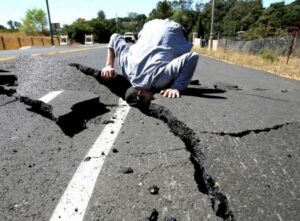
An earthquake with a magnitude of 5.3 occurred in Romania at 17:40 Kyiv time, with tremors also felt in the city of Odesa. According to the website of the European-Mediterranean Seismological Center, the epicenter was located in the Vrancha Zone in the Carpathians at a depth of 137 km.
Odesa Mayor Hennadiy Trukhanov reported no casualties or damage in the city.
“An earthquake with a magnitude of 5.3 occurred in Romania. It was felt in Bulgaria, Moldova and Ukraine, including Odesa. There was no information about damage or injuries in the city,” Trukhanov wrote on Telegram.
In local social media, users reported that the tremors were also felt in Mykolaiv, Zaporizhzhia, Kharkiv, Khmelnytskyi, Cherkasy, and Bila Tserkva in Kyiv Oblast.

An earthquake with magnitude 4.0 (on the Richter scale) was registered on Sunday at 08.06 Kiev time in the area of Vrancea Mountains (Romania), it could be felt in Ukraine, but does not pose a threat to the population, the Main Center for Special Control reports.
“The source of the earthquake is located on the territory of Romania, in the area of Vrancea mountains, 110 km from the border with Ukraine, at a depth of 103 km. The earthquake does not carry a threat to the population of Ukraine. Fluctuations can be felt only by individuals who are quiet indoors, especially on the upper floors,” – said in a message published on the website.
The Main Control Center reminds that the last powerful earthquake from the area of Vrancea mountains was registered on December 04 this year with a magnitude of 4.6 (on the Richter scale).



