
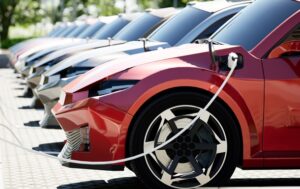
The share of electric vehicles in the new passenger car market in January–June 2026 decreased to 8.3% compared to the same period in 2025, when it stood at 18.9%, according to a report on Ukravtoprom’s Telegram channel.
At the same time, cars with conventional engines (gasoline and diesel) accounted for nearly 62%, up from 56.5% last year. In particular, the most popular gasoline models accounted for 39.2% of the market, while in the first half of last year they accounted for 37.1%. Diesel cars also increased their share—to 22.5% from 19.4% last year.
The share of hybrid cars rose from 26.5% to 29.8%. Cars with LPG systems, as was the case last year, accounted for less than 1% of new car sales.
According to data from “Ukravtoprom,” the Hyundai Tucson took the lead in the gasoline-powered car segment, the Toyota RAV-4 in the hybrid segment, the Renault Duster in the diesel segment, the BYD Leopard 3 in the electric car segment, and the Hyundai Tucson in the LPG-powered car segment.
As previously reported, in 2025 as a whole, driven by rapid growth in electric vehicle sales in the second half of the year, they increased their share of the new passenger car market to 28.3% from 14.5% in 2024, while cars with conventional engines (gasoline and diesel) accounted for only half of the market compared to over 65%. The diesel car segment also decreased from 25.6% to 17.4%.
At the beginning of this year, electric vehicles still held a 19% share of the new passenger car market (in January), but by February that figure had fallen to 3.3%; however, in March it began to gradually increase amid rising prices for traditional fuel.
As reported, according to data from “Ukravtoprom,” sales of new passenger cars in January–June of this year rose by 0.5% compared to the same period in 2025, totaling approximately 33,000 units.

The share of electric vehicles in the new passenger car market in May 2026 fell to 8.5% compared to May 2025, when it stood at 18.4%, according to a report on the “Ukravtoprom” Telegram channel.
Compared to April of this year, their share decreased by 0.5 percentage points.
At the same time, cars with traditional engines (gasoline and diesel) accounted for over 60% of the market, compared to 54.3% last year. In particular, the most popular gasoline models accounted for 39.9% of the market, whereas in May of last year they accounted for 36% of the market. Diesel cars also increased their share—to 20.7% from 18.3% last year.
The share of hybrid cars rose from 27.1% to 30.8%, but compared to April 2025, it decreased by more than 2 percentage points.
As in the previous year, cars with LPG systems accounted for less than 1% of new car sales.
According to data from “Ukravtoprom,” the Hyundai Tucson took the lead in the gasoline-powered car segment, the Toyota RAV-4 in hybrids, the Renault Duster in diesel cars, the BYD Sea Lion 06EV in electric cars, and the Hyundai Tucson in LPG-powered cars.
As reported, overall in 2025, due to the rapid growth in electric vehicle sales in the second half of the year, they increased their share of the new passenger car market to 28.3% from 14.5% in 2024, while cars with traditional engines (gasoline and diesel) accounted for only half of the market compared to over 65%. The diesel car segment also decreased from 25.6% to 17.4%.
At the beginning of this year, electric vehicles still held a 19% share of the new passenger car market (in January), but by February it had fallen to 3.3%; however, in March it began to gradually increase amid rising prices for traditional fuel.
As reported, Ukrainians purchased approximately 5,500 new passenger cars in May 2026, which is 18% less than in May 2025 and 11% less than in April of this year.

In April, 3,007 electric vehicles (new and used) were added to Ukraine’s vehicle fleet, which is 48% less than in April 2025 but 49% more than in March of this year, Ukravtoprom reported on its Telegram channel.
The majority of electric vehicles registered during the month were passenger cars—2,837 units (of which 536 were new and 2,301 were used), while only nine of the 170 commercial electric vehicles were new.
The most popular new electric vehicles in March were the BYD Leopard 3 – 96 units (34 units in March 2026); BYD Sea Lion 06 – 73 units (30 units); MG 4 EV – 38 units (not in the top five); Volkswagen ID.UNYX – 36 units (21 units) and Zeekr 001 – 33 units (30 units).
Among used vehicles, the most frequently registered for the first time were the Nissan Leaf – 345 units (226 units in March of this year); Tesla Model Y – 283 units (212 units); Tesla Model 3 – 265 units (210 units); Renault Zoe – 120 units (101 units) and Chevrolet Bolt – 117 units.
As reported, electric vehicles are gradually seeing a resurgence in demand and slowing the rate of decline compared to the same periods last year following a slump at the beginning of this year, particularly amid rising fuel prices (gasoline and diesel) at gas stations.
In 2025, Ukraine’s vehicle fleet was expanded by 110,200 electric vehicles—twice as many as the previous year. The share of new vehicles was 20%, compared to 24% in 2024.
In particular, in December, the last month of VAT-free customs clearance for electric vehicles, demand for them increased 8.6-fold compared to December 2024—to 32,800 units.
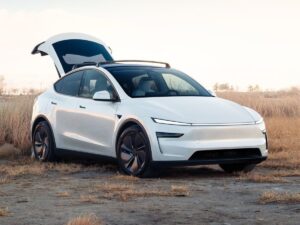
In January of this year, 2,873 battery electric vehicles (BEVs) were added to the Ukrainian vehicle fleet, according to Ukravtoprom’s Telegram channel.
The majority of registered electric vehicles were passenger cars – 2,740 units, of which 952 were new and 1,788 were used. Among the 133 commercial electric vehicles, 37 were new.
The most popular new electric vehicles in January 2025 were the BYD Leopard 3 (169 units), BYD Sea Lion 06 (97 units), Volkswagen ID.UNYX (96 units), Zeekr 001 (77 units), and BYD Song Plus (68 units).
Among used cars, the most frequently registered for the first time were Tesla Model 3 – 219 units; Nissan Leaf – 213 units; Tesla Model Y – 169 units; Renault Zoe – 79 units; KIA Niro – 79 units.
At the same time, compared to December last year, demand for electric cars fell 11.4 times.
As reported, according to Ukravtoprom, in December 2025, more than 32,800 electric vehicles (new and used) were added to the Ukrainian car fleet, which is 8.6 times more than a year earlier, including 32,134 passenger cars (8.8 times more) and 699 commercial vehicles (4.6 times more).
December was the last month for importing electric vehicles without paying VAT during customs clearance.
At the same time, experts from the Automotive Market Research Institute believe that January, despite a sharp drop in electric vehicle imports against the backdrop of December’s peak, did not give reason to talk about the disappearance of the segment—a significantly larger part of transactions takes place within the country.
“After the peak, the market entered a phase of normalization, which was further exacerbated by cold weather, unstable power supply, and the high cost of public charging. For sellers, this means a longer sales cycle, and for buyers, a wider choice and more room for bargaining. For businesses, it is a signal to focus not only on imports, but also on domestic circulation and comprehensive services that meet new customer expectations,” according to a statement on the analysts’ website.

Last year, Ukraine’s vehicle fleet was replenished with more than 110,200 zero-emission vehicles (passenger and commercial), which is twice as many as in 2024, according to Ukravtoprom’s Telegram channel.
Of this number, passenger car registrations increased 2.1 times to 107,470 units, and commercial vehicle registrations also increased more than 2.1 times to 2,773 units. Five electric buses were also registered (1.5 times more).
At the same time, the share of new vehicles in BEV registrations increased slightly and amounted to 21% compared to 20% in 2024.
The top five most popular new electric vehicles on the market in 2025 were led by the Volkswagen ID.Unyx with 3,162 units; followed by the BYD Song Plus EV – 2,948 units, BYD Leopard 3 – 1,623 units, ZEEKR 7X – 1,558 units, and BYD Sea Lion 07 – 1,337 units.
Among imported used electric vehicles, the most popular were the TESLA Model Y – 10,683 units; TESLA Model 3 – 9,348 units; NISSAN Leaf – 7,559 units; KIA Niro – 5,154 units; and HYUNDAI Kona Electric – 4,145 units.
According to the association, in December 2025, more than 32,800 electric vehicles (new and used) were added to the Ukrainian car fleet, which is 8.6 times more than a year earlier, including 32,134 passenger cars (8.8 times more) and 699 commercial vehicles (4.6 times more).
As reported, the surge in demand for electric vehicles in the last months of 2025 was due to information about the cancellation of VAT exemptions on customs clearance from 1 January 2026.
In particular, the share of electric vehicles in the new passenger car market grew from 14.5% to 28.3% over the year.
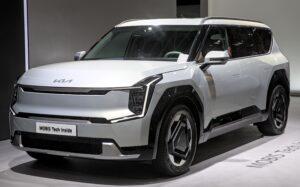
The share of electric vehicles in the new passenger car market in Ukraine in 2025 increased to 28.3% from 14.5% a year ago, while cars with traditional engines (gasoline and diesel) accounted for only half of the market compared to more than 65% in 2024, Ukravtoprom reported on its Telegram channel.
“Models with gasoline engines remained the most popular, but their market share decreased from 40% to 32.3% compared to 2024,” the association said.
In particular, the diesel car segment decreased from 25.6% to 17.4%, while the share of hybrids increased from 19.5% to 21.8%.
Cars equipped with gas cylinder equipment (LPG) again accounted for less than 1% of the new passenger car market.
According to Ukravtoprom, the Hyundai Tucson took the lead in the gasoline car segment, the Volkswagen ID.Unyx in electric cars, the Toyota RAV-4 in hybrids, the Renault Duster in diesel cars, and the Hyundai Tucson in cars with LPG equipment.
According to Ukravtoprom, in 2025, the market for new passenger cars in Ukraine grew by 17% to 81,300 units, including a 2.2-fold increase in December to 12,400 units.
These figures are due to the sharp growth in sales of electric vehicles in the last months of 2025, given the cancellation of VAT exemptions during their customs clearance from the beginning of 2026. In December, according to AUTO-Consulting, the share of electric vehicles exceeded 50% of sales.
According to market experts, after the announcement of the abolition of VAT exemptions, prices for electric vehicles began to rise, and by the beginning of 2026, prices for both used and new electric vehicles had effectively offset the 20% VAT.



