
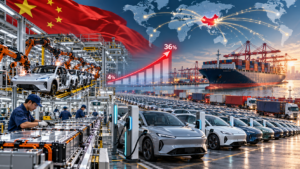
Over the past 25 years, China has increased its share of global automobile production approximately ninefold—from 4% in 2000 to 36% in 2025—transforming itself from a relatively small manufacturer into the world’s largest automotive hub. This was reported by the Experts Club information and analytical center, citing a study by the consulting firm Strategy Partners.
According to analysts’ estimates, around 2 million vehicles were produced in China in 2000, while by 2025 production exceeded 34 million vehicles per year. Thus, over a quarter of a century, the volume of Chinese automobile production increased approximately 17-fold.
China’s position strengthened particularly rapidly after 2010. The country not only formed the world’s largest domestic automobile market, but also created a large-scale manufacturing base covering virtually the entire value chain — from components and batteries to vehicle manufacturing and software.
One of the main factors behind the further growth of China’s automotive industry was the transition to electric vehicles and hybrid models. Chinese manufacturers gained strong positions in the new energy vehicle segment — NEV, which includes fully electric vehicles and plug-in hybrids.
At the same time, Chinese companies are actively increasing their presence abroad. China has become the world’s largest automobile exporter, while local manufacturers are expanding sales and creating their own production capacities in Europe, Asia, Latin America and other regions.
As a result, the structure of the global automobile market has also changed. While in the early 2000s it was shaped primarily by manufacturers from the United States, Japan and Western Europe, by the mid-2020s China had become the industry’s largest individual manufacturing hub.
The growth of China’s automotive industry is accompanied by the strengthening of its own national brands. BYD, Geely, Chery, SAIC, Great Wall Motor and other manufacturers are increasingly competing with European, American, Japanese and South Korean automotive groups not only in China’s domestic market but also in export markets.
China’s own battery manufacturing base has become a significant competitive advantage. Chinese companies hold leading positions in the global production of traction batteries, while the country controls a significant share of global production chains related to raw material processing and the manufacture of components for electric vehicles.
According to Strategy Partners, the transformation of China’s automotive industry demonstrates the country’s transition from a model of catching-up industrial development to technological leadership in certain segments of the industry.
If current trends continue, competition between Chinese and traditional global automakers will increasingly shift into the areas of electric vehicles, battery technologies, software, autonomous driving and production costs.
auto industry, AUTOMOBILE, CHINA, Electric vehicle, PRODUCTION

According to Experts Club, electric vehicles in Ukraine will remain more cost-effective than internal combustion engine vehicles even after full taxation on their import is restored, says Serhiy Kuyun, director of the “A-95” Consulting Group.
According to Enkorr, a 20% VAT is set to be reinstated on electric vehicle imports into Ukraine starting January 1, 2027. Meanwhile, the preferential regime in effect until the end of 2026 exempts electric vehicles from VAT and import duties.
According to Kuyun’s assessment, the elimination of this exemption will make electric vehicles more expensive to purchase, but it will not deprive them of their main advantage—significantly lower operating costs.
“Even with all taxes included, an electric vehicle remains cost-effective. The electricity needed to charge it is significantly cheaper than fuel for a vehicle with an internal combustion engine,” the expert notes.
The savings on operating costs are particularly noticeable with high annual mileage. If an electric vehicle consumes about 15–20 kWh of electricity per 100 km, then when charged at home, the cost of such a trip remains several times lower than the cost of gasoline or diesel fuel for a vehicle of a similar class.
An additional advantage of electric vehicles is the simpler design of their powertrain. They lack a number of components and consumables typical of vehicles with internal combustion engines, which potentially reduces the cost of regular maintenance.
According to Kuyun, the Ukrainian market has already reached a stage of development where tax incentives are no longer the main driver of demand for electric vehicles. In recent years, the model lineup has expanded significantly, the used-car market has grown, and the charging station infrastructure is developing.
At the same time, the reinstatement of the VAT could have a noticeable impact on the market immediately before the end of the tax incentive period. Buyers planning to purchase an electric vehicle may try to import and register it by the end of 2026 to take advantage of the current tax incentives.
As a result, electric vehicle imports may accelerate further in the final months of 2026, after which the market may undergo a correction period in early 2027.
For comparison: with a customs value of 20,000 euros for an electric vehicle, the 20% VAT refund alone potentially increases the tax component by approximately 4,000 euros, without taking into account the specifics of determining the tax base and other payments. However, for an owner with high annual mileage, part of this difference is gradually offset by lower energy and maintenance costs.
Analysts at Experts Club note that the future dynamics of the Ukrainian electric vehicle market will no longer depend solely on tax incentives. The cost of electricity and automotive fuel, the development of charging infrastructure, prices for new and used electric vehicles, the condition of batteries, and the residual value of vehicles on the secondary market will become increasingly important.
Therefore, the reinstatement of full taxation may alter the structure of imports and slow the market’s growth rate; however, it does not, in and of itself, eliminate the economic advantages of electric vehicles for a significant portion of drivers.
Original source: Enkorr – “Electric Vehicles Will Remain Cost-Effective Even With All Taxes — Expert”.
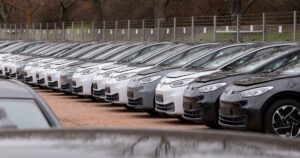
In August of this year, 4,200 electric vehicles (new and used) were added to Ukraine’s vehicle fleet, which is 47% fewer than in the same month last year, according to a report by “Ukravtoprom” on its Telegram channel.
At the same time, compared to July of this year, electric vehicle registrations rose by 7.7%.
As usual, passenger cars accounted for the majority of registered electric vehicles—4,074, of which 503 were new (-73%) and 3,571 were used (-37%).
Of the 160 commercial BEVs, only two were new (in August 2025, 24 out of 175 were new).
The most popular new electric vehicles in July 2026 were the BYD Sea Lion 06 EV—102 units; the Zeekr 001—46 units; the Zeekr 7X—44 units; the MG4 EV—36 units; and the Toyota BZ4X—33 units.
Among used vehicles, the most frequently first-registered models were the Tesla Model Y—494 units, the Tesla Model 3—480 units, the Nissan Leaf—454 units, the Chevrolet Bolt—199 units, and the Hyundai Ioniq 5—160 units.
As previously reported, a sharp increase in demand for electric vehicles began last summer due to plans to introduce a value-added tax (VAT) on the customs clearance of electric vehicles starting January 1, 2026. Specifically, in December—the last month during which electric vehicles could be cleared through customs without
VAT—demand for them increased 8.6-fold compared to December 2024, reaching 32,800 units.
In total, 110,200 electric vehicles were added to Ukraine’s vehicle fleet in 2025—twice as many as in the previous year. New vehicles accounted for 20% of the total, compared to 24% in 2024.
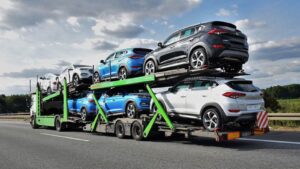
In July 2026, Ukrainians purchased 22,600 used passenger cars imported from abroad, which is 1% more than during the same period in 2025, according to a report by “Ukravtoprom” on its Telegram channel.
Gasoline-powered cars accounted for the largest share of this segment of the auto market, increasing their share by 7 percentage points compared to July 2025—to 55%.
Next came diesel cars at 17% (19%), while the share of electric vehicles fell to 15% from 24%, though they still outpaced hybrids, which accounted for 10% (6%). The share of cars with LPG systems remained unchanged at 3%.
The average age of imported used cars was 8.8 years.
The Volkswagen Tiguan confidently tops the list of the ten most popular imported used models with 937 units. It is followed by the VW Golf with 862 units, the Audi Q5 with 803 units, the Nissan Rogue with 799 units, the Skoda Octavia with 661 units, the Renault Megane with 618 units, the Tesla Model Y with 509 units, the Ford Escape with 465 units, the Tesla
Model 3 with 456 units, and the Mazda CX-5 with 432 units.
As reported with reference to “Ukravtoprom,” in 2025 Ukrainians purchased 274,300 used passenger cars imported from abroad, which is 24% more than in 2024, and the top three most popular models after the Volkswagen Golf included two Tesla electric vehicles—the Model Y and Model 3.
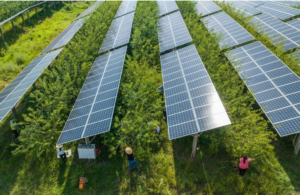
China will gradually introduce a consumption tax on lithium and lithium-ion batteries, as well as solar cells, which have been exempt from taxation since 2015, according to the Xinhua News Agency.
Mercury-free, nickel-metal hydride, lithium, and lithium-ion batteries, as well as vanadium flow batteries, will be taxed at a rate of 2% starting September 1, 2026. Starting in September 2027, the rate will increase to 4%.
For photovoltaic, or solar, cells, a 2% tax will take effect on April 1, 2027, and will also be raised to 4% starting in April 2028.
The new rules were announced by China’s Ministry of Finance, the General Administration of Customs, and the State Taxation Administration.
The introduction of the tax could increase the production costs of batteries and solar cells in China. If manufacturers pass on the additional costs entirely to buyers, selling prices could rise by approximately 2% in the initial phase and up to 4% once the rate is fully implemented.
However, the actual price increase will depend on competition, corporate profitability, and contracts with buyers. Chinese manufacturers may absorb part of the costs themselves to avoid losing market share in both domestic and foreign markets.
The changes will potentially affect the cost of electric vehicles, energy storage systems, and solar power plants, as batteries and photovoltaic modules are among the key components of such projects. At the same time, due to the high proportion of other costs, the price of a finished electric vehicle or solar power plant will not necessarily increase by the full 4%.
Some promising technologies will remain temporarily exempt from the tax until December 2028. These include sodium-ion and solid-state batteries, fuel cells, as well as perovskite, tandem, and gallium arsenide solar cells.
China currently levies a 4% consumption tax on most battery products. At the same time, lithium and lithium-ion batteries, as well as solar and fuel cells, have been exempt since 2015.
This policy has facilitated rapid expansion of production capacity and helped Chinese companies become global leaders. However, the excess supply has simultaneously intensified price competition and reduced profitability for some manufacturers.
Analysts at Citic Securities estimate that the tax changes could generate an additional 45 billion yuan, or about $6.6 billion, in revenue for the Chinese government.
Following the announcement of the new rules, shares of solar cell manufacturer Longi Green Energy Technology rose 2.1%, JinkoSolar’s rose 4%, and those of CATL, the world’s largest battery manufacturer, rose 4.6%.
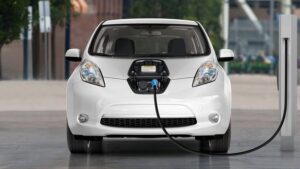
In the first half of this year, 15,221 thousand electric vehicles (new and used) were added to Ukraine’s vehicle fleet, which is half the number registered during the same period last year, according to a report by “Ukravtoprom” on its Telegram channel.
As usual, passenger cars accounted for the majority of registered electric vehicles—14,404 thousand—but their registrations fell by 53%, while demand for commercial electric vehicles dropped by 17% to 817 units.
New vehicles accounted for 19% of BEV registrations, compared to 18% last year.
The most popular new electric vehicles in January–June were the BYD Leopard 3 (421 units), the BYD Sea Lion 06 (359 units), the Zeekr 7X (229 units), the Volkswagen ID.Unyx (203 units), and the Zeekr 7X (172 units).
Among used vehicles, the most frequently registered for the first time were the Nissan Leaf (1,592 units), the Tesla Model Y (1,468 units), the Tesla Model 3 (1,355 units), the Chevrolet Bolt (613 units), and the Renault Zoe (553 units).
As previously reported, Ukraine’s vehicle fleet grew by 110,200 electric vehicles in 2025—twice as many as the previous year. New vehicles accounted for 20% of the total, compared to 24% in 2024.
In particular, in December—the last month during which electric vehicles could be cleared through customs without VAT—demand for them increased 8.6-fold compared to December 2024, reaching 32,800 units.
BEV, Electric vehicle, REGISTRATION, UKRAVTOPROM, vehicle fleet



