

PJSC “Electrometallurgical Plant ‘Dniprospetsstal’” (Zaporizhzhia) and Zaporizhzhia Electric Power Supply LLC have reached a settlement agreement to repay the consumer’s electricity debt in the amount of 89,986,568 thousand UAH for the period from January 1 to February 5, 2026.
According to court documents in Case No. 908/1091/26, copies of which are available to the “Interfax-Ukraine” agency, on May 4, 2026, the Commercial Court of Zaporizhzhia Oblast received a statement of claim from ‘Zaporizhzhiaelektropostachannya’ LLC against “Dniprospetsstal” with the participation of JSC “Zaporizhzhiaoblenergo,” seeking recovery of debt for consumed electricity in the amount of 89,986,568 thousand UAH, of which 85.398 million UAH is principal debt plus 3% per annum and the inflation index.
Following a series of hearings, at the court session on June 3, representatives of the parties to the case supported a joint statement by the parties approving the settlement agreement dated May 26, concluded between Zaporizhzhia Electric Power Supply LLC and Dniprospetsstal PJSC. The court granted the motion to approve the settlement agreement, under which the defendant acknowledges that its debt for electricity consumed during the period from January 1 to February 5, 2026, amounts to 87,986,568 thousand UAH and undertakes to repay it in several installments.
Within three calendar days of the lifting of the provisional measures ordered by the Commercial Court’s ruling of May 19, 2026, in Case No. 908/1091/26, the defendant shall pay the plaintiff 50 million UAH.
Payment of the remaining principal debt in the amount of 37,986,568 thousand UAH will be made according to the following schedule: 18,993,284 thousand UAH by June 30, 2026; a similar installment by July 30, 2026.
On this basis, the court, by a ruling dated June 3 and published on June 8 of this year, closed the case.
In another case, No. 908/1844/25, the Zaporizhzhia Regional Commercial Court, by a ruling dated June 11 of this year and published on June 12, partially granted the motion “Dniprospetsstal” to defer enforcement of the decision regarding the recovery, in favor of the Zaporizhzhia City Council, of lost revenue from the use of a land plot without title documents for the period from July 14, 2020, to February 28, 2025, in the amount of 3,661,675 thousand UAH, taking into account the outstanding balance as of June 11, 2026, in the amount of 3,138,578 thousand UAH.
The company must repay the debt within five months, making equal monthly payments of 627,715 thousand UAH.
As previously reported, in the first quarter of 2026, “Dniprospeztal” saw its losses increase 3.9-fold compared to the same period in 2025—to 510.751 million UAH. Uncovered losses as of the end of March 2026 amounted to 6 billion 775.516 million UAH.
The company’s net loss in 2025 increased by 22.1% compared to 2024—to 711.015 million UAH from 582.427 million UAH. As of December 31, 2025, the company’s workforce numbered 2,814 thousand people (in 2024—3,147 thousand people).
“Dniprospetsstal” is Ukraine’s sole manufacturer of long products and forgings made from special steel grades: stainless steel, tool steel, high-speed steel, bearing steel, structural steel, as well as heat-resistant nickel-based alloys.
According to the National Securities Commission’s data for the first quarter of 2026, its shares are held by Wenox Holdings Ltd. (47.1128%), Boundryco Ltd. (11.0131%), Gazaro Ltd. – 16.5197%, Crascoda Holdings – 6.6826%, and Middleprime Limited – 9.7901% (all based in Cyprus).
It was previously reported that in May 2008, the international investment and consulting group EastOne sold its approximately 30% stake in Dniprospetsstal, which had previously been held under the group’s mandate. The plant’s new shareholders are linked to VS Energy International, whose beneficiaries include several Russian entrepreneurs.
According to the report, in May 2023, pursuant to a decision by the National Security and Defense Council of Ukraine (NSDC) dated May 12, 2023, personal economic sanctions were imposed on the ultimate beneficial owner of PJSC “Dniprospetsstal.”
The authorized capital of the PJSC amounts to 49.720 million UAH.
COURT, DEBT, DNIPROSPETSSTAL, ELECTRICITY, electricity supply, Zaporizhzhia
Electricity imports to Ukraine from June 8 to 14 rose by 63% compared to the previous week—to 100.6 thousand MWh, the DIXI Group analytical center reported on Tuesday, citing data from Energy Map.
“Compared to the previous week, imports increased across all sources,” the center noted.
At the same time, exports fell by 38% to 17.2 thousand MWh.
According to Energy Map, Hungary accounted for the largest share of imports last week—40,000 MWh, or 39.8%. Slovakia accounted for 27,900 MWh (27.7%), Romania – 23.5 thousand MWh (23.4%), Poland – 9.2 thousand MWh (9.1%), and Moldova – 0.03 thousand MWh (<0.1%).
The highest growth rates in imports were recorded from Moldova—a 2.5-fold increase. Imports from Slovakia and Hungary increased by 86% and 83%, respectively; from Romania—by 47%; and from Poland—by 5%.
Meanwhile, in the export structure, Hungary’s share amounted to 7.3 thousand MWh (42.6%), Romania’s share was 6.4 thousand MWh (37.3%), Moldova’s was 3.4 thousand MWh (19.9%), and Slovakia’s was 0.04 thousand MWh (0.2%).
Compared to the previous week, exports decreased by 36–89% in most directions. At the same time, supplies to Romania increased 2.8-fold. Electricity exports to Poland have not taken place since November 2025.

The Ukrainian Renewable Energy Association (UREA) supports the revision of electricity transmission tariffs for NPC “Ukrenergo” and proposes simultaneously launching the practical implementation of a mechanism to protect vulnerable electricity consumers and accelerating the introduction of targeted monetary support for the population.
This is stated in the association’s official letter addressed to the National Commission for State Regulation of Energy and Public Utilities (NEURC) and the Ministry of Energy of Ukraine, published on Facebook.
“The UAVE emphasizes: the discussion should not be limited solely to the tariff rate. A comprehensive solution is needed—a financially sound tariff must be combined with a gradual reduction of cross-subsidization and the launch of targeted monetary support for vulnerable consumers,” the association stressed.
The UAVE also considers it necessary to work with the Ministry of Social Policy, Ukrenergo, distribution system operators (DSOs), and other stakeholders to develop a data-sharing mechanism for launching targeted monetization of subsidies.
The association asserts that this approach will help maintain the financial stability of the energy sector, preserve social protection for the population, and reduce distortions in the electricity market. The transition to targeted support also aligns with Ukraine’s commitments regarding market liberalization to the EU, the IMF, and other international partners.
In turn, as stated in the association’s appeal to the NEURC and the Ministry of Energy, the UEA supports Ukrenergo’s position on the electricity transmission tariff, as the financial stability of the transmission system operator (TSO) is critical for the reliable operation of the power system, the fulfillment of special obligations, stable settlements between market participants, and the restoration of energy infrastructure.
The association cited Ukrenergo data, according to which the projected volume of electricity transmission in 2026 will be approximately 89.6 million MWh, which is significantly lower than the figure used when setting the current tariff. At the same time, costs to cover transmission losses have increased, the configuration of power grids is changing, and the volumes of electricity imports and long-distance transmission are growing—a situation that, against the backdrop of ongoing damage to energy infrastructure, requires significant financial investment.
“Trends such as the accumulation of debt among market participants, deteriorating payment discipline, reduced opportunities for the restoration and development of grid infrastructure, and a decline in the investment attractiveness of the energy sector—all in the absence of a source to cover the TSO’s costs—will intensify,” the UAVE emphasized.
At the same time, as the association noted, amid systematic attacks on energy infrastructure, the development of distributed generation, renewable energy sources (RES), and energy storage systems has become one of the key elements of energy security, as these facilities provide additional stability to the power system, increase its flexibility and maneuverability, and reduce the risk of shortages.
“Therefore, ensuring timely and predictable payments to renewable energy producers is not only a matter of fulfilling financial obligations but also a crucial factor in the further development of Ukraine’s energy resilience,” the UAVE concluded.
As reported, the NEURC proposes setting the tariff for NPC “Ukrenergo” for electricity transmission at 903.53 UAH/MWh (excluding VAT) effective July 1, 2026, which is 21.62% higher than the current rate.
It is noted that the updated tariff component for Ukrenergo’s special obligations regarding payment for electricity from alternative sources amounts to 367.56 UAH/MWh within the transmission tariff structure.
Accordingly, it is proposed to increase the dispatch tariff by 7.83% to 118.64 UAH/MWh.
Between May 11 and 17, Ukraine increased electricity imports by 50% compared to the previous week—to 81,700 MWh—while exports fell by 23%—to 17,700 MWh, the DIXI Group analytical center reported on Tuesday, citing data from Energy Map.
“Throughout the week, Russia continued its attacks on Ukraine’s energy infrastructure. In particular, on May 13–14, another massive attack on energy facilities took place, leading to power outages in a number of regions,” the center noted.
Against this backdrop, daily import volumes rose significantly: on May 13 to 15,200 MWh (+78% compared to May 12) and on May 14 to 16,000 MWh (+87% compared to May 12).
At the same time, sunny weather at the beginning and end of the workweek facilitated active operation of residential solar power plants and reduced the load on the power grid. In the middle of the week, consumption increased due to deteriorating weather conditions. Despite this, domestic generation and imports fully covered consumer demand without the need for restrictions.
According to Energy Map, Hungary accounted for the largest share of imports last week—46.5 thousand MWh, or 57%. Poland accounted for 18.4 thousand MWh, or 23%, Romania – 16.7 thousand MWh, or 20%, and Moldova – 0.1 thousand MWh (<0.1%).
Electricity imports increased across all sources by 14–80%. Additionally, on May 13–14, after a week-long hiatus, imports from Moldova resumed in small volumes—0.06 thousand MWh between 10:00 PM and 11:00 PM. There were no imports from Slovakia during the week.
As reported, between May 4 and 10, Ukraine reduced electricity imports by 63%—to 54.6 thousand MWh, and in April—by 41%,—to 558.3 thousand MWh.
In April 2026, Ukraine reduced its electricity imports by 41%—to 558,300 MWh, according to the DIXI Group analytical center, citing data from Energy Map.
“This is the second consecutive month of declining volumes of purchases from abroad,” the center noted.
At the same time, exports rose by 10%—to 33,300 MWh—but remained insignificant and occurred only during specific hours of temporary surplus in Ukraine’s power grid. By the end of the month, Ukraine had imported 17 times more electricity than it exported.
As explained by DIXI Group, the decline in imports and the modest growth in exports in April were driven by several factors. On the one hand, predominantly warm and clear weather, as well as longer daylight hours, contributed to increased generation from solar power plants and reduced the load on the power grid due to lower consumption. On the other hand, the security situation remained tense: at least three waves of heavy shelling were recorded during the month (on April 1–2, 3, and 16), resulting in infrastructure damage and limitations on available generation. An additional factor was the temporary reinstatement of differentiated price caps starting April 1, which reduced the economic attractiveness of imports during certain hours.
Under these conditions, consumption restrictions were periodically applied to balance the power system, but they were significantly less extensive than in March.
Hungary accounted for the largest share of imports in April—305,600 MWh, or 55%. Poland and Romania accounted for 125,200 MWh and 124,200 MWh, respectively—22% each. Meanwhile, Moldova accounted for 3.2 thousand MWh (1%), and Slovakia for 0.13 thousand MWh (<0.1%).
For comparison: in April 2025, imports amounted to 187.0 thousand MWh—three times less than in the reporting month.
“The average utilization of the permitted transmission capacity in April was 36.9% of the approved nominal value (2.1 GW),” DIXI Group reported. In turn, in March of this year, this figure stood at 60.4%. The maximum value of 88.4% was recorded on April 19 between 9:00 p.m. and 10:00 p.m.
The nominal capacity limit for imports from EU countries to Ukraine and Moldova has been 2.45 GW since January. At the same time, part of this capacity is used for electricity imports to Moldova, so approximately 2,100 MW of commercial imports are available to Ukraine. However, the amount of permitted import capacity for each country in the bloc is dynamic and may vary depending on the operational situation in the countries’ power systems.
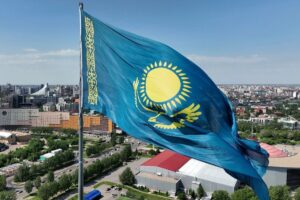
Kazakhstan plans to completely stop purchasing electricity from Russia starting in 2027 thanks to the commissioning of its own power generation facilities, said the country’s Deputy Minister of Energy, Sungat Esimkhanov.
According to him, if the planned power facilities are commissioned in late 2026 or early 2027, Kazakhstan will be able to meet domestic demand without Russian supplies. “If we commission all of our planned power facilities by the end of this year or early next year, I think that in 2027 we will not purchase any electricity from Russia at all,” Esimkhanov said at a press conference.
In recent years, Kazakhstan has purchased electricity from Russia annually due to a shortage of its own capacity. According to the Ministry of Energy, the deficit is decreasing: in 2024 it stood at 2.1 billion kWh, in 2025—about 1.5 billion kWh, and in 2026 it is expected to be at the level of 1–1.2 billion kWh. The government expects to eliminate this deficit by 2027.
Earlier, Kazakhstan’s Minister of Energy Erlan Akkenzhenov stated that the country intends to fully meet the economy’s electricity needs by the end of the first quarter of 2027. To this end, Kazakhstan is implementing 81 energy projects with a total capacity of 15.3 GW and an investment volume of over 13 trillion tenge, or more than $25 billion.
Moving away from Russian supplies will be a significant milestone in Kazakhstan’s energy policy. For the country, this means reducing dependence on external electricity sources and transitioning to a more self-sufficient energy balance model. However, the plan’s success will depend on the timing of new facilities coming online, the condition of the grids, and the power system’s ability to handle peak loads.
The decision also has regional significance. Kazakhstan remains part of the Central Asian power grid and is connected to the Russian power grid, so reducing imports from Russia does not mean a complete technological disconnect. However, from an economic and political standpoint, the move to replace Russian supplies demonstrates Astana’s desire to strengthen its own energy security and reduce vulnerability to external disruptions.
For Russia, this means a gradual loss of a portion of its electricity export demand from Kazakhstan. For Central Asia, it is a signal to accelerate the modernization of power generation, the construction of new thermal power plants, the development of renewable energy, and the improvement of grid reliability, as power shortages remain one of the region’s main infrastructure challenges.



