
The large-scale deployment of solar power plants and battery energy storage systems could reduce the total operating costs of electric power systems by 40% in the 2030s, provided that equipment costs continue to fall and electricity consumption grows simultaneously, according to a study by the Schneider Electric Research Institute (SERI), published by the international energy technology company Schneider Electric on November 10, 2026.
As noted in the company’s official press release, the report System Costs of Electricity: A New Baseline for the 21st Century Economy analyzes 40,500 energy system development scenarios with various combinations of costs for solar generation, batteries, and grid infrastructure.
The aim of the study was to determine how the proliferation of distributed energy resources—specifically rooftop solar power plants and batteries—will affect the overall costs of the power system, including centralized generation and grid operation.
According to the researchers’ estimates, even at current global average installation costs for solar panels and batteries, an optimal combination of these technologies could reduce total system costs by approximately 10%. With the projected decline in equipment costs in the 2030s, potential savings could reach 40%.
At the same time, the company emphasizes that the realization of such a scenario depends on the synchronized development of solar generation, energy storage, and the electrification of the economy. According to Schneider Electric’s estimates, these savings could contribute an additional 0.8% of global GDP to the world economy by 2030.
Researchers cite the development of battery capacity as one of the key factors in the efficiency of the power system. Under average global price conditions, a mismatch between the characteristics and operating duration of storage systems and the needs of various facilities could, conversely, increase total system costs by 35% compared to the current baseline.
The study also showed that not only the pace of renewable energy deployment is important, but also the sequence in which generation, storage, and consumption are developed. If the pace of electrification lags behind or outpaces the deployment of new power generation capacity, grid costs may temporarily rise.
Schneider Electric notes that increased electricity consumption by electric vehicles, heat pumps, data centers, and industrial facilities will allow for more efficient use of the existing grid infrastructure. Rising consumption levels, combined with load balancing, will help spread fixed costs across a larger volume of electricity sold and reduce its system-wide cost.
“Over the past decade, solar energy has been viewed as an intermittent energy source. But we’ve been looking at this generation asset the wrong way: solar energy is the fuel, and the battery is the power plant,” said Laurent Bataille, Executive Vice President of European Operations at Schneider Electric.
According to him, battery systems significantly expand the possibilities for using solar generation; however, reducing the costs of the entire electricity system is only possible through the coordinated development of generation, storage, and demand.
“Thanks to the significantly faster scaling of solar energy and batteries, Europe can set itself on the path to energy sovereignty and competitiveness. The pieces are falling into place; now we need acceleration and coordination,” Batay emphasized.
Esther Finidori, Chief Sustainability Officer at Schneider Electric, also stressed the need to align the energy transition with economic efficiency.
“This study shows that sustainability and affordability can reinforce each other, but coordination is critically important. The priority now must be to turn ambitions into action by accelerating demand for electrified energy, ensuring more flexible energy use to smooth the load curve and free up capacity, and removing barriers to the deployment of solar power and batteries,” she said.
Researchers have identified three key areas of public policy that can accelerate the reduction of electricity costs. These include introducing incentives to balance daily consumption patterns, simultaneously supporting the development of renewable generation and electrification, and reducing equipment costs by improving supply chains, streamlining permitting procedures, and training qualified specialists.
The company believes that regulatory policy should, first and foremost, create conditions for the development of distributed generation and energy storage systems, rather than imposing strict requirements on the volume of their use by individual consumers.
For Ukraine, the study’s findings are particularly significant given the need to enhance the resilience of the power grid, develop distributed generation, and ensure an uninterrupted power supply to businesses and critical infrastructure. The combination of solar power plants, batteries, and digital energy management systems can reduce individual consumers’ dependence on the centralized power grid and increase the flexibility of the energy infrastructure.
Schneider Electric is a French multinational energy technology company whose history dates back to 1836. It specializes in energy management, industrial automation, and the digital transformation of buildings, data centers, infrastructure, and industrial facilities. The company’s portfolio includes low- and medium-voltage electrical equipment, automation systems, uninterruptible power supplies (UPS), the EcoStruxure software platform, and digital services. Schneider Electric operates in over 100 countries and employs approximately 160,000 people. As of 2025, the group’s revenue reached EUR 40.15 billion, an increase of approximately 5.2%, while net income amounted to EUR 4.2 billion.
Schneider Electric began operations in Ukraine in 1994, registered a representative office in 1996, and established Schneider Electric Ukraine LLC in 2000. The company supplies electrical equipment, automation systems, energy management solutions, and uninterruptible power supplies for the industrial, commercial real estate, energy, and infrastructure sectors. Its Ukrainian subsidiary has commercial divisions as well as logistics, engineering, and service support teams.
In August 2026, Schneider Electric announced its participation in the modernization of heating systems in 26 Ukrainian cities, which received equipment to improve the energy efficiency and operational reliability of their municipal infrastructure. In addition, in July, the company announced its support for Ukrainian universities by providing software for power grid design and training more than 200 faculty members from 30 higher education institutions.
BATTERY, ELECTRICITY, ENERGY, INVESTMENT, Schneider Electric, SOLAR

In January–October 2026, Ukrainian companies increased imports of electric batteries and separators for them by nearly 3.6 times compared to the same period last year—to $3.77 billion, according to data from the State Customs Service of Ukraine.
According to customs statistics, imports of these products totaled $583.2 million in October, which is approximately four times higher than the figure for October 2025, when $144.9 million worth of batteries were imported into Ukraine.
China remains the main supplier of electric batteries to Ukraine, with its share reaching 91.1% of total imports over the first ten months of 2026, compared to 70.2% during the same period last year.
In monetary terms, imports of Chinese products increased from $740.6 million to $3.43 billion, or approximately 4.6 times.
Other major suppliers of electric batteries in 2026 were the Czech Republic and Poland; however, their shares remain insignificant compared to China’s.
For comparison, in January–October 2025, in addition to China, significant volumes of products came from Vietnam, which accounted for 9.1% of imports, and Taiwan, with a 5.1% share.
Thus, over the course of the year, the concentration of electric battery supplies to the Ukrainian market from China increased significantly.
At the same time, exports of electric batteries from Ukraine over the first ten months of 2026 decreased by 15.4%—to $37.16 million compared to $43.9 million during the same period last year.
Poland, Germany, and France remain the main markets for Ukrainian products.
As a result, imports of electric batteries exceeded exports by more than 100 times.
As previously reported, in 2025, Ukraine increased its imports of electric batteries by 55% compared to the previous year, reaching $1.48 billion. Thus, in just the first ten months of 2026, the value of imported products exceeded last year’s total by approximately 2.5 times.
In late July 2024, Ukraine introduced tax and customs incentives for the import of certain categories of energy equipment, including batteries used to provide backup power.
Rechargeable batteries are used in energy storage systems, autonomous and backup power supplies, telecommunications equipment, industry, transportation, and household appliances. The increase in imports is driven by the need of Ukrainian businesses and households for backup power sources.
Source: State Customs Service of Ukraine, foreign trade statistics for January–October 2026.

In Kyiv, contractors involved in the construction of two new boiler houses are switching to round-the-clock operations to accelerate the commissioning of these energy facilities, the Interfax-Ukraine news agency reported on November 12, citing Ivan Fedorov, head of the State Agency for the Restoration and Development of Infrastructure of Ukraine.
According to the Agency for Reconstruction, the decision to accelerate the pace of construction was made following an inspection of the progress of work at the sites.
Currently, specialists are installing heating boilers and connecting process equipment to pipelines and other engineering systems.
Once the installation work is complete, contractors will move on to the commissioning phase, which involves testing the equipment’s functionality and preparing the boiler rooms for operation.
The transition to a round-the-clock schedule is expected to accelerate the completion of construction and the preparation of the capital’s new heating infrastructure facilities for operation during the heating season.
At the same time, the Agency for Reconstruction has not yet specified the installed thermal capacity of the boiler houses, their locations, construction costs, or specific dates for commissioning.
The State Agency for Reconstruction and Infrastructure Development of Ukraine is a central executive body whose activities are aimed at implementing state policy in the field of infrastructure reconstruction and development. The Agency participates in the reconstruction of damaged facilities, including transportation, utility, and other critical infrastructure.
Sources: “Interfax-Ukraine,” November 12, 2026, official statement from the Agency for Reconstruction.

Huawei Ukraine announced the results of the nationwide engineering competition “Student Tech Challenge 2026,” in which 152 students from 18 higher education institutions, organized into 42 teams, participated. Participants developed practical solutions for telecommunications networks, digital infrastructure, and energy supply, the Interfax-Ukraine news agency reported on November 11, citing the company’s press service.
The closing ceremony took place on November 6 in Kyiv. The competition is being held for the third consecutive year with the support of the Ministry of Education and Science of Ukraine and is aimed at training engineering professionals for the technology sector and restoring critical infrastructure.
This year, students worked in three areas: Radio Access Network Planning, Datacom Engineering, and Digital Energy. The tasks involved planning mobile radio networks, designing data transmission systems, creating fault-tolerant telecommunications infrastructure, and developing energy-efficient solutions.
In particular, participants explored ways to improve mobile coverage, increase network reliability, and utilize solar power generation in conjunction with energy storage systems.
Over the course of a month, the teams worked with the support of university faculty and mentors from Huawei Ukraine. Twenty-three teams from 12 cities across the country advanced to the final stage, where they presented their projects in English to an independent panel of industry experts on November 4–5.
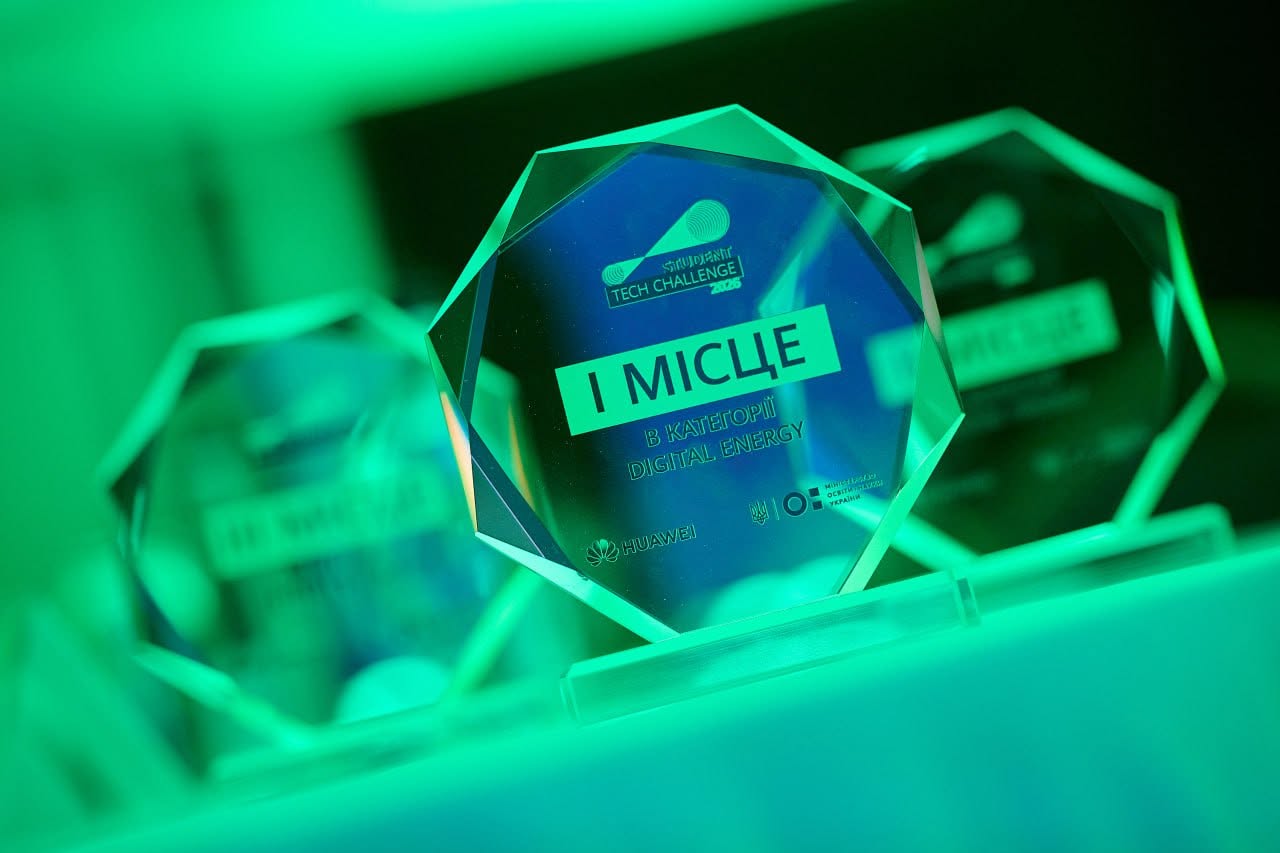
Winners were selected in three engineering categories
In the Datacom Engineering category, the “Sinners of the Networks” team from Taras Shevchenko National University of Kyiv took first place.
The “Spectrum” team from the Igor Sikorsky Kyiv Polytechnic Institute (KPI) achieved the best result in the Radio Access Network Planning category.
The Renew Able team from Zaporizhzhia Polytechnic National University won the Digital Energy category.
All three teams received awards from the organizers and the opportunity to complete an internship at Huawei Ukraine with the prospect of future employment.
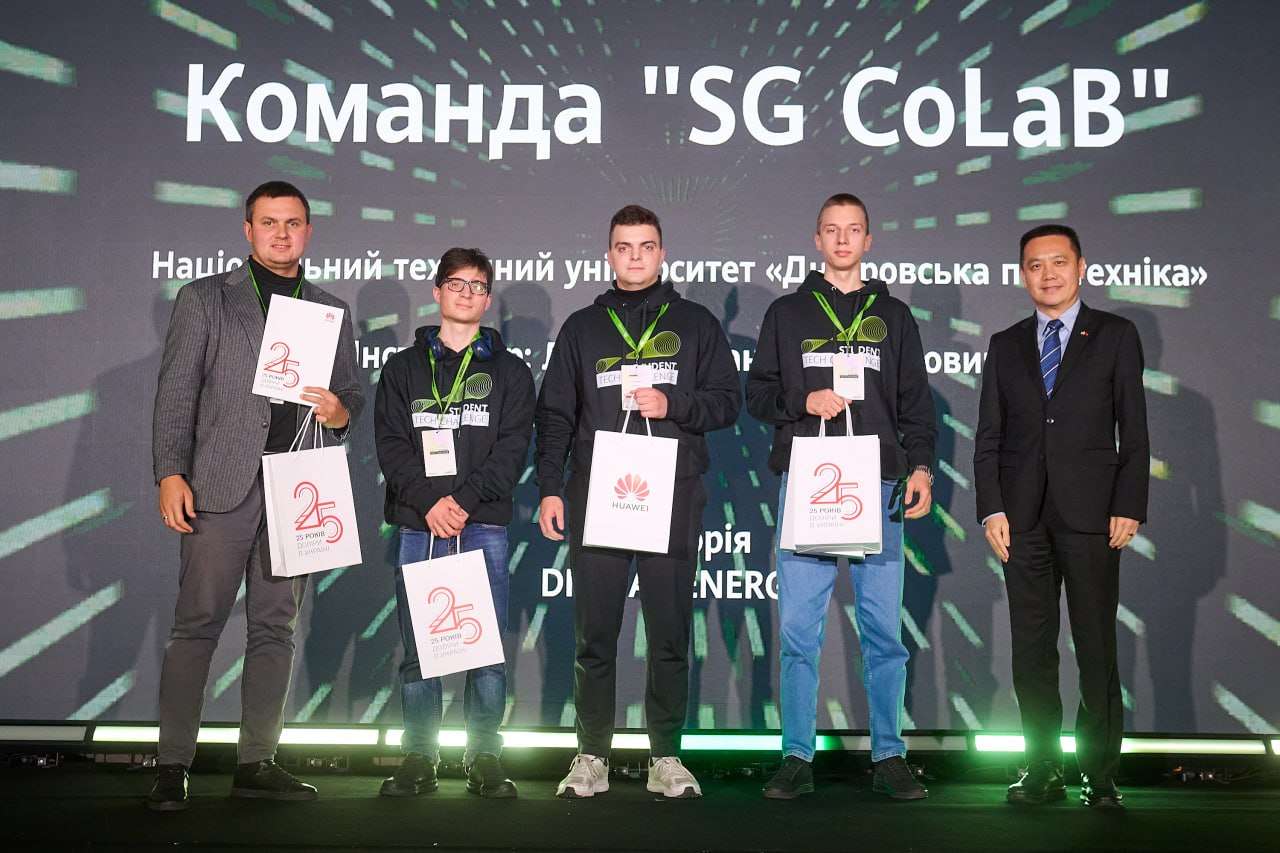
Huawei Expands Cooperation with Ukrainian Universities
Ma Minze, CEO of Huawei Ukraine, emphasized during the ceremony that training engineers is crucial for ensuring the stable operation of telecommunications systems and the restoration of Ukraine’s infrastructure.
According to him, since the start of the full-scale Russian invasion, the company has continued to work with Ukrainian telecom operators and technology partners to support and restore networks.
The company’s CEO noted that the Student Tech Challenge is designed to help students apply their university knowledge to practical engineering challenges that arise in the telecommunications and energy sectors.
The closing ceremony was attended by Ma Shengkun, Ambassador Extraordinary and Plenipotentiary of the People’s Republic of China to Ukraine; Oleksandr Fedienko, Member of the Ukrainian Parliament; and representatives of universities and technology companies.
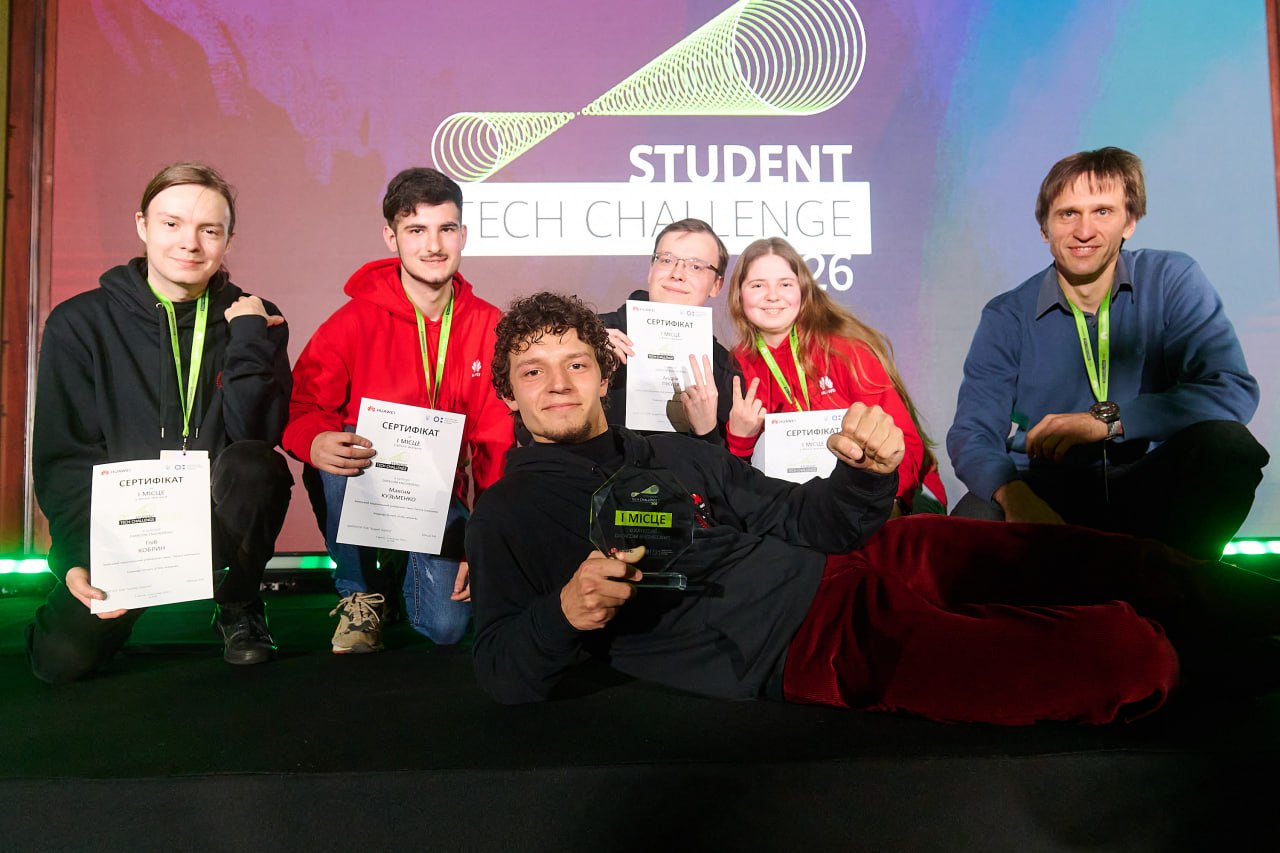
Anatoliy Melnichenko, Rector of the Igor Sikorsky Kyiv Polytechnic Institute, emphasized the need to develop students’ practical skills in the fields of sustainable telecommunications networks and digital energy.
Viktor Hreshta, Rector of Zaporizhzhia Polytechnic National University, emphasized the importance of training specialists using modern equipment and technologies that graduates will encounter in the workplace.
According to Huawei Ukraine, the company’s collaboration with educational institutions also includes providing internet connectivity in the shelters of educational facilities, organizing paid internships, and offering professional development programs for young specialists.
Huawei is an international technology company specializing in telecommunications equipment, networking solutions, digital infrastructure, and power supply systems. In Ukraine, the company collaborates with telecommunications operators, businesses, and institutions of higher education.
Sources: “Interfax-Ukraine,” November 11, 2026, the official Student Tech Challenge website.
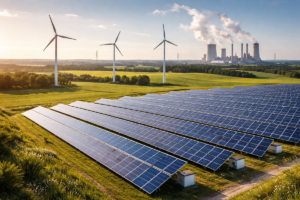
According to Experts.news, global fossil fuel consumption increased by 8%, or 40 exajoules (EJ), between 2017 and 2025, despite improvements in energy efficiency across economies and the rapid growth in the use of renewable energy sources (RES), according to the findings of the Energy Institute’s Country Transition Tracker 2026, released by the UK-based Energy Institute on November 10.
According to the report, global demand for natural gas saw the largest increase during this period—by nearly 15%, or 19 ExJ. Coal consumption rose by 7%, and oil consumption by 5%.
The study covers approximately 80 of the largest energy-consuming countries, which account for over 96% of global energy consumption and 95% of greenhouse gas emissions.
According to the Energy Institute, 83% of the countries studied have seen a decline in the energy intensity of their economies since 2017—that is, the amount of energy required to generate a unit of GDP. At the same time, 86% of countries reduced the carbon intensity of their energy consumption.
Despite these changes, global demand for fossil fuels continued to grow. In 2025, oil, natural gas, and coal still accounted for more than 85% of global energy consumption.
Renewable energy consumption increased by more than 60%
According to estimates by the Energy Institute, global use of renewable energy sources, including hydropower, increased by more than 60% between 2017 and 2025.
Growth was recorded in 74 of the 79 leading countries included in the analysis.
However, despite the rapid expansion of solar, wind, hydropower, and other renewable sources, their share in 2025 accounted for only about 8.6% of total global energy demand.
At the same time, decarbonization is occurring much faster in electricity generation than in other energy sectors.
In particular, France has the highest share of electricity from low-carbon and carbon-free sources among the countries studied—95 percent—of which nuclear power plants account for 68 percent of total generation. Brazil ranks second in this regard, with a share of 89 percent.
Greenhouse gas emissions continue to rise
The increase in fossil fuel consumption was accompanied by a further rise in global energy-related greenhouse gas emissions. Between 2017 and 2025, these emissions increased by an average of nearly 1% annually.
The largest reductions in emissions in absolute terms during this period were recorded in Germany—by 222 million metric tons—and Japan—by 216 million metric tons.
In contrast, energy-related emissions increased by 2.096 billion metric tons in China and by 783 million metric tons in India.
The Energy Institute notes that the United Kingdom, Spain, France, and Germany rank among the top five countries across five or six energy transition indicators.
Jemma Reniés, Director of External Relations at the Energy Institute, emphasized that the energy transition is proceeding unevenly both among individual countries and across sectors of the global economy.
According to her, the success of the transition will be determined not only by the volume of new clean energy capacity brought online but also by the ability of countries to meet growing energy demand while simultaneously reducing emissions.
According to the Statistical Review of World Energy published on June 30, 2026, total global energy demand in 2025 exceeded 600 EJ for the first time, increasing by 1.7% compared to the previous year.
At the same time, renewable energy sources made the largest contribution to the growth in global energy consumption, although fossil fuels continue to dominate the energy mix.
The Energy Institute is an independent British professional organization in the energy sector that publishes international energy statistics, analytical studies, and assessments of energy market developments. The annual publication *Statistical Review of World Energy* contains data on the production and consumption of oil, gas, coal, electricity, renewable energy, and nuclear energy, as well as energy-related greenhouse gas emissions.
Source: Energy Institute, official report “Country Transition Tracker 2026” dated November 10, 2026.
COAL, DECARBONIZATION, ENERGY, GAS, OIL
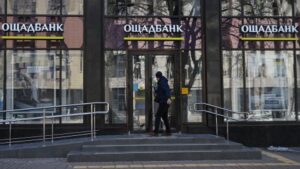
As of now, Oschadbank has signed loan agreements in the energy sector totaling 11 billion UAH, which is more than 1.5 times the amount for all of 2025, when such agreements totaled 6.77 billion UAH, said Yuriy Katsion, Chairman of the Board of Oschadbank.
“Investors in the energy sector can still be called the biggest optimists in the country today. It is they who, despite all the risks, are investing in the country’s future. Lending trends confirm growing business interest in this sector: while Oschadbank concluded energy sector loan agreements totaling 6.77 billion hryvnias for the entire year of 2025, their volume reached 11 billion hryvnias in 2026,” said Katsion during the first annual forum of the Ukrainian Renewable Energy Association, UKRAINE RENEWABLE ENERGY AGENDA 2027, which took place recently in Kyiv.
According to him, these figures demonstrate the business community’s readiness to invest in the country’s energy independence and implement long-term projects.
As Oschadbank clarified in a press release following the forum, of the total volume of loan agreements concluded by Oschadbank to finance the energy sector in 2026, 8.83 billion UAH went to corporate clients, and another 1.94 billion UAH went to micro, small, and medium-sized businesses. At the same time, half of the agreements in the MSME segment were concluded with the support of government and international programs. For comparison: in 2025, the volume of loan agreements in the energy sector amounted to 5.64 billion UAH for large corporate clients and 1.13 billion UAH for MSMEs.
At the forum, Katsion noted that for certain projects, the payback period can now be as short as three years, which increases the investment attractiveness of the energy sector and encourages businesses to invest more actively in new capacity.
At the same time, he noted that a key factor for continued growth in energy lending will be the reduction of the corporate income tax rate for banks to at least 25%, down from the current 50%.
According to the banker, such a high tax rate critically affects capital adequacy and limits the banking system’s ability to lend to the real economy.
The chairman of Oschadbank’s board identified forecasting medium- and long-term electricity prices as one of the key challenges for further attracting investment; therefore, insurance and hedging instruments for price risks should also become an important area of market development.
At the same time, Katsion noted that the bank has been granted the status of an active electricity consumer and is developing its own energy consumption management system.
As he told reporters on the sidelines, the entire branch network is equipped with inverters and battery systems that provide at least four hours of autonomous operation, and in most cases, up to eight hours.
Automated commercial electricity metering systems (ASKOE) have also been installed in branches and regional offices.
To manage this infrastructure, Oschadbank has established its own control center, which, among other things, tracks hourly electricity prices and determines the optimal times for charging and discharging the battery systems. According to him, this not only ensures the uninterrupted operation of the bank’s network during power outages but also generates economic benefits through optimized energy consumption.



