

Schneider Electric reported a roughly 30% increase in net income attributable to the company’s shareholders to EUR2.49 billion for the first half of 2026, while revenue reached a record EUR21.23 billion.
A year earlier, revenue stood at EUR19.34 billion. Organic sales growth in the first half of 2026 was 14%.
Adjusted EBITA rose to EUR4.09 billion from EUR3.51 billion, representing organic growth of 22%. The margin for this metric reached 19.3%.
The company’s free cash flow more than tripled, reaching approximately EUR 1.6 billion.
The second quarter was particularly strong, with Schneider Electric’s revenue reaching a record EUR 11.5 billion, an organic increase of 17%. The Energy Management segment grew by 18%, and Industrial Automation by 11%.
The company cites the data center market as one of the main drivers. Demand for electrical infrastructure for data centers is growing rapidly amid the development of artificial intelligence, which significantly increases computing density, power consumption in server racks, and demands on cooling and backup power systems.
North America posted organic growth of 23%, while China and East Asia saw growth of 20%.
Following a strong first half of the year, Schneider Electric raised its forecast for the full year 2026. The company expects organic growth in adjusted EBITA of 14–19%, up from its previous forecast of 10–15%.
Organic revenue growth is projected at 10–13%.
Schneider Electric’s results reflect a broader investment cycle in energy infrastructure. AI data centers require not only servers and graphics processing units (GPUs), but also transformers, distribution equipment, UPS systems, automation systems, cooling systems, and digital energy management solutions.
Thus, energy infrastructure is gradually becoming one of the key constraints on the further scaling of AI.
For Ukraine, this trend is significant in the long-term context of rebuilding digital infrastructure and constructing new data centers. Future facilities will require significantly more connected power capacity and a more complex power supply architecture than traditional server centers.
Schneider Electric has been operating in Ukraine for over 30 years. Globally, the company is present in more than 100 countries and employs approximately 160,000 people.
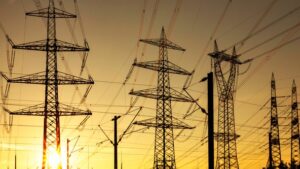
Electricity exports from Ukraine on September 14–20 decreased by 17.3% compared to the previous week, to 109.3 thousand MWh, while imports increased by 12.2%—to 18.6 thousand MWh.
“Overall, electricity sales were nearly six times higher than purchases,” the DIXI Group analytical center reported on Wednesday, citing data from Energy Map.
As the center noted, weather conditions had the greatest impact on electricity trade during the reporting period. A cloudy start to the week, combined with a gradual seasonal decline in solar power generation, reduced the daytime power surplus, and the largest decline in exports occurred during daylight hours. At the same time, comfortable temperatures, mostly without precipitation, did not create peak loads on the power grid. Industrial consumption remained low due to Russian attacks.
According to Energy Map, Hungary accounted for the largest share of last week’s exports—53.8 thousand MWh, or 49.2%. Moldova accounted for 36,2 thousand MWh (33.1%), Romania for 19,0 thousand MWh (17.4%), and Poland for 0,3 thousand MWh (0.3%).
Compared to the previous week, exports declined across all destinations: to Poland by 72% (due to insignificant supply volumes), to Romania by 28%, to Moldova by 22%, and to Hungary by 8%. Exports to Slovakia remained at zero.
Hungary also remained the main source of imports, accounting for 8,900 MWh (47.8%). Poland accounted for 5,900 MWh (31.4%), Romania for 3,800 MWh (20.6%), and Moldova for 0.04 thousand MWh (0.2%).
As previously reported, in August 2026, electricity imports to Ukraine increased by 5% compared to July—to 184,000 MWh—while exports jumped by 63.8% to 380,900 MWh, marking the highest monthly export volume since September 2025. As a result, Ukraine maintained its status as a net exporter for the second consecutive month: sales exceeded purchases by nearly double.
The energy shock caused by the U.S.-Iran war is likely to last longer than previously anticipated and extend beyond the oil sector, said Isabel Schnabel, a member of the Executive Board of the European Central Bank (ECB).
“At first, one might have assumed this was a short-term phenomenon, but, unfortunately, we have had to conclude that it is much more persistent,” Schnabel said at an event in Salsomaggiore Terme, Italy, on Thursday. “We’re not just talking about oil, but also diesel and natural gas.”
Her remarks reflect the ECB leadership’s ongoing concern about the consequences of the Middle East conflict, which has already caused inflation in the region to accelerate to a level significantly above the 2% target.
The year-over-year rate of consumer price inflation in the eurozone reached 3.2% in August, and analysts do not rule out it rising to 4% later this year, according to Bloomberg.
Expectations for further tightening of the ECB’s monetary policy have recently increased, with traders factoring in the likelihood of four interest rate hikes of 25 basis points (bp) by the regulator by the end of 2027.
“We’ve raised interest rates twice this year—first in June, then again in September—because we’re concerned about inflation. That’s why we had to act,” Schnabel said on Thursday.
The ECB raised all three key interest rates by 25 bps at its September meeting; the deposit rate now stands at 2.5% per annum.
According to the Serbian business publication Parametar, the Serbian oil and gas company NIS has submitted a new request to the Office of Foreign Assets Control (OFAC) of the U.S. Department of the Treasury for a special license that would allow the company to continue its operations beyond September 30. The current license expires on that very day.
NIS emphasizes that the company’s uninterrupted operations, the stable operation of the oil refinery in Pančevo, and the regular supply of petroleum products to the Serbian market are crucial for the country’s energy stability.
U.S. sanctions against NIS were imposed in early 2025 due to Russian ownership stakes in the company. Since then, OFAC has repeatedly issued temporary licenses allowing NIS to continue its operations.
At the same time, the process of restructuring NIS’s ownership continues. Hungary’s MOL is in negotiations with Gazprom Neft regarding the acquisition of a 56.15% stake in NIS. In June, the Serbian government and MOL already signed a shareholders’ agreement outlining the future governance model for the company should the deal be finalized.
To finalize the deal, not only is a purchase and sale agreement between MOL and Gazprom Neft required, but also additional approvals from regulatory authorities, primarily OFAC. Serbia has also agreed to the possibility of increasing its stake in NIS by another 5 percentage points.
Serbian authorities had previously reported that a company from the UAE might also participate in the future structure of the deal. This refers to the possible entry of a Middle Eastern investor into NIS’s capital following the completion of the deal with MOL.
As of June 30, 2026, Gazprom Neft owned 44.85% of NIS, the Republic of Serbia owned 29.87%, and another 11.3% was held by JSC Intelligence. The remaining shares are held by minority investors.
NIS remains Serbia’s key oil company. It owns an oil refinery in Pančevo, and the company’s network of gas stations also operates in neighboring countries in the region.
Currently, the main question for the Serbian energy market is whether OFAC will extend the license before the current permit expires on September 30, while negotiations regarding the change in NIS ownership are still ongoing.
The Turkish company ASTOR Enerji A.Ş., which specializes in electrical equipment manufacturing, plans to implement a project worth up to $200 million in the Kyiv region, which will involve the production of energy storage systems and transformers, according to the Kyiv Regional Development Agency.
“The company is considering investing up to $200 million in the creation of a modern manufacturing complex in the Kyiv region. The project involves the production of energy storage systems, battery solutions, electrical equipment, and transformers,” the agency stated in a post on LinkedIn on Tuesday.
It notes that a corresponding memorandum with ASTOR Enerji A.Ş. was signed by the Kyiv Regional Military Administration with the agency’s support during the Carpathian Eight Summit.
The agency notes that for the Kyiv region, the implementation of such a project will mean the creation of new production capacity and jobs, further industrial development, the introduction of advanced technologies, and enhanced energy resilience.
It explained that it will continue to support the project through the next stages: from selecting potential investment sites and engaging with local communities to coordinating further steps with the investor.

More than half of the new enforcement proceedings regarding wage arrears in Ukraine during the first eight months of 2026 were concentrated in just two sectors—electricity and gas supply, and chemical production.
According to OpenDataBot, 1,545 enforcement proceedings were initiated against companies in the electricity and gas supply sector from January through August, accounting for about one-third of all new cases involving wage arrears.
Another 989 proceedings, or 21%, were initiated against chemical manufacturers.
Thus, these two sectors together accounted for about 55% of all new enforcement proceedings related to wage arrears in the country.
The next sector by number of proceedings was the manufacture of other transportation equipment, with 263 cases. Machinery manufacturing companies accounted for 235 proceedings, and electrical equipment manufacturers for 191.
In total, 4,621 new enforcement proceedings regarding wage arrears were registered in Ukraine from January through August 2026, which is 16% fewer than a year earlier.
The high concentration of debt in the energy and chemical industries is linked, in particular, to the presence in these sectors of large enterprises with complex financial situations and significant accumulated debt to employees.
In particular, among the companies with a large number of new enforcement proceedings in 2026 are Sumykhimprom, the Odesa Port Plant, Karpatnaftochim, and Dniproazot.
Source: OpenDataBot, Unified Register of Debtors.



