
The ICE-calculated index showing the dollar’s dynamics against six currencies (euro, Swiss franc, yen, Canadian dollar, pound and Swedish krone) is losing 0.03% in trading, while the broader WSJ Dollar Index is stable.
The minutes of Wednesday’s Jan. 31-Feb. 1 U.S. Central Bank meeting showed that Fed policymakers plan to continue raising rates, believing that current levels are not enough to curb economic activity to beat inflation. At the same time, they believe that the cycle of rate hikes could be completed this year.
According to the minutes, meeting participants also noted that the restrictive policy will need to be maintained until the Central Bank has “confidence that inflation is on the path to a steady decline to the 2% level.”
Eurozone inflation stats released Thursday confirmed investors’ view that the European Central Bank will continue to tighten policy sharply.
According to final data from the European Union Statistical Office (Eurostat), consumer prices excluding food and energy (CPI Core Index, an indicator of core inflation) rose at a record annual rate of 5.3% in January. They had been previously reported to have risen 5.2% in January, and analysts did not expect the data to be revised.
The estimate for consumer price growth as a whole was revised to 8.6% annualized from the previously announced 8.5%, Eurostat said.
The euro/dollar pair was trading at $1.0603 as of 8:15 a.m., up from $1.0596 at market close on Thursday.
The pound is at $1.2023 from $1.2013 the day before.
The U.S. currency fell to 134.58 yen against 134.68 yen in trading during the previous session.
Kazuo Ueda, who was nominated as the head of the central bank by the Japanese government said during his speech in the parliament on Friday that he considered it reasonable to keep ultra soft monetary policy in Japan in order to achieve the central bank’s inflation target. At the same time, he made it clear that he sees various options for controlling the yield curve of government bonds in the future.
The US dollar is getting stronger against the euro, the yen and the pound sterling during trading on Tuesday.
Traders are awaiting the publication of the Federal Reserve System (Fed) meeting minutes from January 31 to February 1. The Federal Reserve Board decided to raise the rate by 25 basis points (bps) – to 4.5-4.75% a year.
Experts expect that the protocol may confirm the Fed’s intention to continue raising the rate longer than it was planned before, Trading Economics said.
The latest statistical data on the U.S. economy has “called into question” arguments that the Fed may soon halt its rate hike cycle or move to lower rates altogether, notes Chuck Camello, president and chief executive officer of Essex Financial Services.
“I think the market is finally coming to the realization that U.S. rates will be higher than expected, and longer than expected,” Bloomberg quoted the expert as saying.
Calculated by ICE index showing dollar dynamics against six currencies (euro, Swiss franc, yen, Canadian dollar, pound sterling and Swedish krona) added 0.13% during Tuesday’s trading, broader WSJ Dollar Index added 0.15%.
The euro/dollar pair is trading at $1.0672 as of 8:10 a.m., up from $1.0687 at Monday’s market close.
The pound fell to $1.2026 from $1.2041 the day before.
The value of the American currency against the yen rose to 134.39 yen against 134.26 yen in previous trading.
The U.S. dollar goes up against the euro, yen and pound sterling in trading on Friday on hawkish statements of Federal Reserve (Fed) executives, which strengthened traders’ opinion that the U.S. Central Bank is not going to stop the rate hike cycle yet.
Federal Reserve Bank (FRB) Cleveland President Loretta Mester said the day before that she had seen a “compelling case” for a 50 basis points (bps) rate hike at the January 31-February 1 Fed meeting.
The Federal Open Market Committee (FOMC) unanimously decided at that meeting to raise the rate by 25 bps, to 4.5-4.75% per year.
Mester still believes the Fed needs to raise the benchmark rate to more than 5% and keep it above that mark for a while to get inflation back under control.
St. Louis Fed Chairman James Ballard said Thursday that, like Mester, he supported a 50-bp rate hike at the last meeting. Neither Ballard nor Mester have a vote on the FOMC this year.
Ballard said he thinks the Fed should raise the rate to 5.25-5.5% and do it “as soon as possible. Thus, Ballard believes it is necessary to raise the rate by 75 bps from current levels, Market Watch notes.
“A further rate hike could help solidify the disinflationary trend in 2023 even as the economy continues to grow and the labor market is strong,” Ballard said.
The ICE-calculated index, which shows the dollar’s performance against six currencies (euro, Swiss franc, yen, Canadian dollar, pound sterling and Swedish krona), added 0.53% Friday, while the broader WSJ Dollar Index gained 0.38%.
The euro/dollar pair was trading at $1.0638 as of 7:45 a.m., compared with $1.0672 at market close Thursday.
The pound was down to $1.1948 from $1.1988 the day before.
The value of the American currency against the yen rose to 134.71 yen against 133.94 yen by the previous trading results.
The dollar/yuan pair is trading at 6.8755 yuan, compared to 6.8607 yuan on the previous day.
EURO, pound, U.S. dollar, yen
The U.S. dollar rose moderately against the euro and pound sterling Wednesday morning as traders assessed U.S. inflation data for January.
The ICE-calculated index, which shows how the U.S. dollar is performing against six currencies (euro, Swiss franc, yen, Canadian dollar, pound sterling and Swedish krona), is up 0.2% in morning trading.
The euro/dollar pair is trading at $1.0716 at 7:43 a.m. versus $1.0737 at the close of Tuesday’s session, the euro is losing about 0.2%.
As it became known the day before, consumer prices (CPI) in the U.S. rose by 6.4% in January compared to the same month last year. Thus, inflation slowed down from 6.5% in December.
However, analysts had expected a much more significant weakening in the pace of price growth, to an average of 6.2%, according to Trading Economics. The slower-than-expected slowdown in inflation raises the possibility that the Fed will continue to stay tight on monetary policy.
Now the market is waiting for U.S. retail sales data for January, which will be released at 4:30 p.m. Moscow time on Wednesday to better gauge the health of the U.S. economy. According to the consensus forecast, sales jumped 1.8% year-over-year last month after falling 1.1% in December.
The pound is 0.2 percent cheaper, trading at $1.2152 versus $1.2174 at the close of last session.
The dollar/yen exchange rate is at 133.05 yen compared to 133.12 yen the day before.
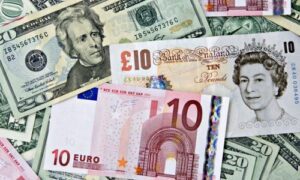
The US dollar is getting weaker against the euro and the pound sterling in trading on Monday.
This week traders’ attention is focused on January data on consumer price dynamics in the states. Experts fear that the report of the U.S. Labor Department to be published on Tuesday will confirm that the fight against inflation is far from over, thus dispelling hopes that the cycle of monetary tightening by the Federal Reserve System (FRS) will soon be over.
According to an expert consensus forecast cited by Trading Economics, U.S. consumer prices rose 6.2% year-over-year in January, up from 6.5% in December.
“Depending on what the inflation data are, we could see either markets breathe a sigh of relief or risk aversion accelerate,” said Standard Chartered Plc analyst Eric Robertsen.
“The more the Fed extends the cycle of rate hikes and delays the transition to rate cuts, the more likely it is that the U.S. economy will “hard land” and that the U.S. central bank will have to lower the rate more aggressively in the future,” Robertsen was quoted as saying by Bloomberg.
University of Michigan data released Friday showed that Americans’ inflation expectations for the medium term (next year) rose to 4.2% in February from 3.9% in January.
The ICE-calculated index showing the dollar’s performance against six currencies (euro, Swiss franc, yen, Canadian dollar, pound sterling and Swedish krona) added 0.11% on Monday, while the broader WSJ Dollar Index gained 0.22%.
The euro/dollar pair is trading at $1.0669 as of 8:10 a.m., up from $1.0679 at the close of the previous session.
The pound is at $1.2047, up from $1.2060 on Friday.
The dollar’s value against the yen rose to 132.17 yen from 131.4 yen in previous trading.
On Tuesday the Japanese government will submit a candidate for the post of the Central Bank head to the parliament. On Friday the Japanese mass media informed that Prime-Minister Fumio Kishida chose Kazuo Ueda, 71-year-old, from the list of candidates for the post. The current head of the Bank of Japan, Haruhiko Kuroda, will step down in early April.
Initially, investors interpreted the decision to choose Ueda as a potential “hawkish” signal, said Bloomberg. That opinion, however, changed after his speech to reporters, during which he said he believes the Bank of Japan’s current ultra-soft policy should remain unchanged.
The U.S. dollar is strengthening against the euro, the yen and the pound sterling in trading on Friday.
The ICE-calculated index showing the dollar’s dynamics against six currencies (euro, Swiss franc, yen, Canadian dollar, pound sterling and Swedish krona) is adding 0.16%, while the broader WSJ Dollar Index is up 0.18%.
The euro/dollar pair is trading at $1.0722 as of 7:50 a.m., up from $1.0743 at the close of the previous session.
The pound is at $1.2097, compared to $1.2121 the day before.
The dollar went up to 131.74 yen against 131.54 yen at the close of trading on Thursday.
Signals that the Federal Reserve (Fed) may raise the benchmark interest rate higher than the market expects provided support for the American currency. Several Fed policymakers this week signaled they believe a further rate hike is necessary because the fight against high inflation has not yet been won and there is no significant slowdown in economic growth.
Next week, the January U.S. inflation data will be released. The consensus forecast from experts cited by Trading Economics suggests consumer prices are up 0.5% from December, when they fell 0.1%.
The Australian dollar fell in trading Friday to $0.6924 from $0.6937.
The Reserve Bank of Australia (RBA) raised its forecast for core inflation, which excludes food and energy costs, for the current fiscal year ending in June to 6.25% from 5.5%.



