
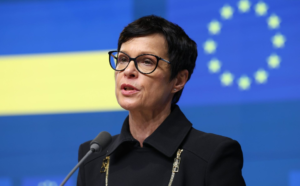
European Commissioner for Enlargement Marta Kos notes that the annual enlargement report does not contain a specific date for Ukraine’s accession to the European Union.
“At the current stage of Ukraine’s accession process, we cannot say exactly when it will be able to join the EU. The roadmaps presented in our enlargement report outline plans for the period until the end of 2027. After that, we will see how quickly the country can move forward,” she said at a press conference in Brussels on Wednesday, answering journalists’ questions.
According to Kos, the roadmap concerns the completion of negotiations on some clusters and the opening of new ones. “If Ukraine meets the IBAR (readiness assessment report) requirements, and the chances of this are high, it will be able to close up to seven negotiating chapters as early as next year,” the European commissioner reiterated the forecast she had made the previous day during the presentation of the report to the European Parliament’s Committee on Foreign Affairs.
For her part, High Representative for Foreign Affairs and Security Policy Kaja Kallas added that Ukraine “certainly still has many steps ahead.” “It is also important to work with the public. After all, when we talk about security, it becomes clear that Ukraine’s integration into the European space will significantly strengthen our common security. The experience Ukraine has gained on the battlefield, the capabilities it has developed and the expertise it possesses — all this indicates that, for our security, it is extremely important to move forward on the issue of Ukraine as quickly as possible,” she explained.
EUROPEAN INTEGRATION, EUROPEAN UNION, KAJA KALLAS, UKRAINE, МАРТА КОС
On October 20, Hungary blocked the next stage of the negotiation process regarding Ukraine and Moldova’s accession to the European Union by refusing to approve the results of the preliminary review of legislation for the last two outstanding negotiation clusters. Budapest’s position was not supported by the remaining 26 EU countries, according to “European Truth,” citing European diplomats.
The decision was discussed at a meeting of the EU Council’s Working Group on Enlargement (COELA) in Brussels. The participants had planned to approve the results of the screening of Ukrainian and Moldovan legislation regarding negotiation clusters No. 4 and No. 5, which is a necessary procedural step before their official opening.
However, the Hungarian representative refused to support the approval of the documents, despite the position of the other EU member states.
As three European diplomats told The Kyiv Independent, representatives from other countries asked the Hungarian delegation to explain the reasons for the refusal. According to one of the publication’s sources, Budapest did not provide any new arguments, stating only that its position remains unchanged.
At the time of publication, Hungary’s official mission to the EU had not provided the publication with a comment.
The fourth negotiation cluster, “Green Agenda and Sustainable Interconnectivity,” covers transportation policy, energy, trans-European networks, environmental legislation, and the fight against climate change.
The fifth cluster, “Resources, Agriculture, and Cohesion Policy,” involves harmonizing regulations in the areas of agricultural policy, food security, veterinary and phytosanitary controls, fisheries, regional development, as well as financial and budgetary provisions.
Both clusters are of significant importance for Ukraine’s economic integration into the EU, as they concern access for agricultural products to the European market, transportation, energy infrastructure, and future mechanisms for the distribution of European budget funds.
This new impasse occurred one week after the previous progress in the negotiation process.
On October 13, the Council of the EU officially opened two negotiation clusters for Ukraine and Moldova: No. 2, “Internal Market,” and No. 3, “Competitiveness and Inclusive Growth.” These clusters encompass 17 negotiation chapters, including issues related to competition, entrepreneurship, and economic regulation.
As reported by the Council of the EU, at that time, four of the six clusters provided for in the accession procedure had been opened for both countries.
The previous decision became possible after Hungary withdrew its objections to the opening of the second and third clusters following the Verkhovna Rada’s adoption on October 12 of amendments to education legislation concerning the rights of national minorities.
Previously, Budapest had linked the progress of negotiations to ensuring the linguistic and educational rights of the Hungarian community in Zakarpattia.
According to The Kyiv Independent, the current delay may prove to be temporary. European diplomats expect that the remaining two negotiation clusters will be officially opened in December 2026.
Ireland, which will hold the EU Council presidency in the second half of 2026, intends to continue discussing this issue at upcoming meetings of the Enlargement Working Group.
However, Hungary’s October decision does not cancel the negotiation clusters that have already been opened and does not mean the end of accession negotiations for Ukraine and Moldova. It does, however, delay the necessary harmonization of documents required for both countries to move forward.
Ukraine and Moldova were granted EU candidate status in June 2022. In December 2023, the European Council decided to open negotiations, and the first intergovernmental conference took place in June 2024.
The accession process involves aligning national legislation with EU law, implementing institutional reforms, and negotiating 35 chapters, most of which are grouped into six thematic clusters. The opening of all clusters marks a stage in the negotiations but does not in itself signify the completion of the accession process.
EUROPEAN INTEGRATION, EUROPEAN UNION, HUNGARY, MOLDOVA, UKRAINE
According to the Serbian business media outlet Parametar, Croatia is claiming property worth over $2.7 billion located in Montenegro that remained there following the breakup of Yugoslavia. And this is by no means limited to the well-known training sailing ship “Jadran.”
This was stated by Croatian Minister of Foreign and European Affairs Gordan Grlić Radman during a visit to Montenegro. Zagreb has documentation regarding property that ended up on Montenegrin territory and was sold or transferred to other owners after the breakup of Yugoslavia.
Among these, the minister specifically mentioned military ships, submarines, and a military hospital.
The “Jadran” has become the most well-known part of the dispute. The training sailing ship was built in the 1930s and was used by the Yugoslav Navy. The vessel is currently in Montenegro, while Croatia insists on its return.
But the property dispute is only part of a much broader list of Zagreb’s demands on Podgorica.
The Croatian Ministry of Foreign Affairs lists the following among the unresolved issues:
– the return of the “Jadran” and the settlement of other property claims;
– compensation for former Croatian prisoners of the Morin camp;
– the search for 14 people who are still considered missing in action following the war of the 1990s;
– the investigation and prosecution of war crimes;
– the return of property belonging to Croatian families in Montenegro and the conclusion of protracted court proceedings;
– the preservation of a memorial plaque at the site of the former Morin camp;
– renaming the swimming pool in Kotor named after Zoran Hopčević;
– resolving the maritime border between the two countries.
These issues take on particular significance in light of Montenegro’s EU accession negotiations.
Croatia is already using its status as an EU member state to block the closure of certain negotiation chapters. In September, a planned intergovernmental conference had to be postponed after Zagreb refused to agree to the closure of several chapters.
Currently, Croatia is blocking the closure of chapters related to transport policy, foreign policy and security, the judicial system and fundamental rights, as well as justice, freedom, and security.
Podgorica hopes to conclude negotiations and become the 28th member of the European Union in 2028. However, this date is not guaranteed: the consent of EU member states is required for progress and final accession.
At the same time, Croatia is currently the main source of bilateral demands on Montenegro, which directly affect the negotiation process. There is currently no comparable official set of claims from other EU member states.
This creates a rather interesting situation: the closer Montenegro gets to the EU, the greater the significance of long-standing disputes dating back to the breakup of Yugoslavia.
And Croatia’s property claims, totaling more than $2.7 billion, are now becoming not only a matter of relations between Zagreb and Podgorica but also a potential factor capable of influencing the timing of Montenegro’s accession to the European Union.

The updated licensing requirements for motor carriers could take effect in Ukraine by the end of 2026, according to Volodymyr Golubosh, deputy head of the State Service of Ukraine for Transport Safety.
According to “Interfax-Ukraine”, the draft of the new licensing conditions was published by Ukrtransbezpeka on March 18. The agency then collected and reviewed proposals from stakeholders, and the finalized document was resubmitted for approval.
“We expect that after amendments are made to the legislation and the new procedure is approved, the updated conditions will take effect by the end of this year,” Golubosh said during the conference “Regional Dialogues with Business on European Integration: The Transportation Sector” in Lviv.
The changes are part of the harmonization of Ukrainian transportation legislation with European Union standards, specifically EU Regulations No. 1071, No. 1072, and No. 1073. According to a representative of Ukrtransbezpeka, Ukraine must fulfill the relevant European integration obligations by April 2027.
The draft amendments are being developed by Ukrtransbezpeka in collaboration with the Ministry of Community and Territorial Development. Its goal is to modernize the road transport licensing system and bring Ukrainian requirements in line with European market access rules.
The new approach stipulates that a license will confirm more than just a company’s formal right to provide transportation services. Carriers will also be required to demonstrate their ability to organize operations professionally and safely.
Specifically, the right to operate in the licensed road transport sector will be granted to companies and entrepreneurs who can demonstrate professional competence, financial capacity, and integrity.
The introduction of these criteria is intended to bring the operating rules for Ukrainian road carriers in line with the requirements of the EU’s single transport market and serve as one of the steps toward integrating Ukraine’s transport sector into the European space.
EUROPEAN INTEGRATION, LICENSE, ROAD TRANSPORT, TRANSPORTATION, UKRAINE
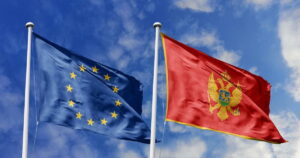
According to the “Serbian Economist,” five EU countries—the Netherlands, Croatia, Estonia, Lithuania, and Latvia—have called for a pause before closing the remaining negotiation chapters with Montenegro, reports the Podgorica-based newspaper Dan, citing diplomatic sources in Brussels.
The Netherlands initiated the move, demanding further analysis of Montenegro’s compliance with European criteria and a more consistent application of established standards. Croatia and the three Baltic countries subsequently joined this position.
This has already affected the negotiation schedule. The EU–Montenegro intergovernmental conference scheduled for September—at which Podgorica had hoped to close new chapters—will not take place.
However, Brussels’ official line is more conciliatory. An EU representative stated that several countries have not yet completed their internal approval procedures, as many negotiation chapters are technically complex.
“The desire to make progress is there. The work is practically complete. It’s more a matter of timing than anything else,” the EU representative said.
The most optimistic scenario at the moment is that the next intergovernmental conference will be held in mid-October in Luxembourg.
Montenegro remains the candidate that has made the most progress in the EU accession process. The country has opened all 33 negotiation chapters, 18 of which have already been provisionally closed. The last conference took place on July 14, when Chapters 8 (“Competition Policy”) and 29 (“Customs Union”) were closed.
Croatia’s position remains a separate issue. In July, Zagreb refused to agree to the closure of Chapter 14, “Transport Policy,” primarily due to issues regarding cabotage and aviation permits. Croatia also continues to block Chapter 31, “Foreign Policy, Security, and Defense,” due to unresolved bilateral issues with Montenegro.
The Council of the EU officially confirms that Montenegro’s progress continues and that work on new negotiating positions is ongoing.
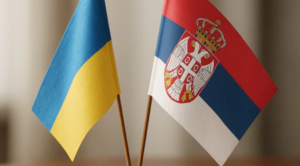
According to the “Serbian Economist,” Serbia’s lack of progress in its EU accession negotiations could create additional challenges for Ukraine and Moldova, as some EU countries are insisting on maintaining a geographical balance between candidates from Eastern Europe and the Western Balkans.
Euronews reports this, citing EU diplomats.
Ukraine has opened two of the six negotiation clusters in recent weeks, but further acceleration of the process may face demands to simultaneously advance Serbia’s application.
“Progress in one direction creates pressure to move forward in the other as well,” one European diplomat told Euronews.
In early July, the European Commission once again recommended opening Cluster 3—dedicated to competitiveness and inclusive growth—for Serbia. Negotiations regarding Serbia have effectively remained stalled since December 2021.
However, eight EU member states opposed opening the chapter: the Netherlands, Sweden, Finland, Belgium, Estonia, Lithuania, Bulgaria, and Croatia. Denmark, Luxembourg, and Latvia are also not yet ready to support this decision. The consent of all 27 EU member states is required to open a negotiation chapter.
Opponents of Serbia’s advancement point to Belgrade’s insufficient progress in the areas of the rule of law, judicial independence, and democratic standards. Another reason is Serbia’s refusal to join the EU’s sanctions against Russia.
The European Commission, on the other hand, believes that Belgrade has implemented some of the recommendations, repealed controversial changes to judicial legislation, improved cooperation with the EU on foreign policy, and strengthened ties with Ukraine. At the same time, Brussels acknowledges that Serbia needs to continue reforming its judicial and prosecutorial systems.
France, Spain, and a group of countries calling themselves the “Friends of the Western Balkans” advocate for preserving Serbia’s membership prospects. They fear that Ukraine’s rapid progress against the backdrop of Belgrade’s prolonged stagnation will be perceived as the application of double standards.
Euronews emphasizes that the negotiation processes for Ukraine and Serbia have not yet been formally merged. However, as Kyiv and Chisinau push to open the remaining clusters by the end of the year, demands for equal treatment of the candidate countries may intensify.



